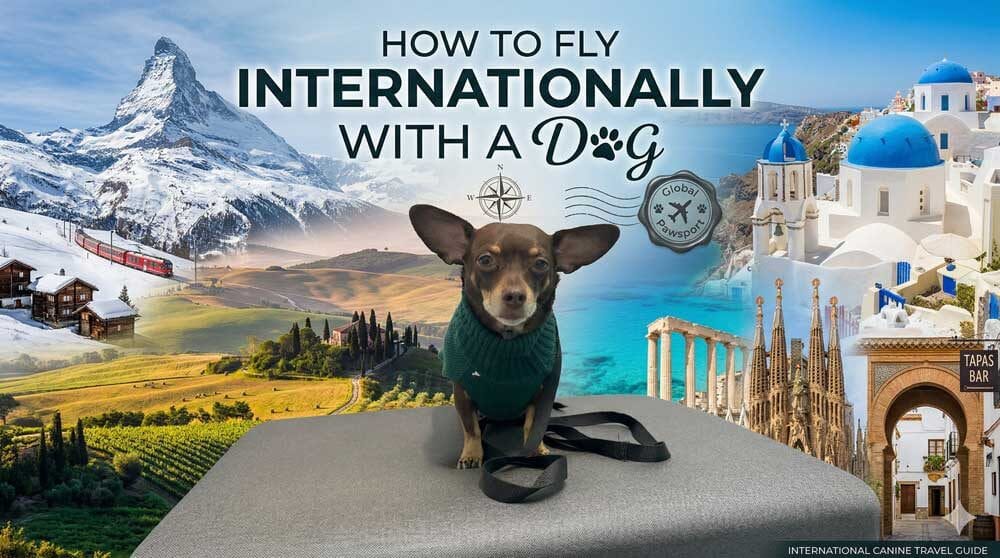
How to Fly Internationally With a Dog: The 10-Day USDA Certificate Guide
By Diana Pena • March 23, 2026
Here’s the truth about traveling internationally with a dog: navigating the airport is the easy part. This series, which covers traveling through countries such as Italy, Switzerland and more, documents the real-life friction of crossing borders with a dog, starting with the baseline of leaving the United States.
What nobody is telling you is that the actual nightmare happens weeks before departure, buried in strict 10-day USDA health certificate windows, exact microchip-to-rabies sequencing, and obscure shipping label requirements. Whether you are flying with a trained service dog like Darcy or navigating the separate logistical hurdles of standard pet travel, this is the breakdown of the hidden traps, the mandatory gear, and the exact preparation required to ensure you are not grounded before takeoff.
United States — Departure and Baseline Expectations when traveling with a service dog
The Good
Traveling within the United States with a service dog is structured and predictable. Airline requirements exist, but once approved, the airport experience itself tends to be straightforward.
At the airport, moving through check-in and security with Darcy was smooth. Staff were familiar with service animal protocols, and there was no need for repeated explanations. Public access norms are well established, which created a sense of control before departure.
The Friction
The complexity begins before you ever reach the airport.
International travel requires a USDA-endorsed health certificate, and timing is strict. The veterinary exam can be completed in advance, but the certificate cannot be endorsed until within 10 days of departure. That creates a narrow window where everything has to align.
Not all veterinarians complete international travel paperwork, so finding the right provider becomes part of the process.
Preparing the documents to submit to the USDA adds another layer. A next-day prepaid shipping label is required, and it must be set up correctly. In practice, this is more complicated than it sounds. Shipping stores often default to printing labels in-store, but the USDA process requires an electronic label so the documents can be returned properly.
The most reliable option was setting this up from home. The vet requested both the “to” and “from” addresses be mine to ensure the documents came directly back. Most shipping locations were not willing to process it that way, which meant creating a carrier account manually. That process was not intuitive and required contacting customer support to complete.
Even when everything is done correctly, there is a waiting period where you are dependent on the documents being processed and returned on time. With a fixed departure date, that gap can feel uncertain.
There is also a longer-term constraint. The health certificate is valid for 4 months or until the rabies vaccination expires, whichever comes first. On extended travel, this becomes something you have to track early. It does not interrupt the trip immediately, but it stays present in the background.
Airline requirements add another layer. In addition to the health certificate and service dog documentation, airlines often require their own forms, typically submitted at least 48 hours before departure. In practice, this can be inconsistent. Documents may be rejected and re-requested, and different representatives may ask for different items. Some required forms were difficult to locate on the airline’s website, which added unnecessary back-and-forth before final approval.
Service Dog vs. Pet (Important Distinction)
The experience described here applies specifically to a trained service dog.
Traveling with a pet follows a different process. Many airlines restrict pets in cabin, especially on international routes, and often require transport in a carrier under the seat or in cargo. Fees are typically charged each way, and availability can be limited.
Service dogs are not subject to those same restrictions or fees, but they do require documentation and behavioral standards. The logistical burden shifts from cost and space limitations to paperwork and compliance.
The Ugly
There were no direct access issues during departure, but the process carried a constant sense of pressure.
There was no real backup plan if paperwork was delayed. The only option would have been contacting the airline and potentially rebooking, ideally with a refundable ticket. Without that buffer, everything depends on timing working exactly as expected.
Preparation That Matters More Than You Expect
Beyond paperwork, preparation for the dog itself is critical.
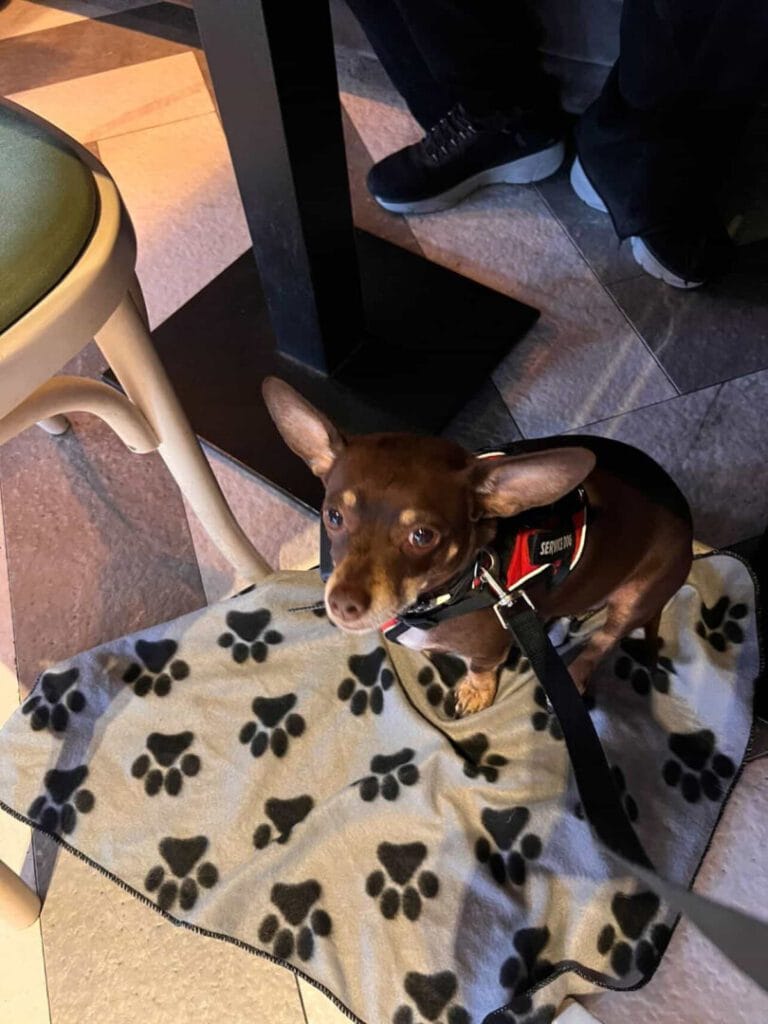
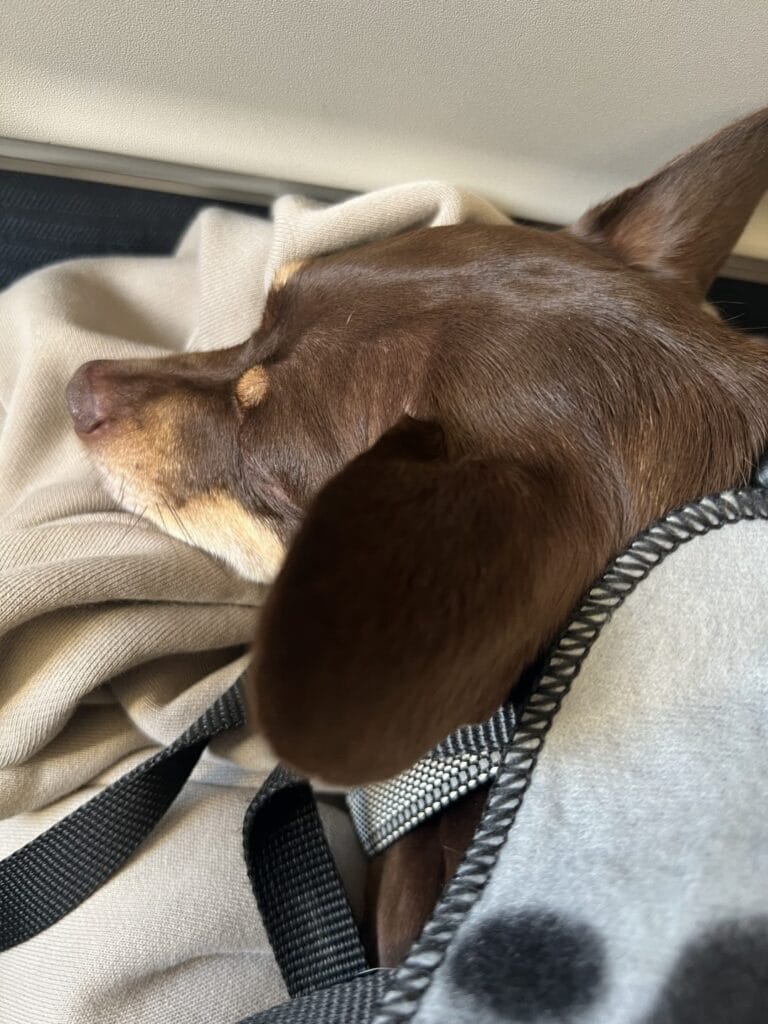
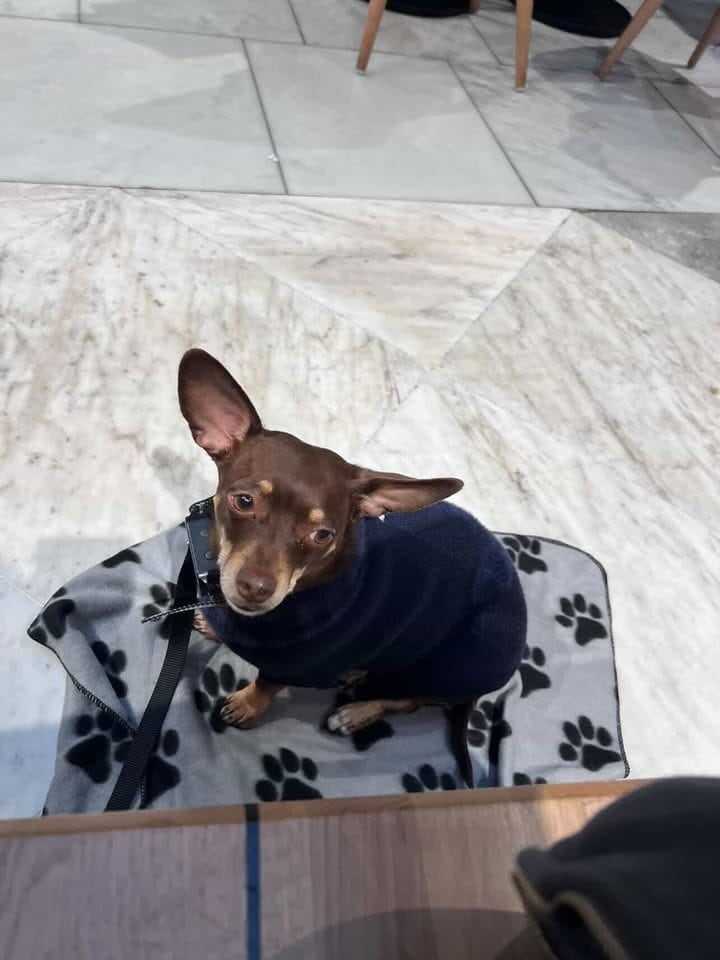
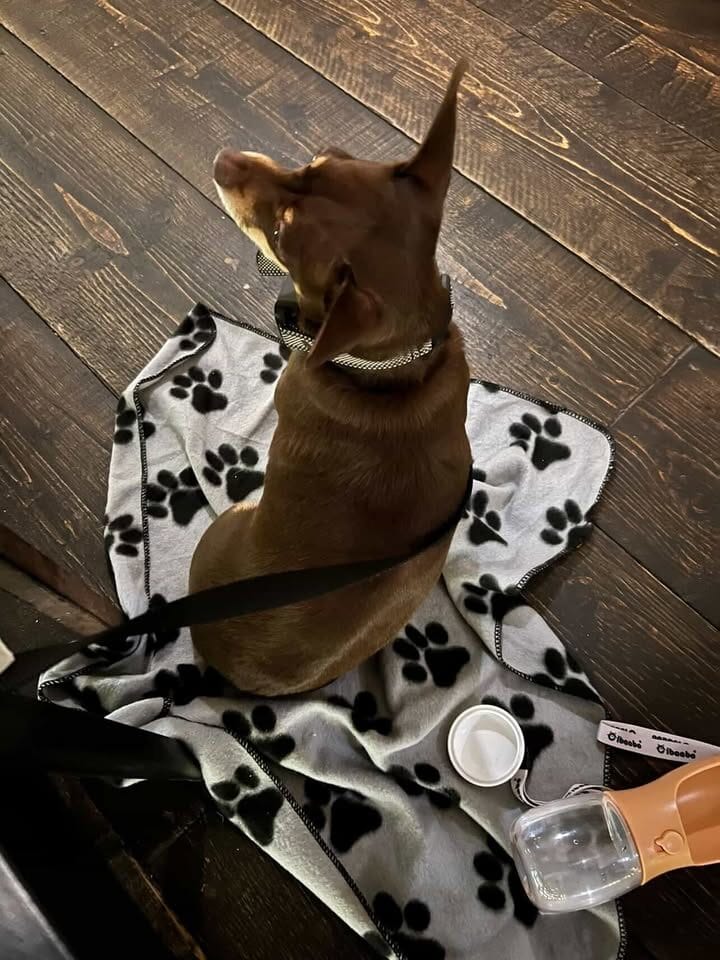
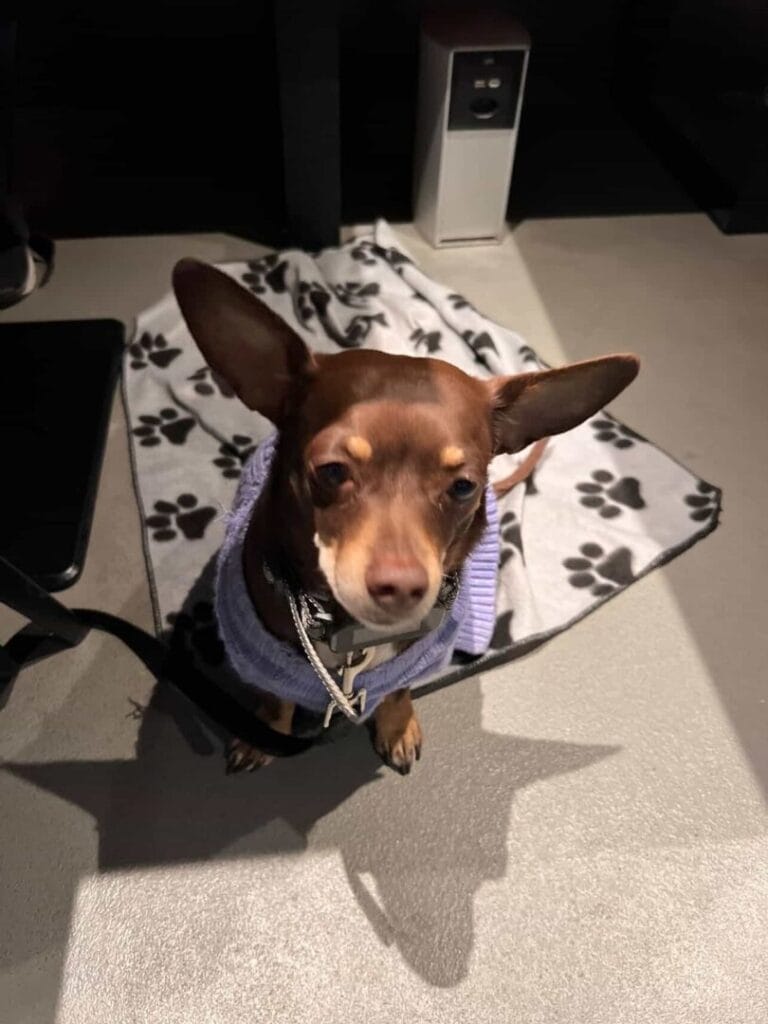
A consistent “place” cue becomes essential. A familiar blanket that signals where to settle allows the dog to remain calm in busy environments like airports and planes.
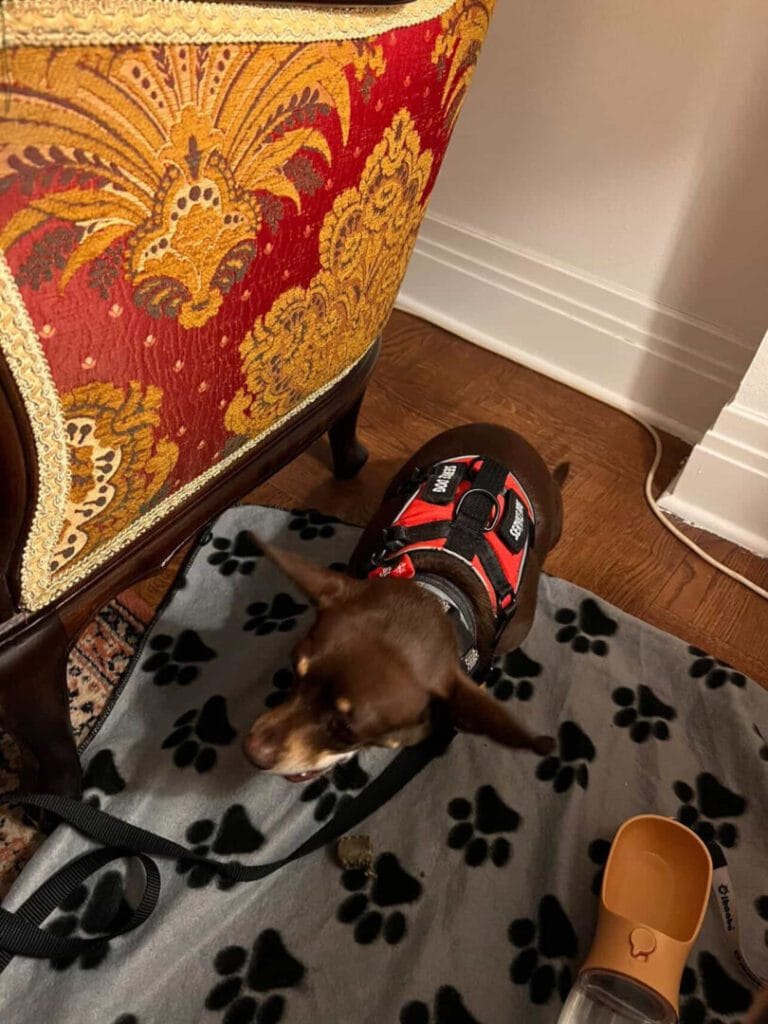
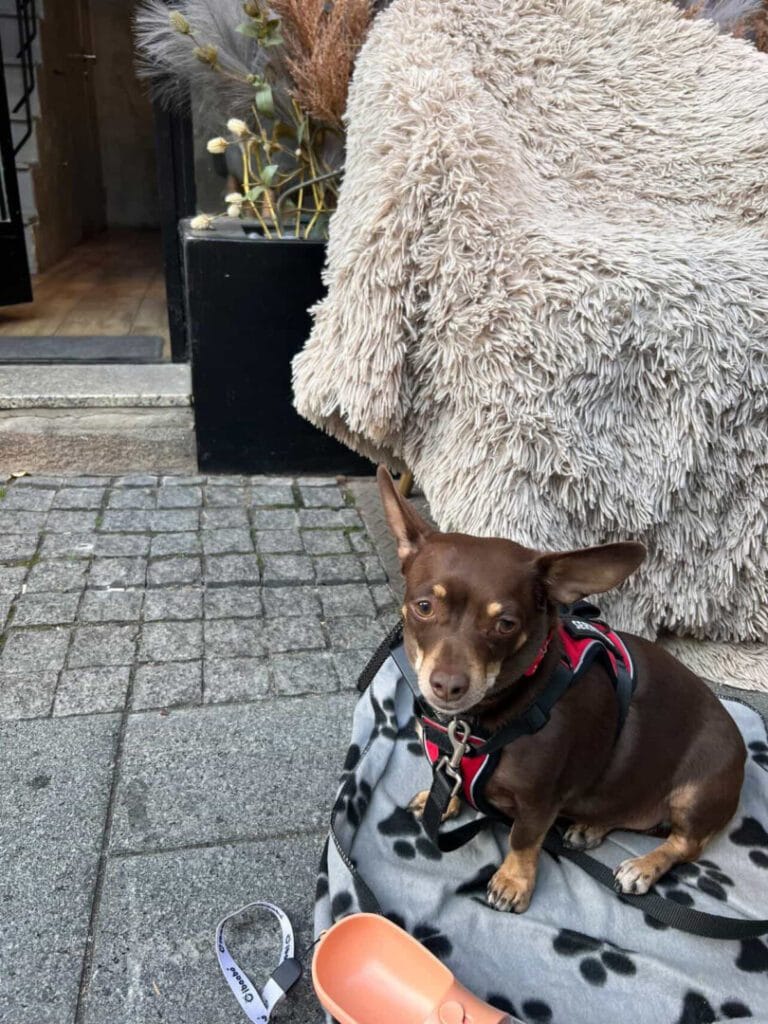
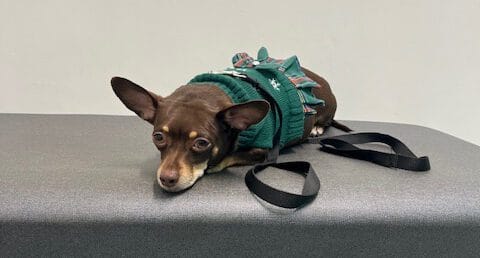
Travel-friendly food and water containers make a significant difference during long travel days. Having quick access without disruption simplifies transitions. The one we are using is pictured here:
Bringing familiar items, such as favorite chews, helps maintain routine and reduces stress in new environments.
Keeping both printed and digital copies of all documents is necessary. Not every checkpoint asks for them, but when they do, access needs to be immediate.
Microchip and Rabies Details (Important)
The microchip and rabies vaccination must align correctly on the paperwork.
The dog must be microchipped before the rabies vaccination is administered
The microchip number must be listed on the rabies certificate
That same microchip number must also appear on the USDA health certificate
This linkage validates the vaccination. If the sequence or documentation does not match, some countries can deny entry.
Takeaway
The United States provides a clear and reliable framework, but the process is front-loaded. The challenge is not access; it is timing, coordination, and administrative detail. Once those pieces are in place, the actual travel experience becomes manageable.
Italy
The Good
Italy is one of the nicest and easiest countries to travel with a pet or service dog.
Entry into the country was smooth. Passport control focused only on my passport and did not review Darcy’s paperwork at all. There were no questions and no delays.
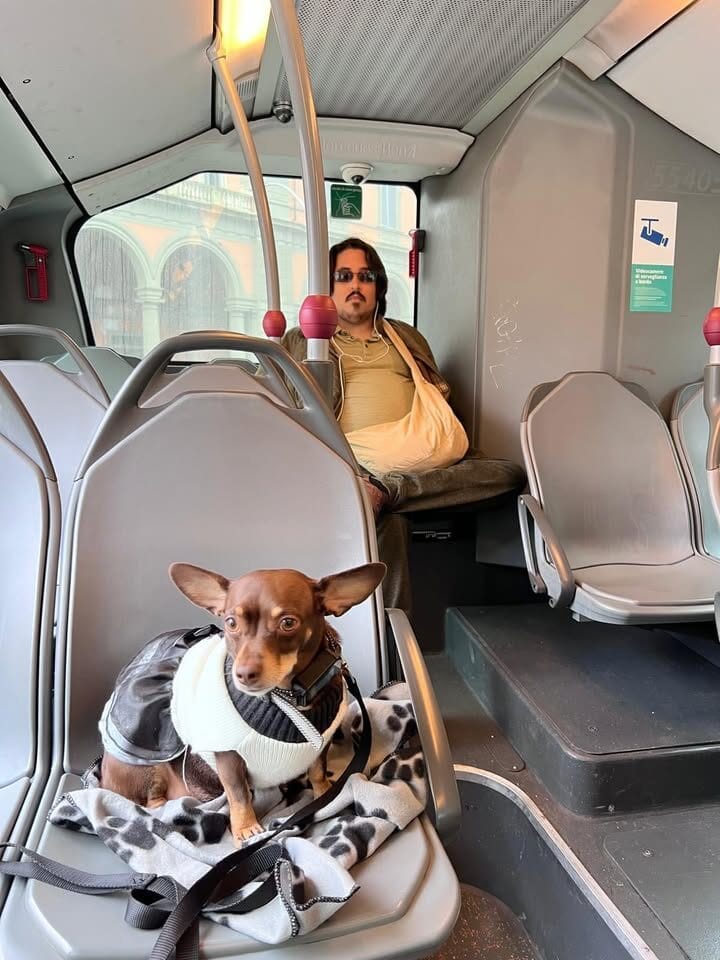
Transportation was consistently accessible. Darcy traveled with me on trains, buses, and ferries without issue. Smaller dogs typically do not require a ticket, while larger dogs may. The process felt normal and expected rather than something requiring approval.
Darcy entered all spaces without wearing a service dog vest or jacket. This included indoor and outdoor environments, and there was no repeated need to explain or justify her presence.
She was with me:
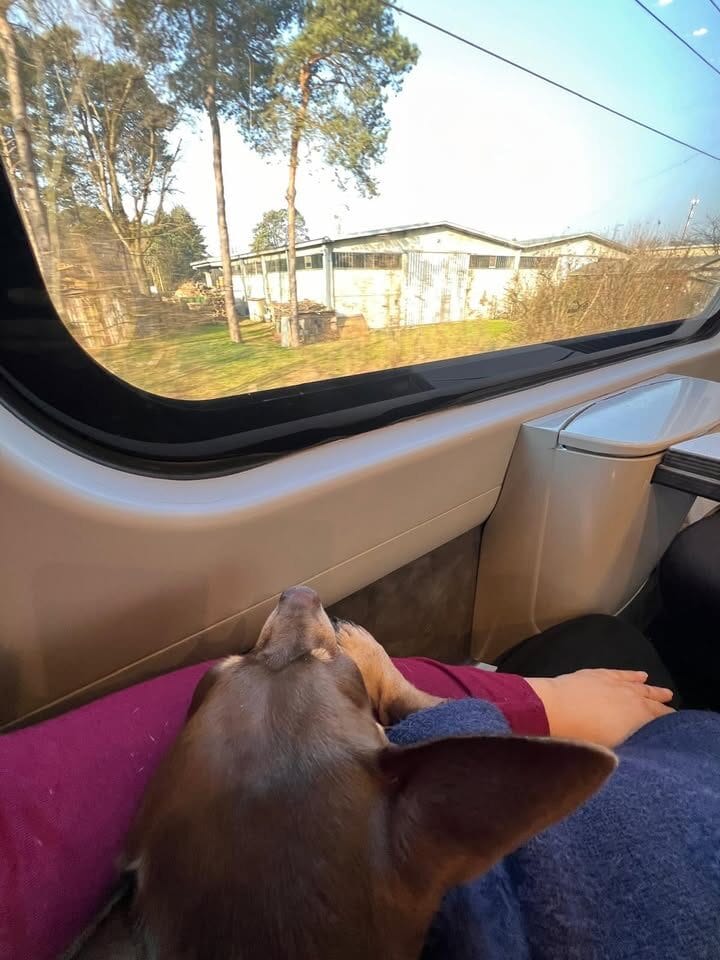
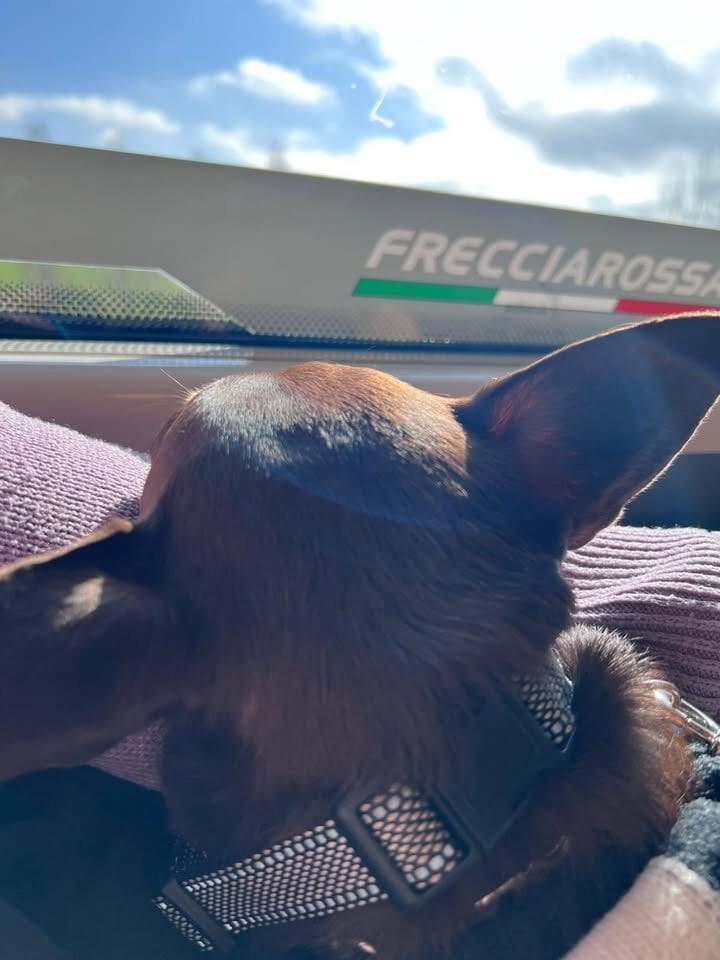
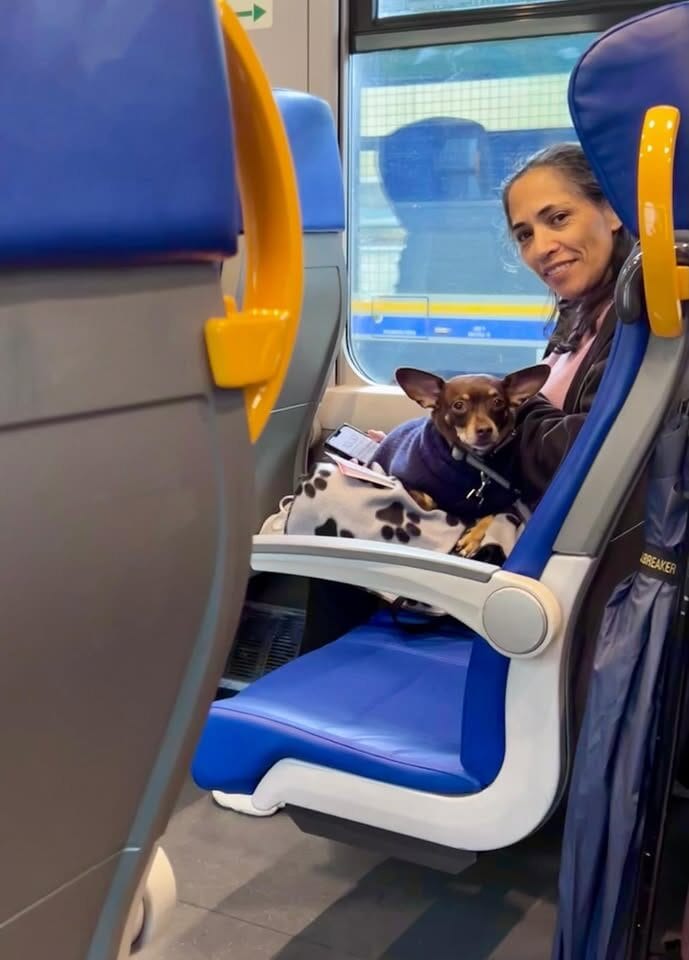
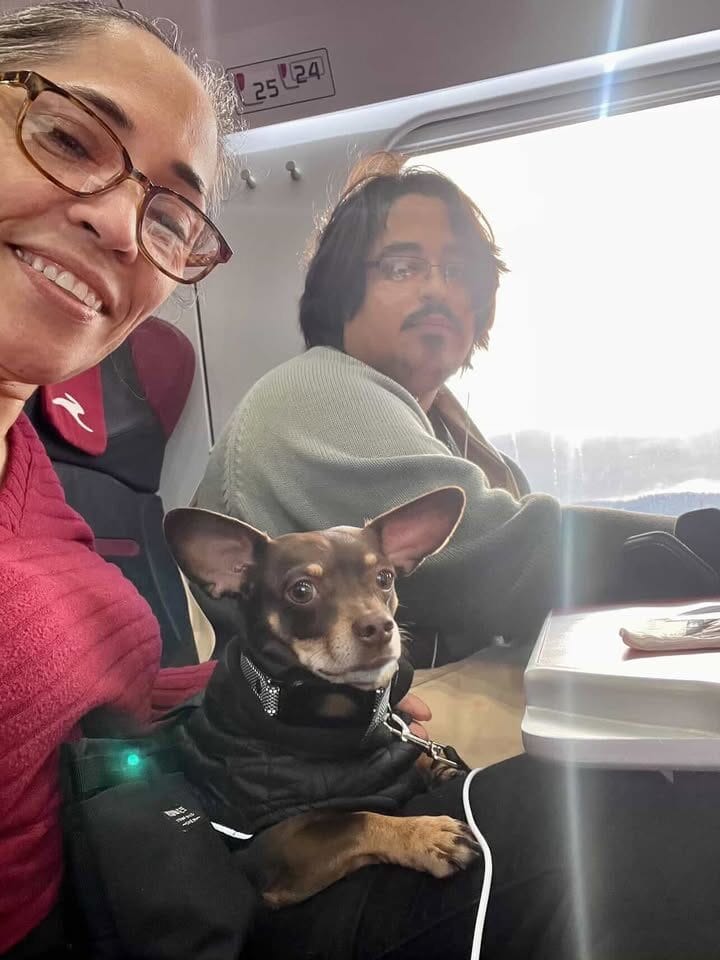
On trains, sitting calmly by the window
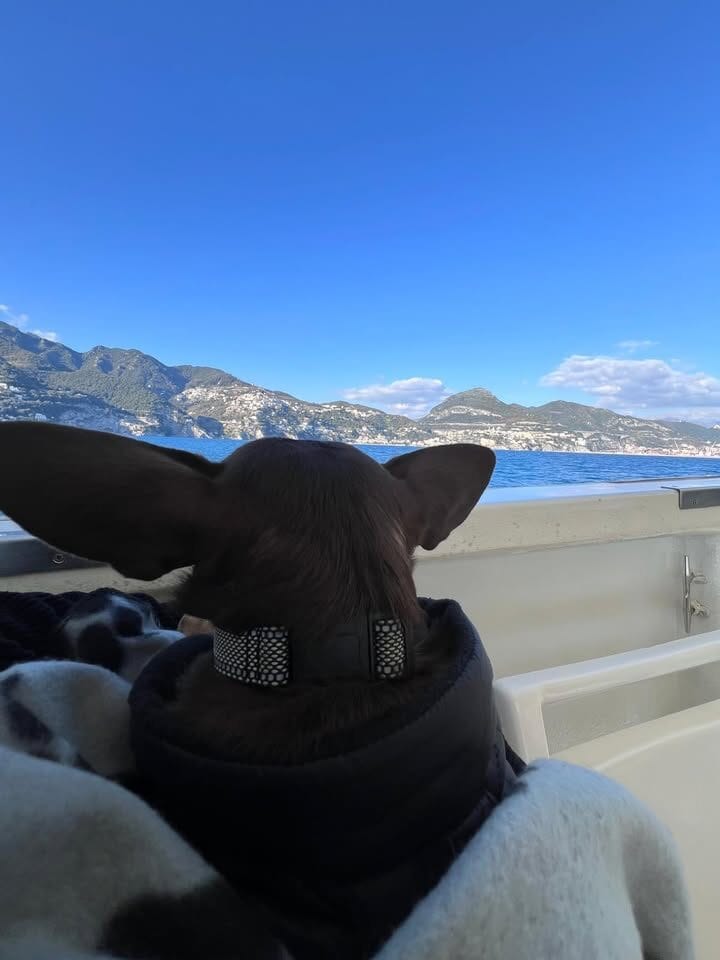
On ferries, traveling along the coastline without restriction
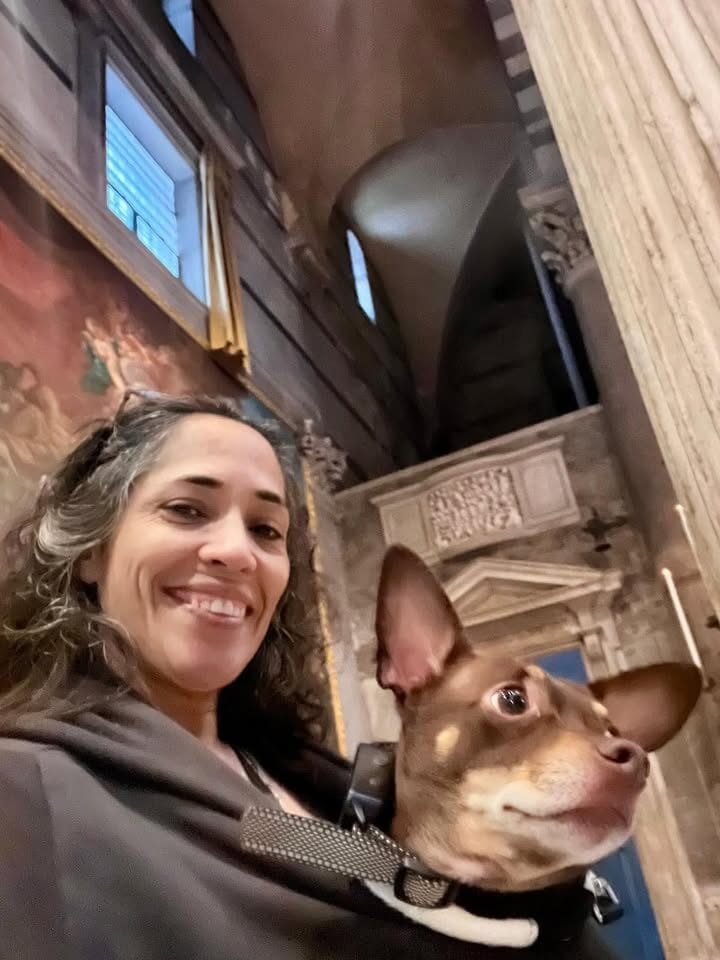
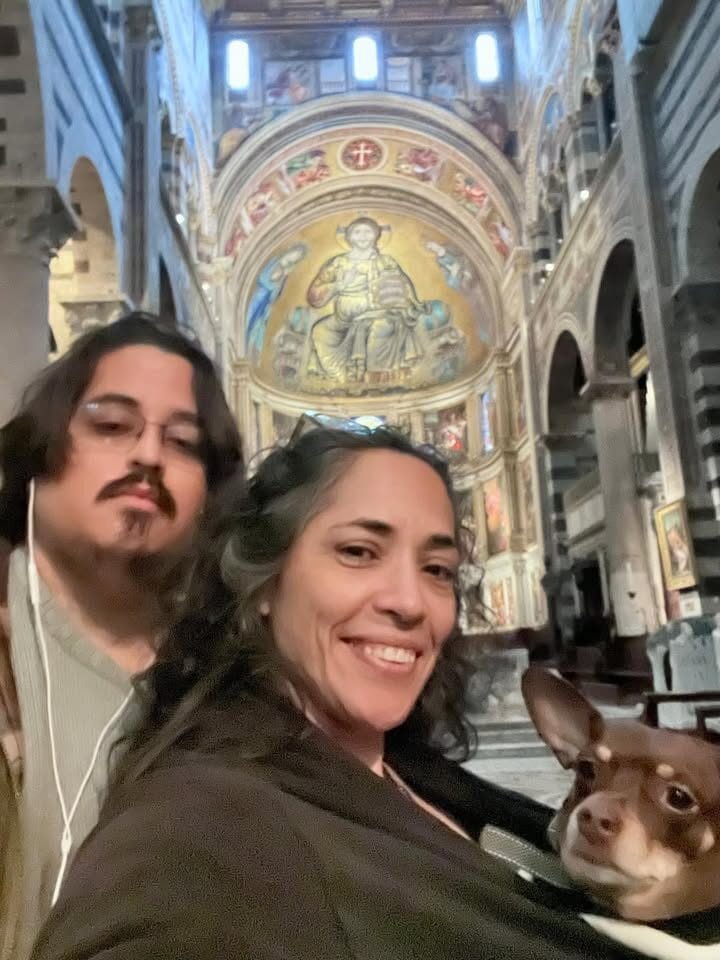
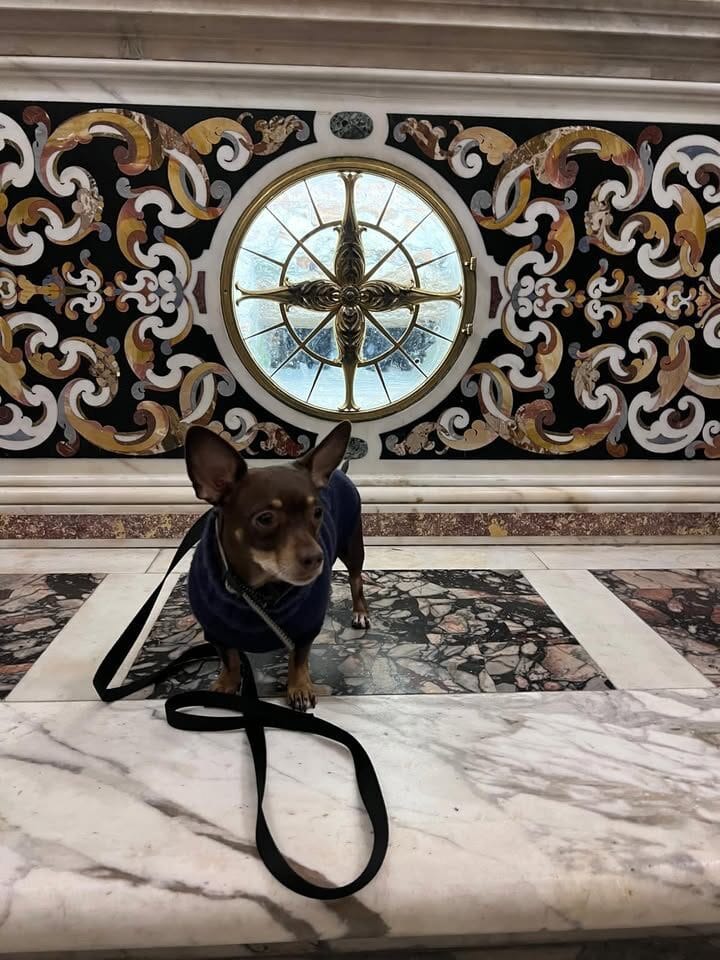
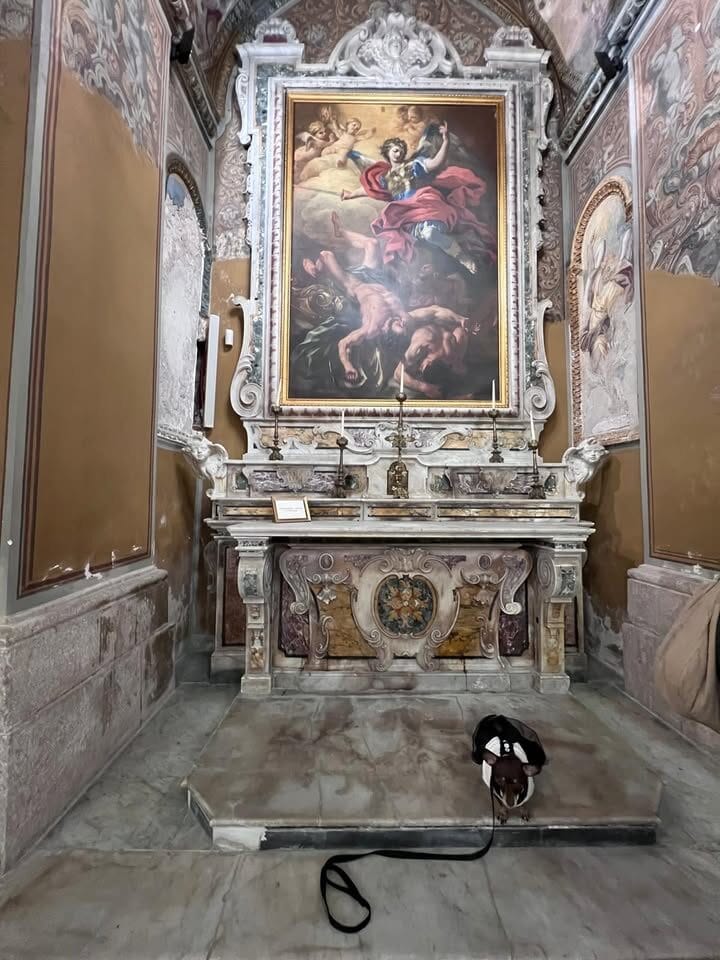
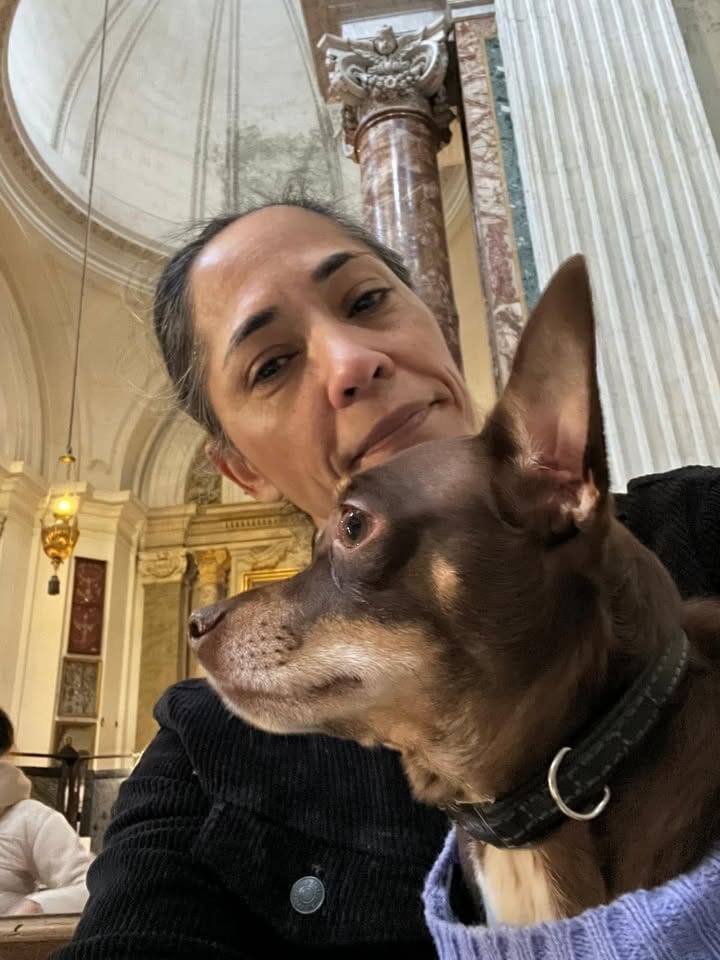
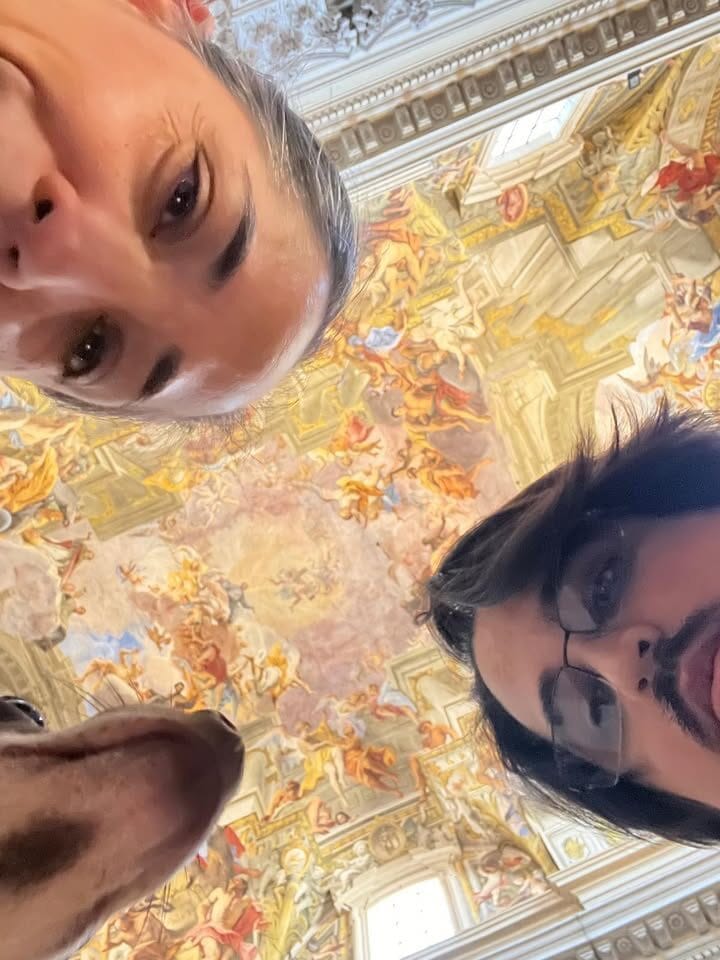
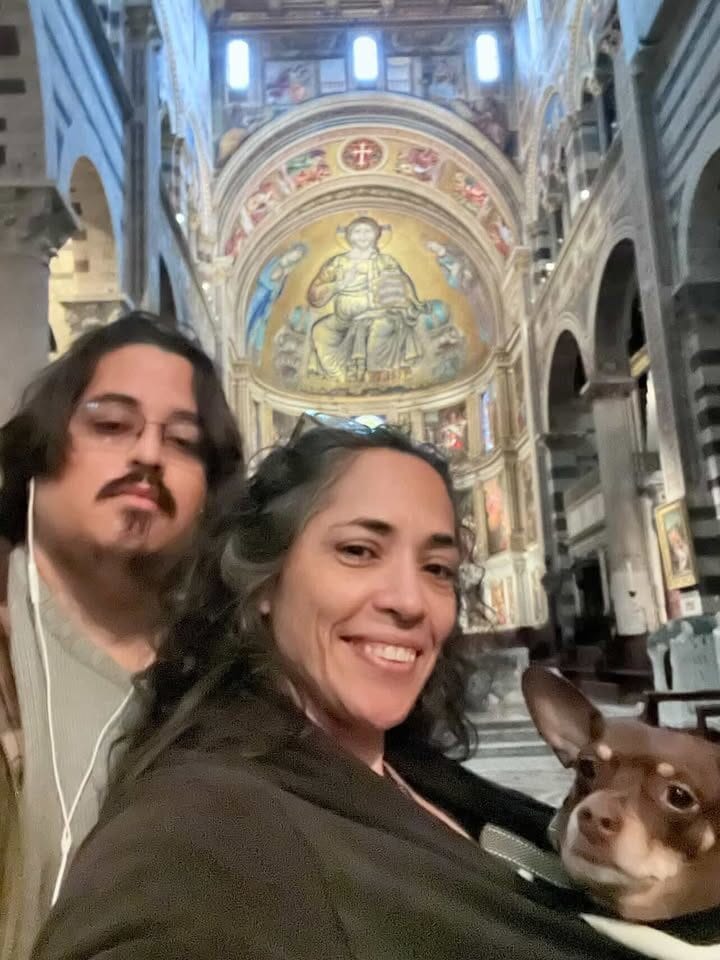
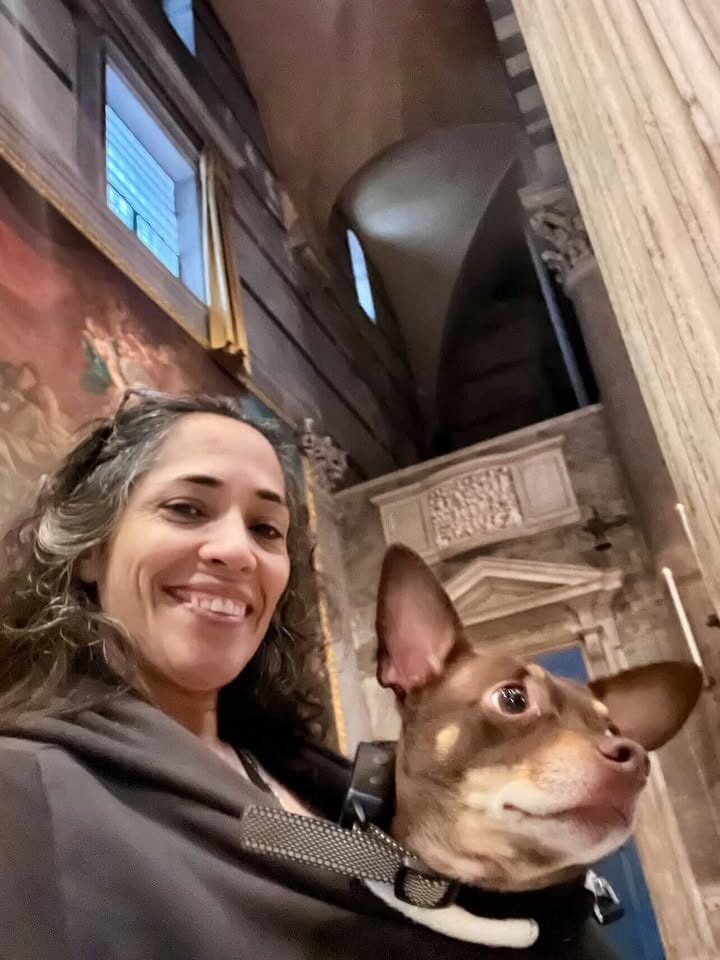
Inside churches, on marble floors in fully indoor formal spaces
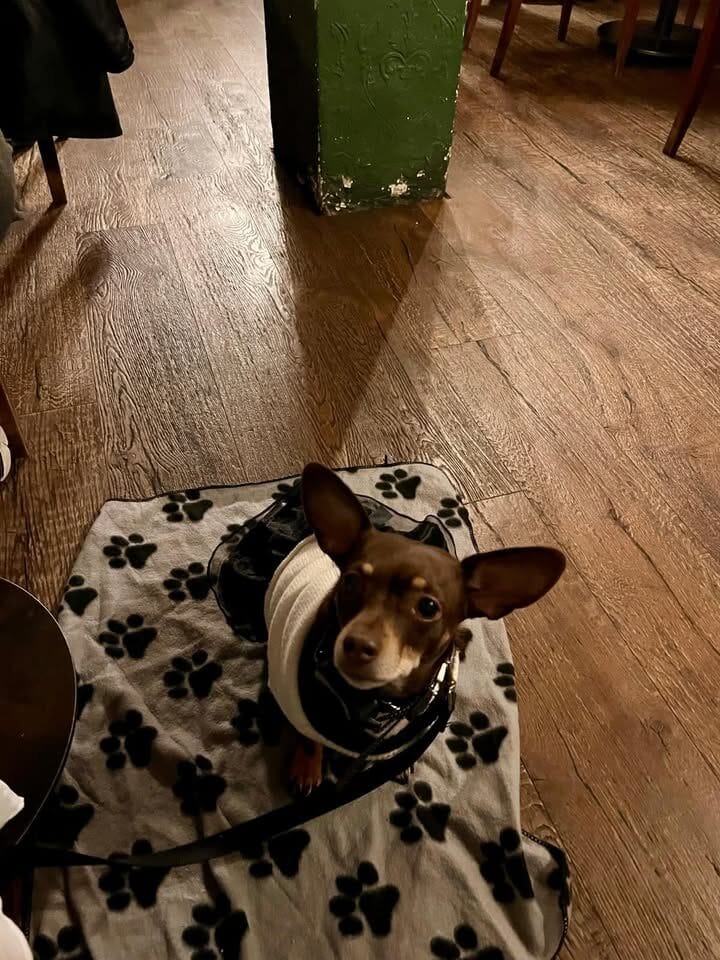
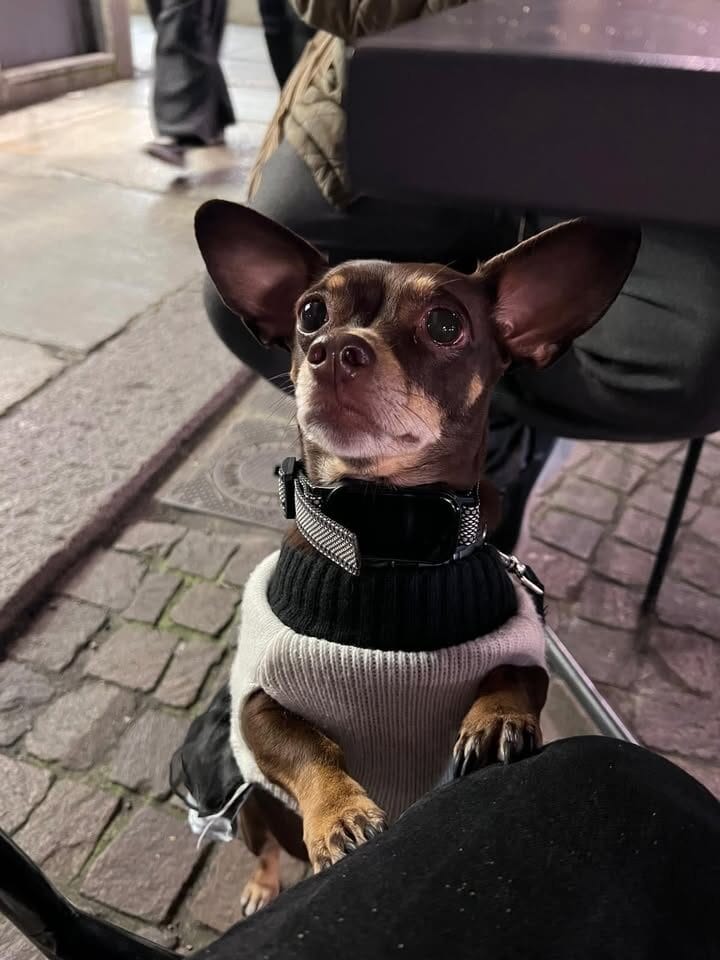
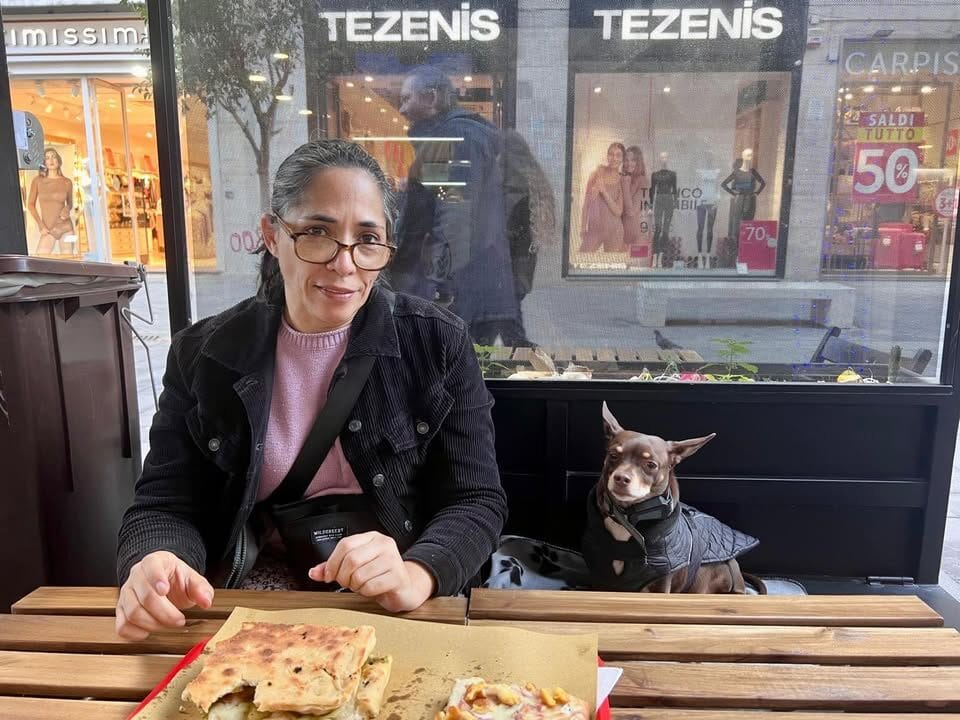
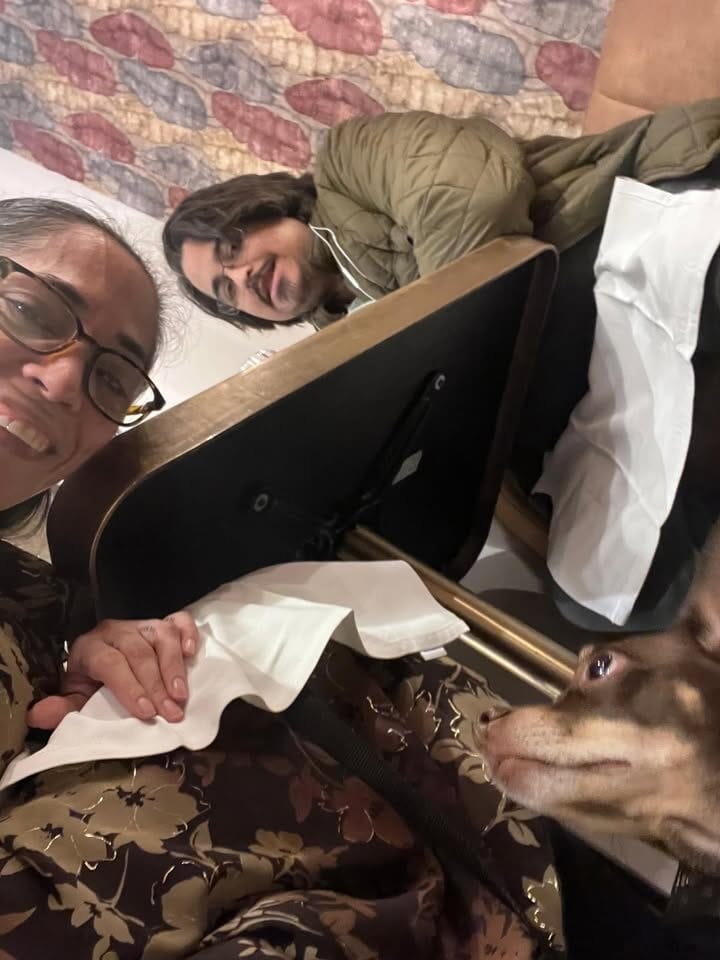
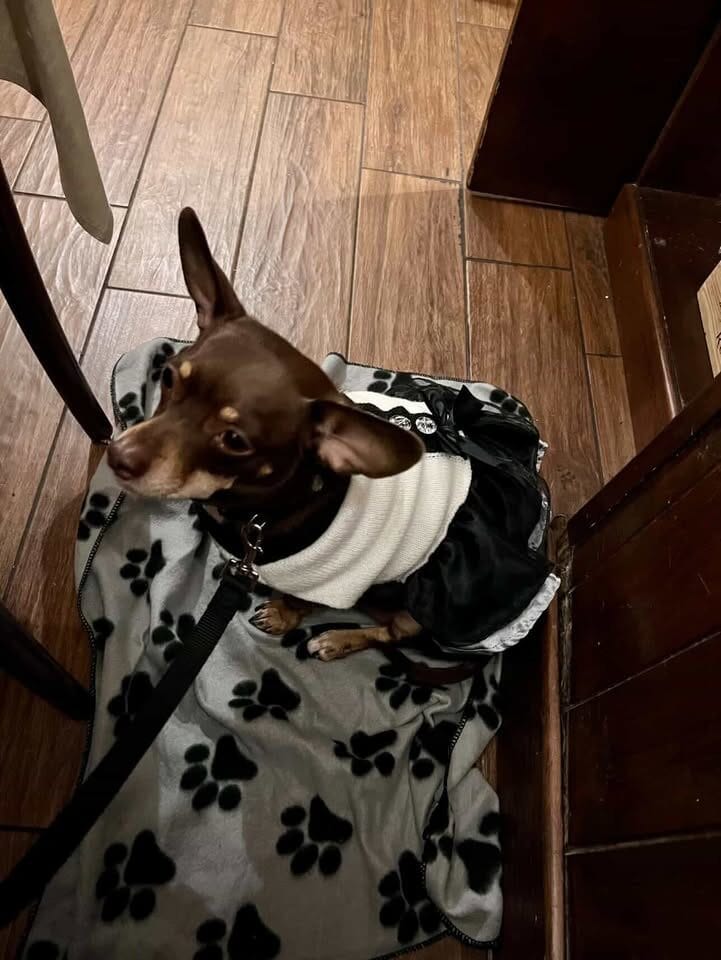
Inside restaurants, settled on a blanket under the table
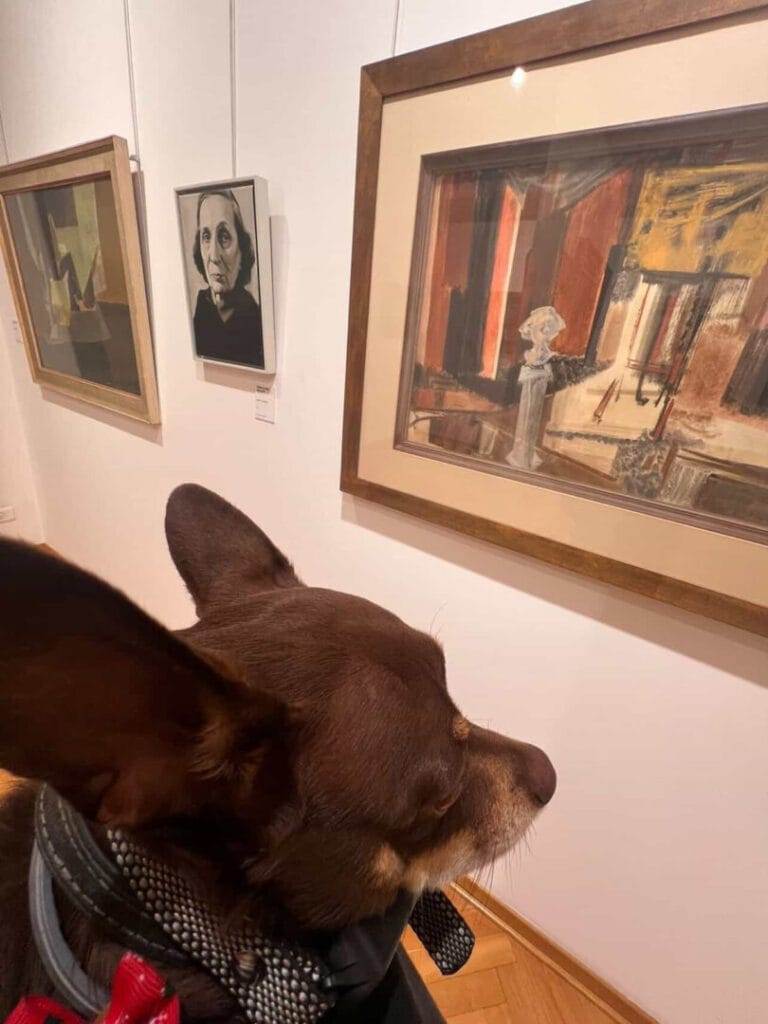
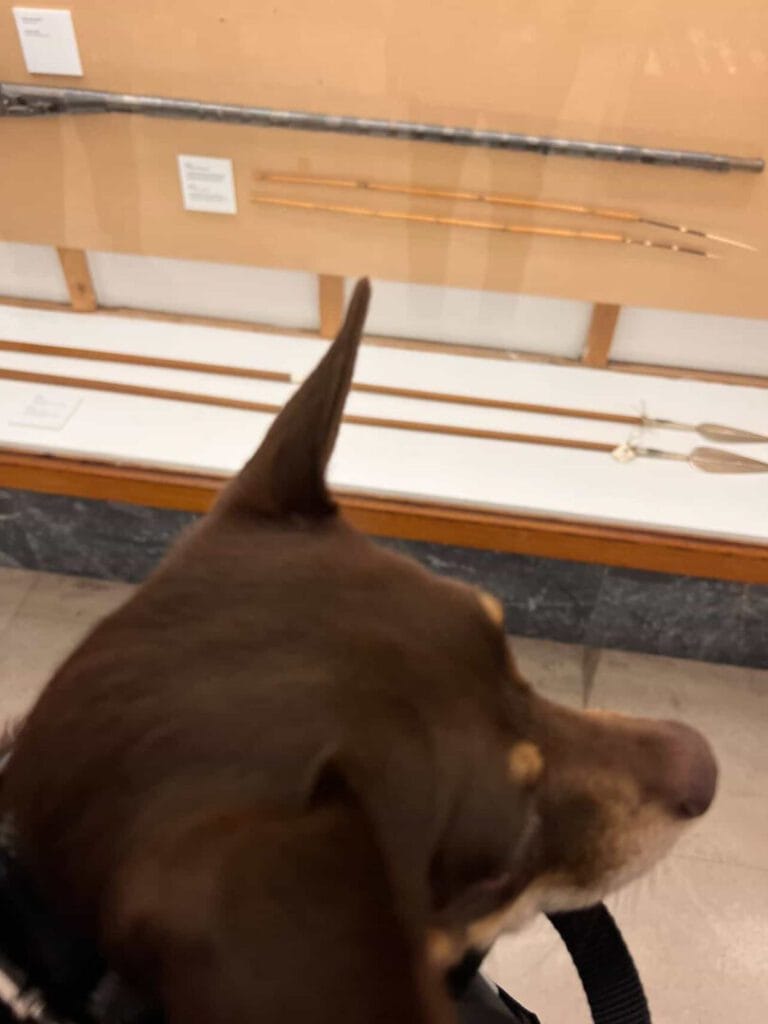
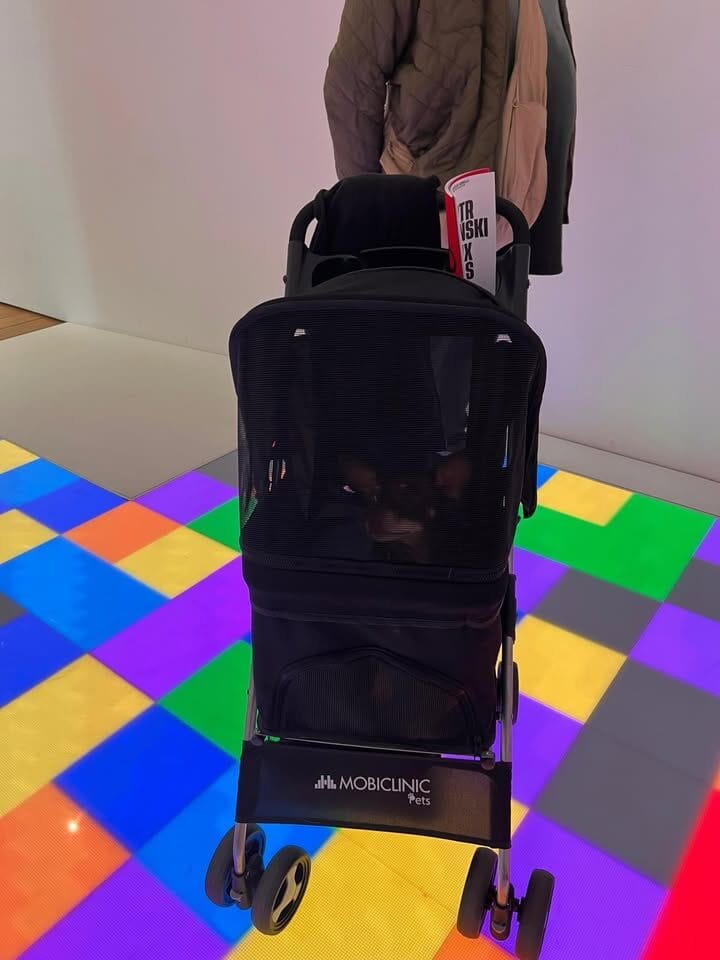
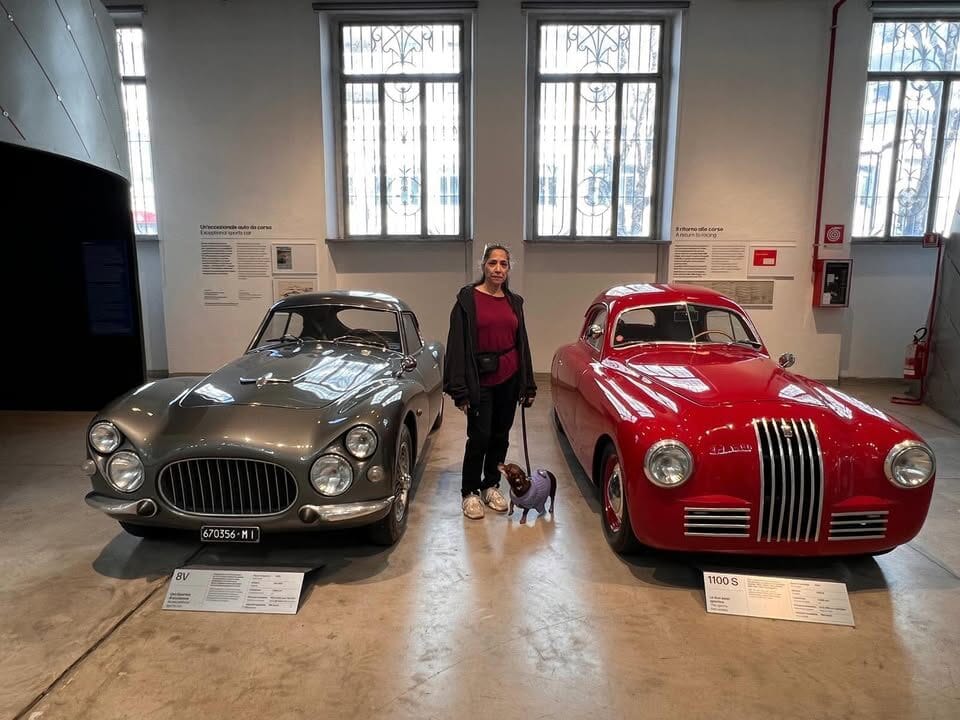
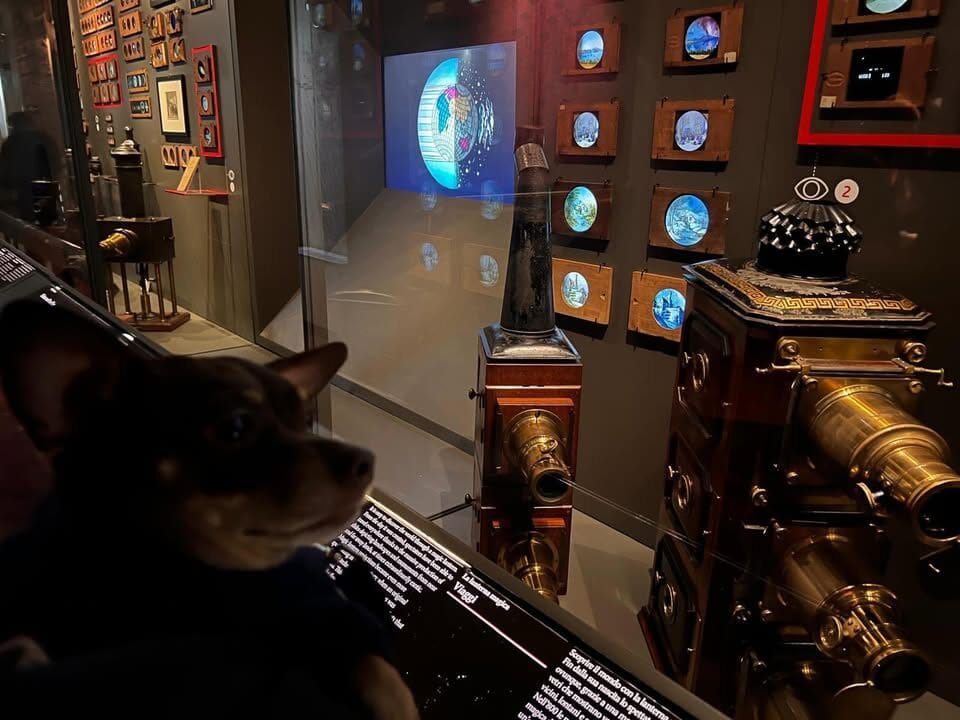
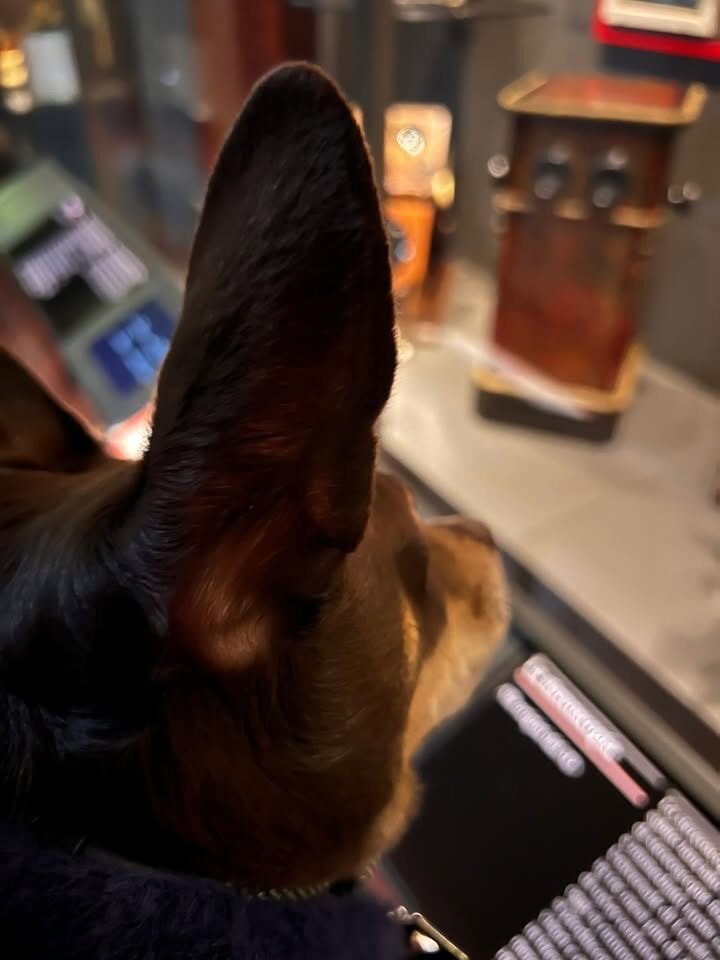
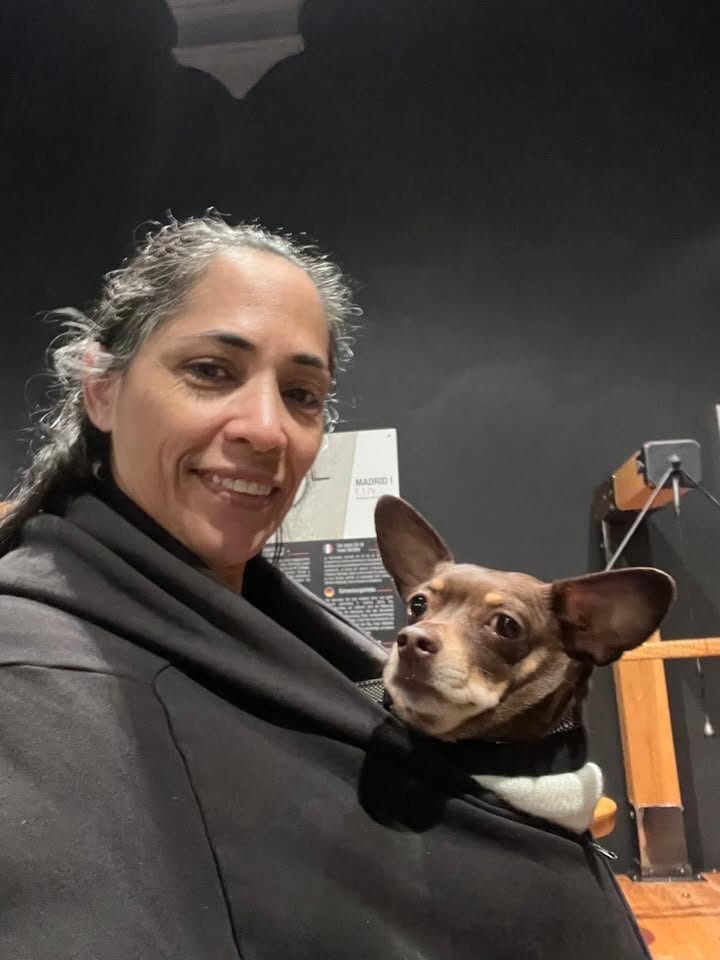
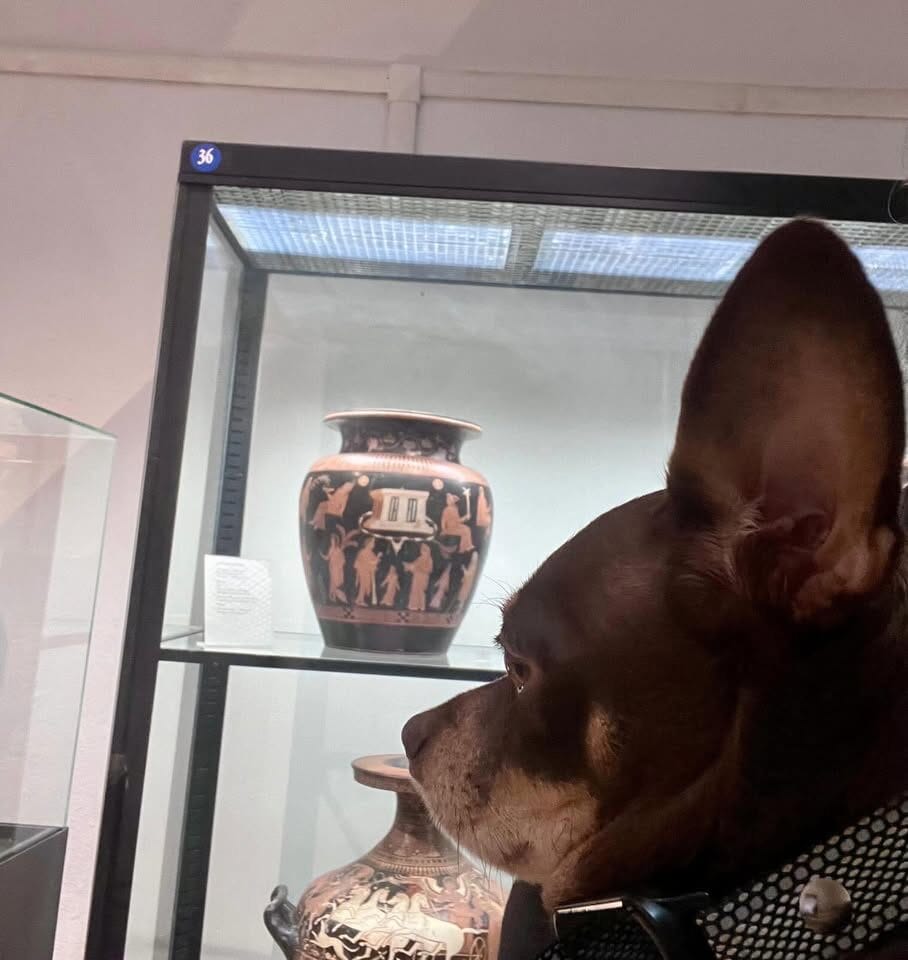
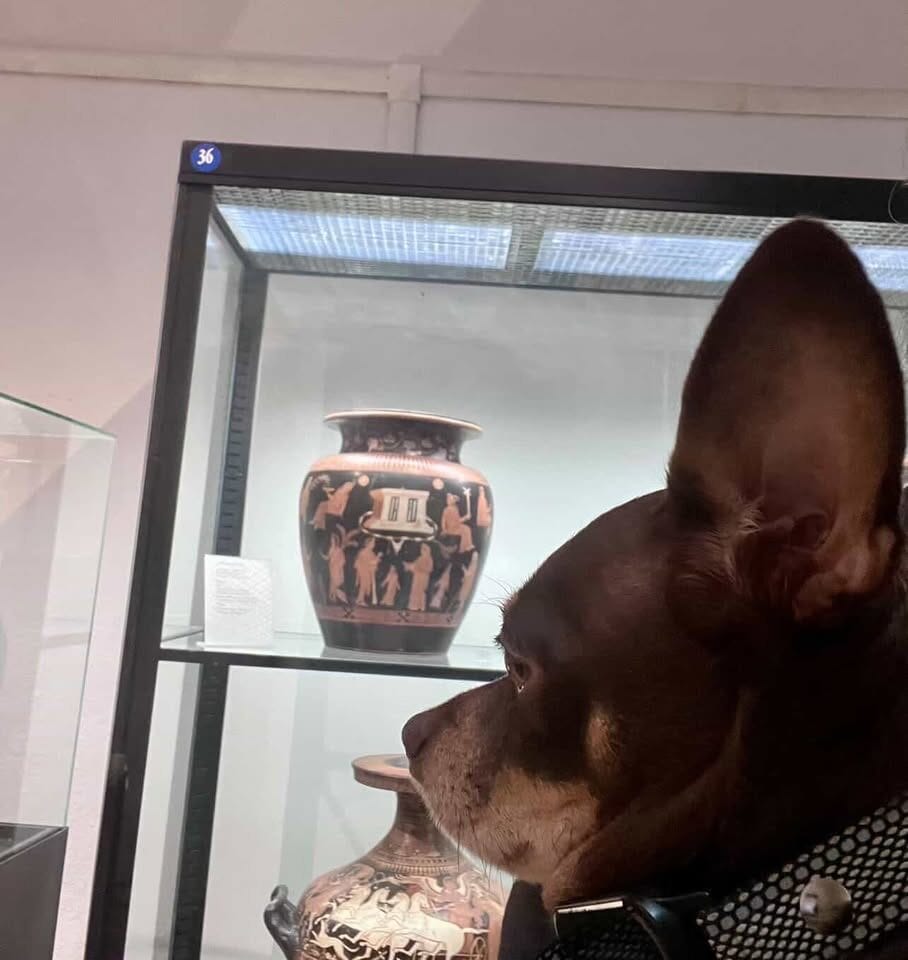
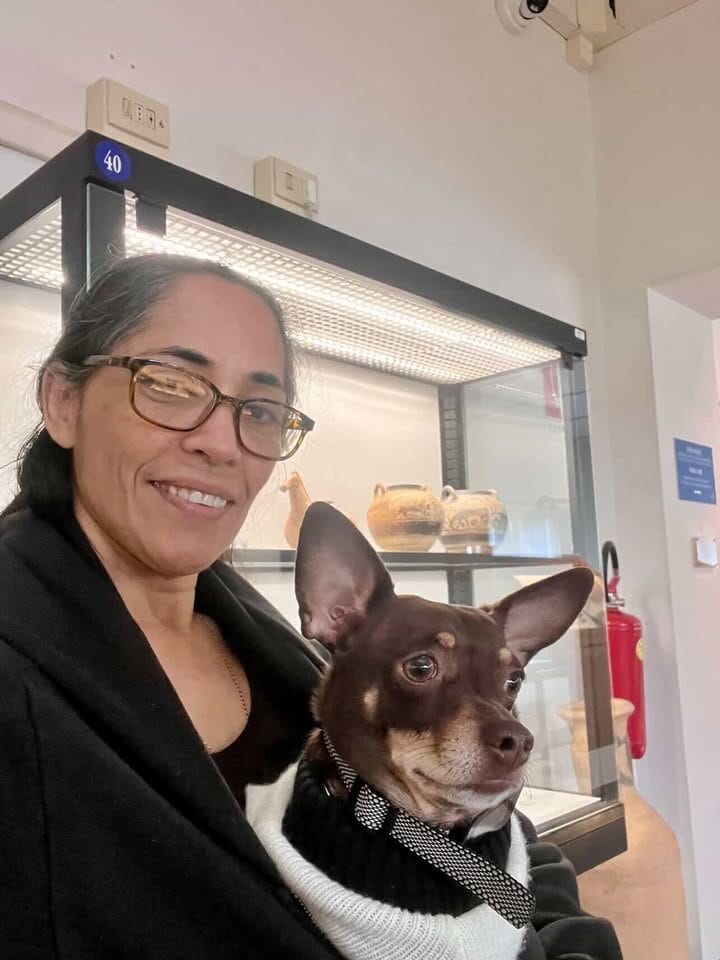
Inside museums and exhibit spaces. At one location, FIAT 500 provided a stroller to make the visit easier at no charge
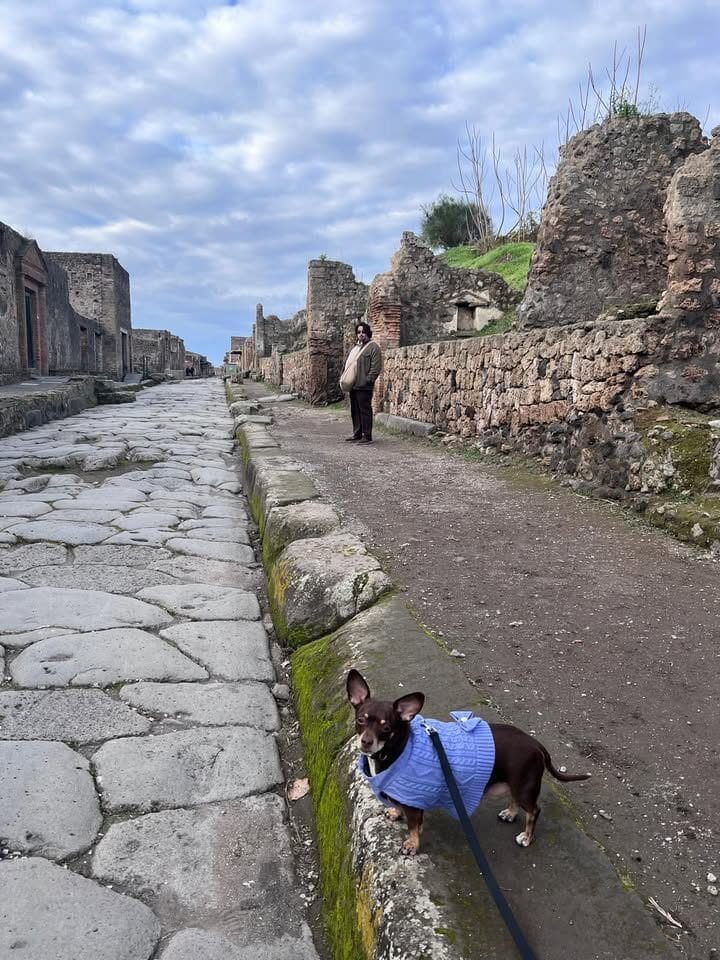
Walking through Pompeii without any issue
In Salerno and Rome, this extended even further into daily life. Supermarkets provide carts designed for dogs, allowing you to shop normally with them, similar to child seating in the U.S.
Because pets are so integrated into daily life in Italy, there is also a growing movement for museums to provide pet care areas where animals can wait during visits. This was not necessary in our case, as Darcy remained with me at all times.
The overall pattern was consistent. No confrontation, no hesitation, no need to advocate. Just access.
The Friction
Friction in Italy is limited and mainly tied to specific institutions rather than general culture.
In Vatican City, access rules are strict. Entry to the Vatican Museums and the Museum Complex of Castel Gandolfo is not permitted for animals, including small dogs. Exceptions apply only to guide dogs for individuals who are blind or partially sighted, and require advance notice at least one day prior, along with specific requirements such as a leash and muzzle.
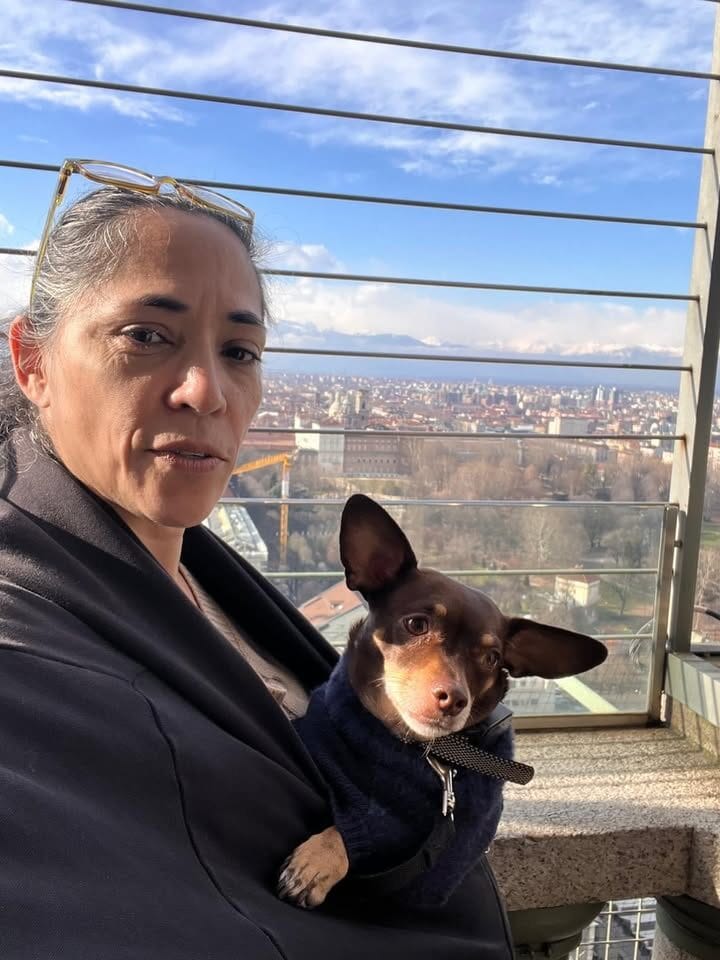
In Turin, issues were more related to staff awareness. Some workers are not fully familiar with service dog policies, which can result in hesitation or incorrect denial at entrances. These situations appear to be misunderstandings rather than actual legal restrictions.
Contacting institutions ahead of time helps prevent these situations.
The Ugly
There is no consistent pattern of hostility.
Negative experiences are limited to isolated misunderstandings. When access is denied, it is typically due to lack of staff knowledge rather than intentional exclusion.
Certified assistance dogs are legally allowed in public venues in Italy, but real-world enforcement can vary depending on the individual at the entrance.
Takeaway
Italy is one of the most reliable countries for traveling with a service dog.
Entry into the country is simple. Transportation, including trains, buses, and ferries, is accessible. Daily life, including restaurants, churches, shops, and even major historical sites like Pompeii, allows dogs without resistance.
Limitations exist mainly in highly regulated institutions such as the Vatican and in occasional staff knowledge gaps.
Outside of those exceptions, traveling with a service dog in Italy feels natural, routine, and uninterrupted.
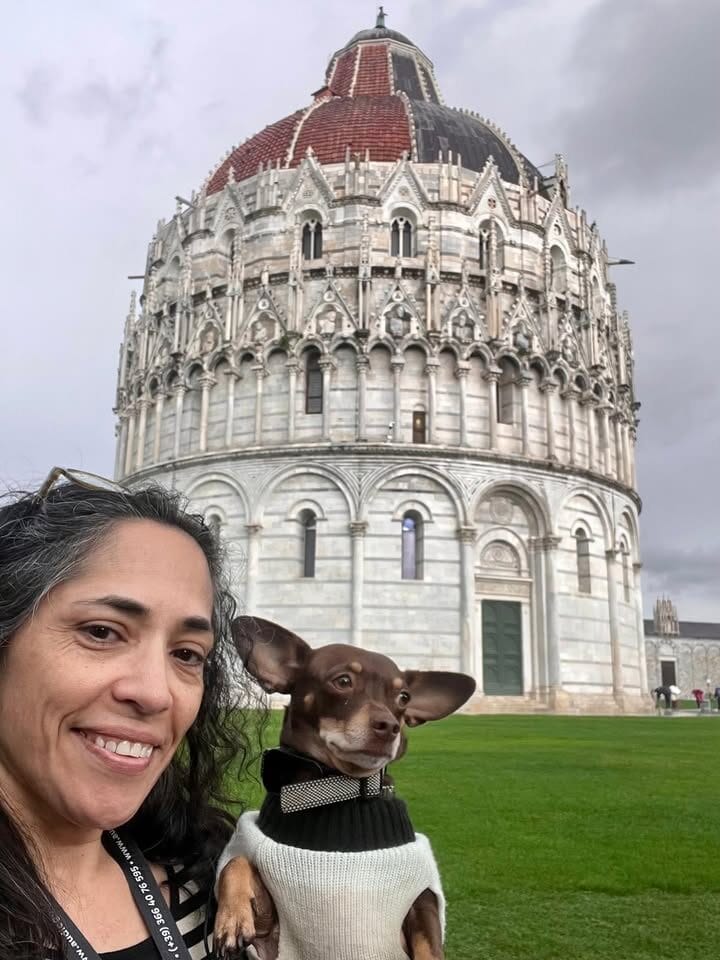
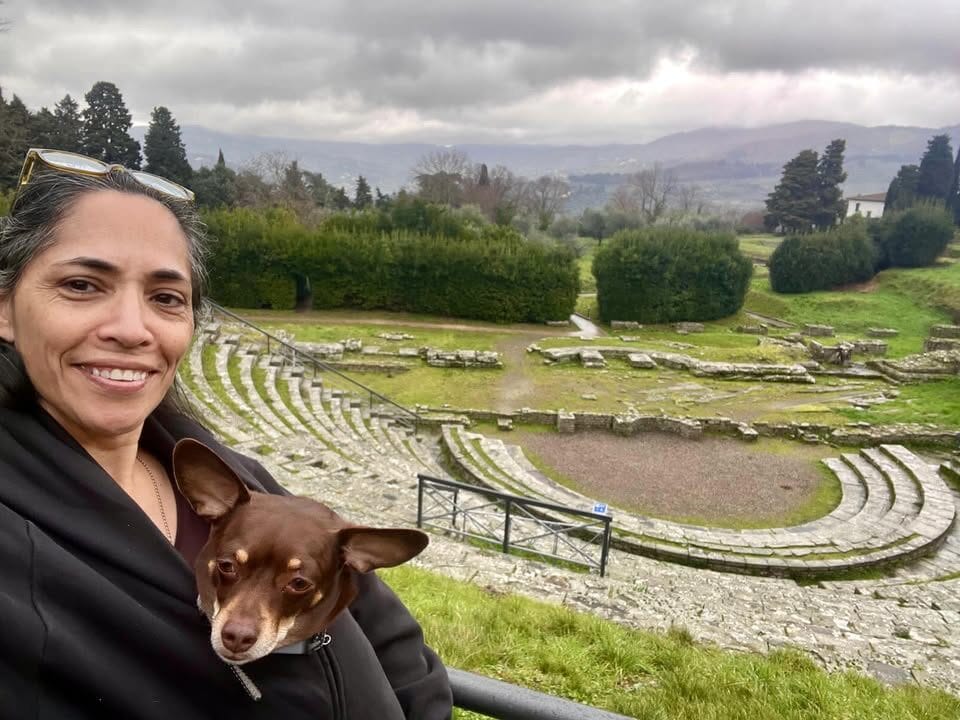
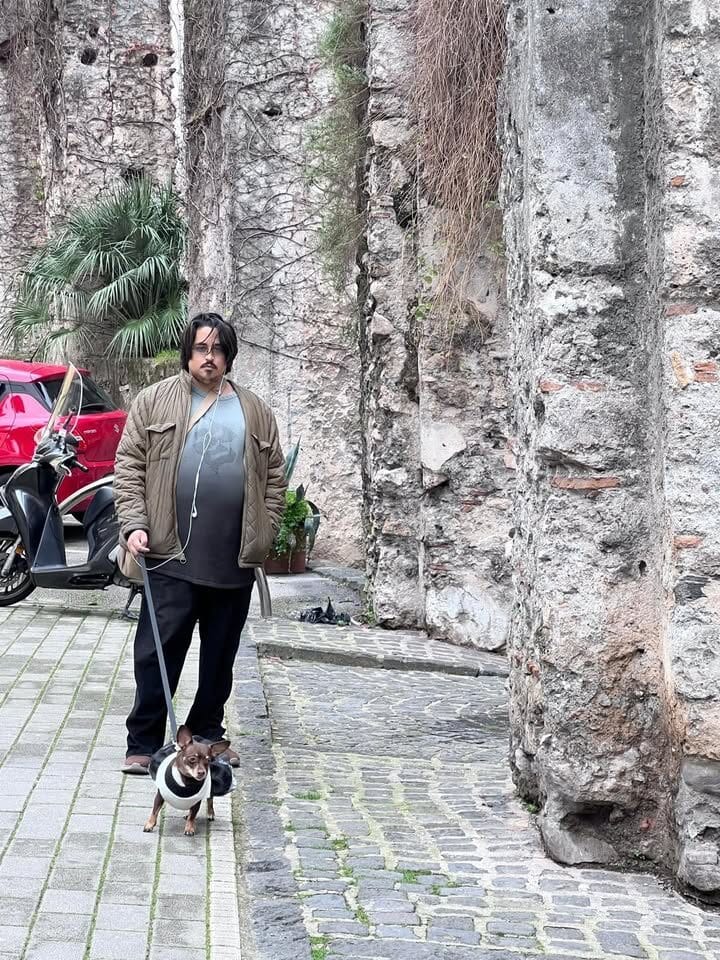
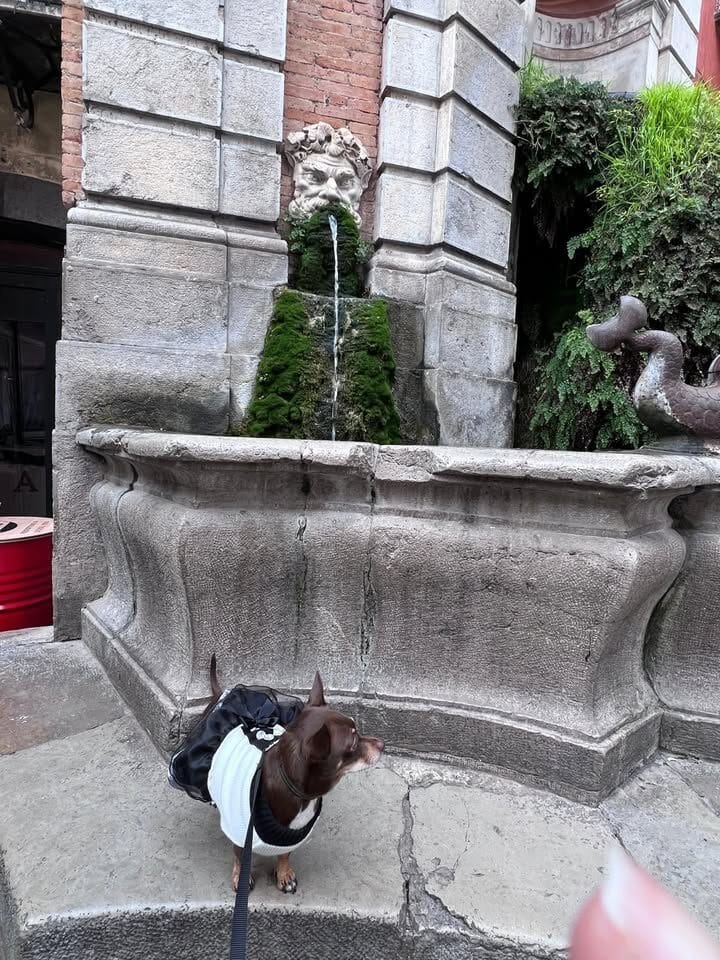
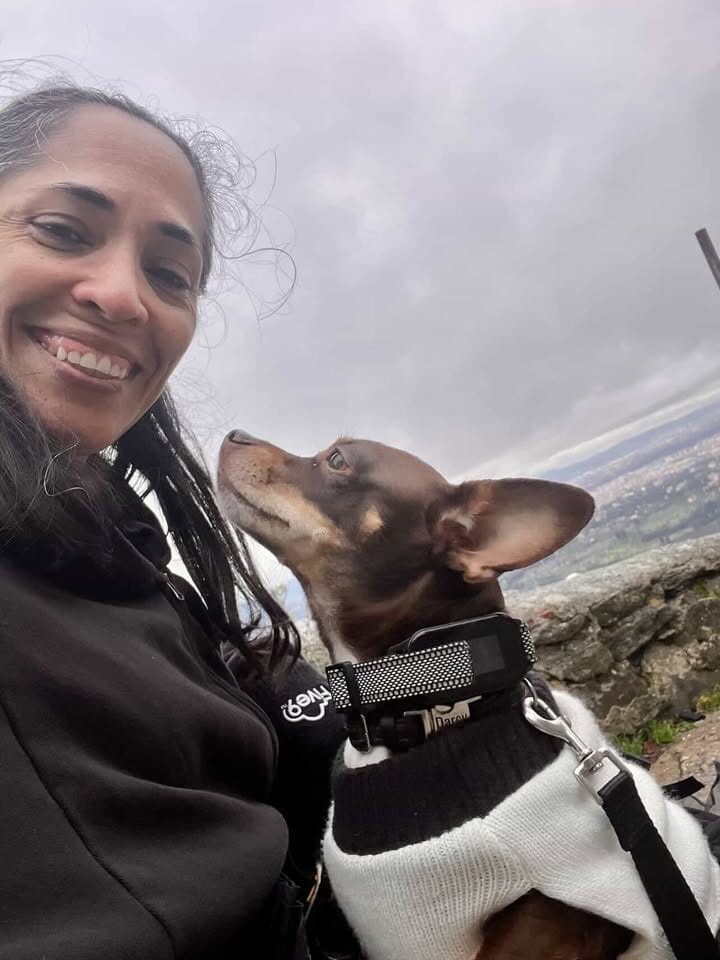
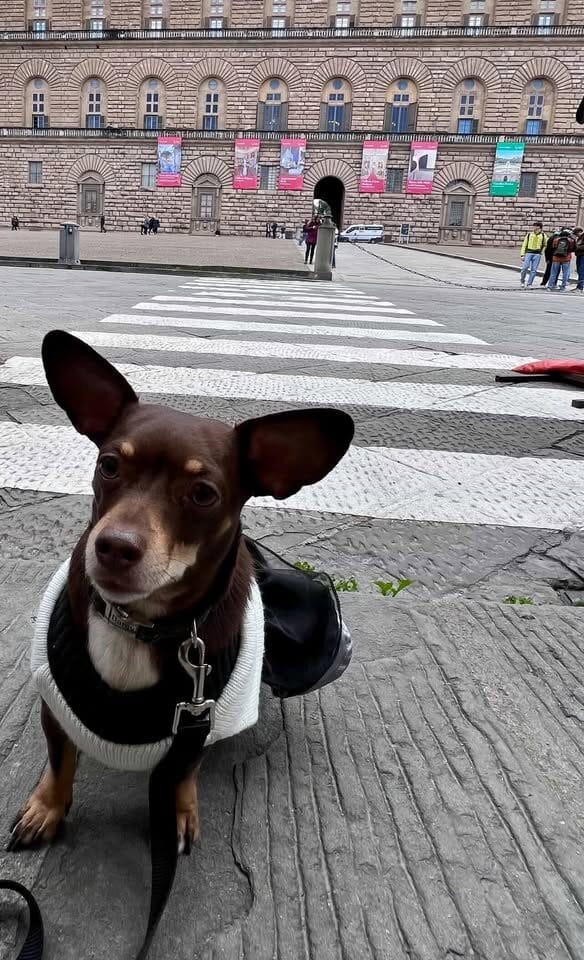
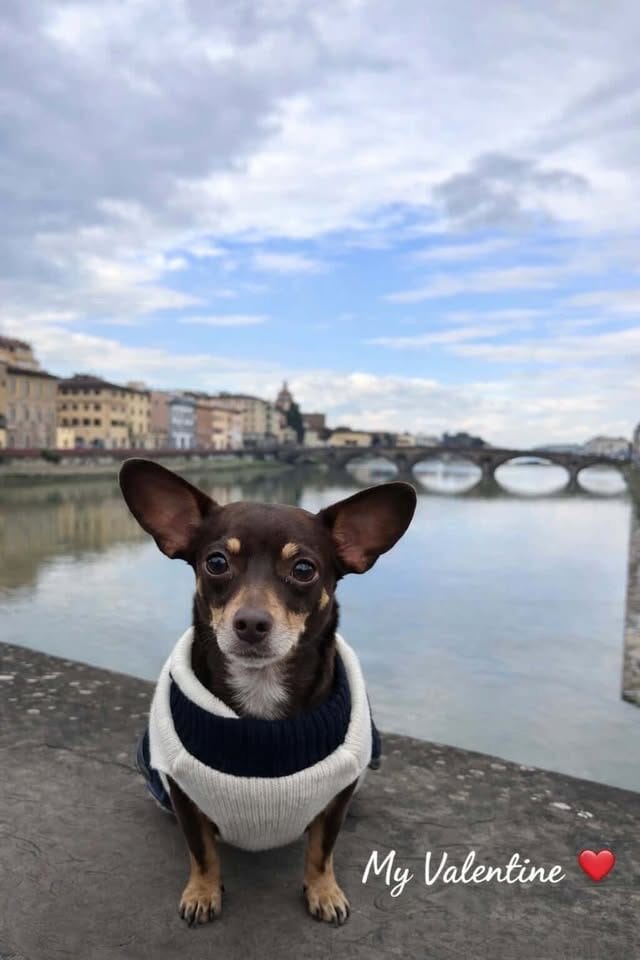
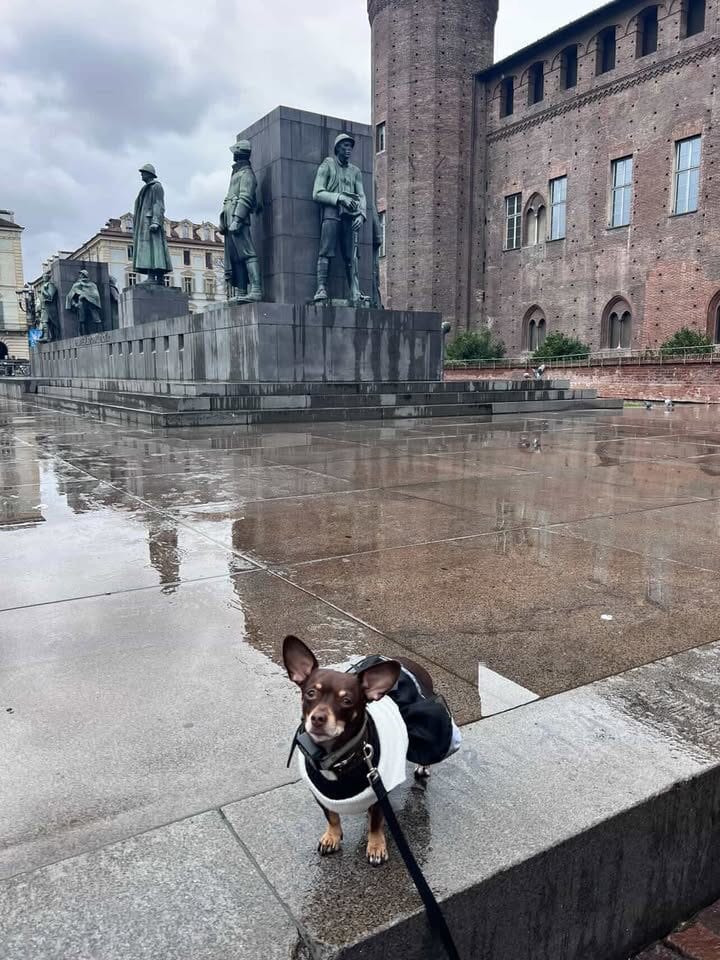
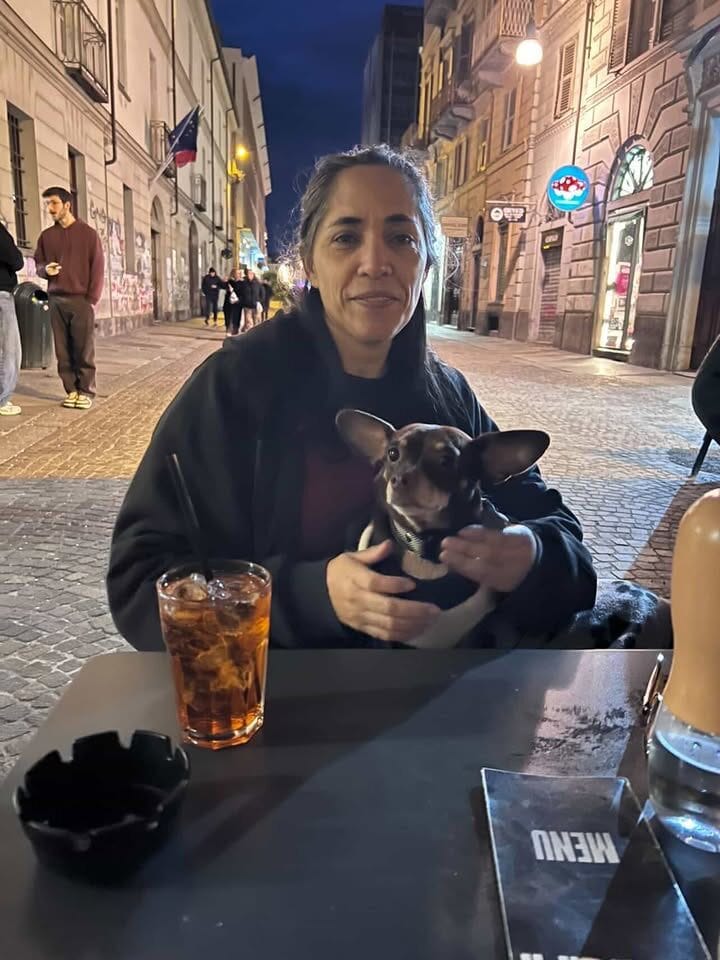
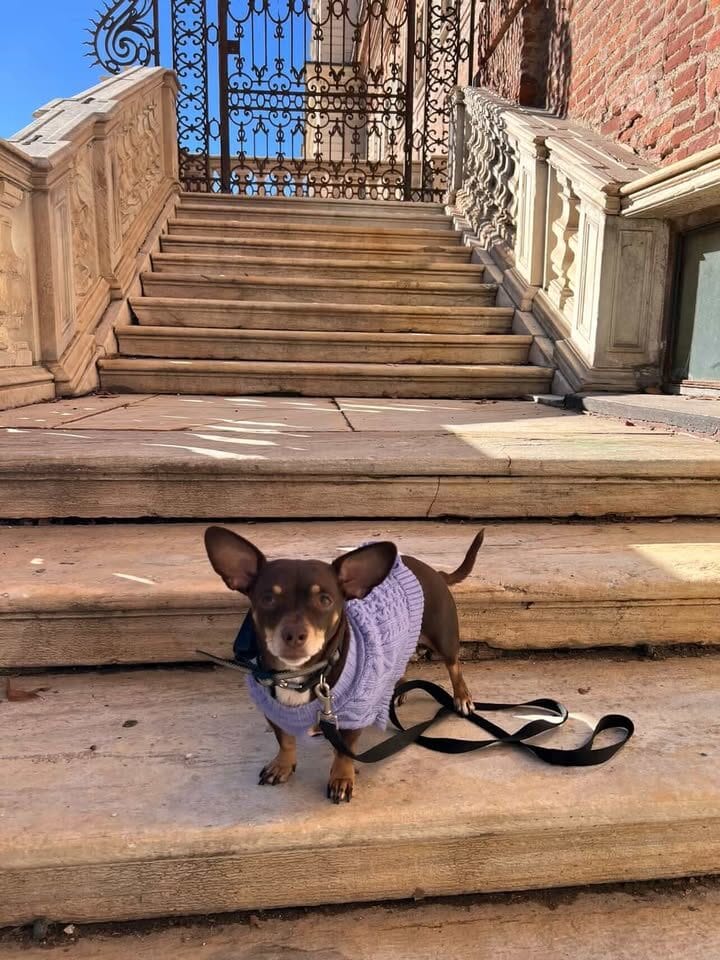
TrainTrainWe took a tour to get to Pisa, she did greatBusAnother train ride to get to PompeiiRestaurant in SalernoFerry to get to Amalfy Coast from SalernoCrypt of Saint Matthew, located beneath the Salerno CathedralAt another ChurchWalking PompeiiChocolate store in SalernoRestaurant in RomeAnd another train ride, we love the fast trains to get everywhereMuseumMuseumExploring TorinTorin at the Palace GardenTook Darcy shopping, she picked this dress
Italy → Switzerland (Sion Vet + Rabies Titer Process)
The Good
Leaving Italy with Darcy felt effortless. By that point, having her with me everywhere had stopped feeling like something I had to think about. She had already been on trains, inside restaurants, walking through crowded streets and quiet towns without anyone questioning her presence. It had just become normal.
Switzerland, though, wasn’t just another stop. It was where I needed to deal with something I had been quietly tracking in the background the entire time.
The U.S. health certificate has limits. It allows entry into the EU for 10 days, and after that it functions as a travel document for up to four months, or until the rabies vaccine expires, whichever comes first. My trip was about six months, which meant I was going to fall out of compliance no matter what. It wasn’t a maybe. It was guaranteed.
The plan was to try to get Darcy an EU pet passport and avoid that issue entirely.
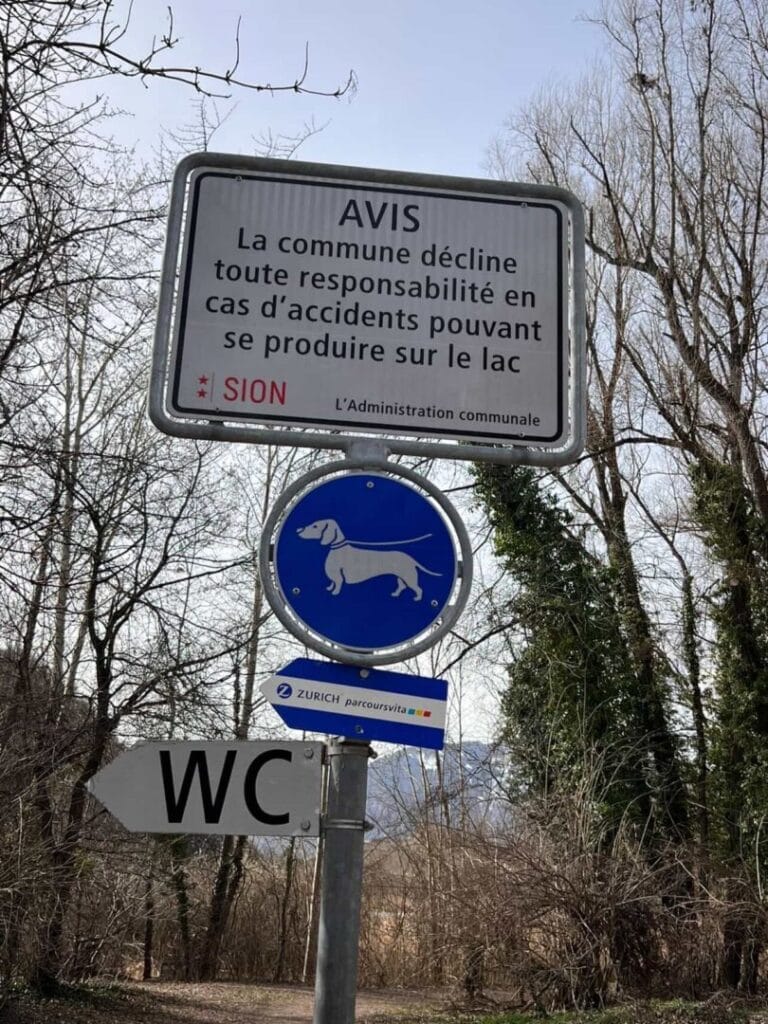
In Sion, I found a vet and decided to try. I had already learned that nothing about traveling internationally with a dog is as straightforward as it sounds online. The visit itself turned into something I had to work through more than something that just happened.
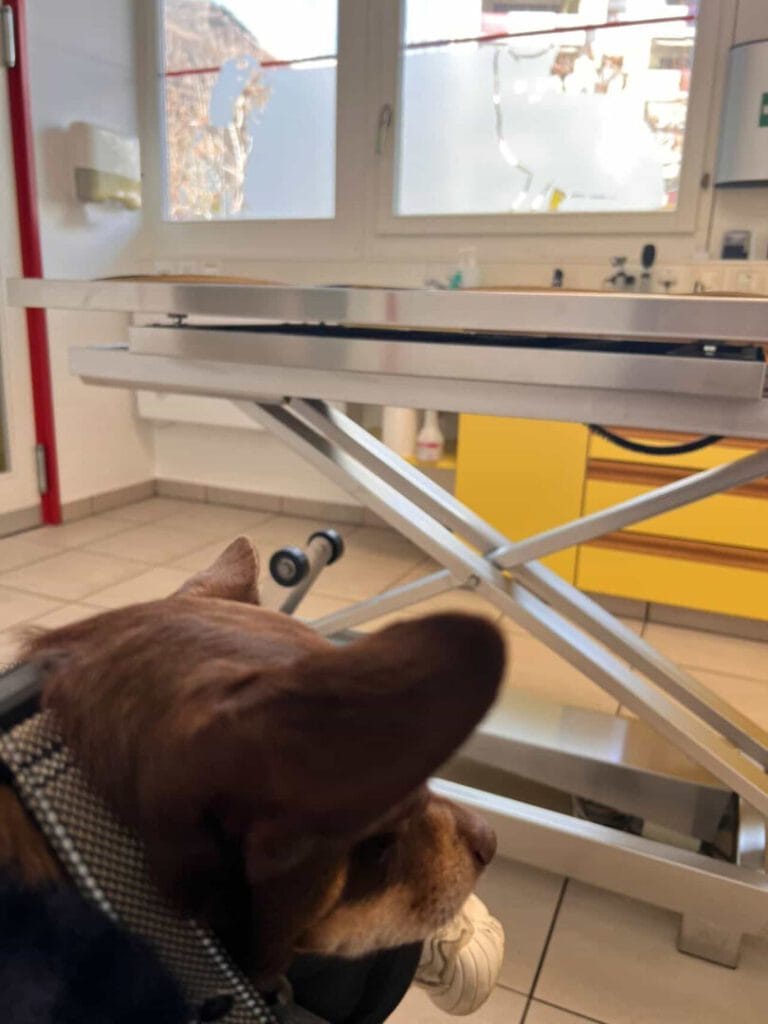
Darcy waiting at the Vet office
I’ve been studying Italian on Duolingo for over a year, and that ended up being the only reason I was able to navigate the appointment at all. The vet spoke German and French, not English, so everything came down to broken Italian, repeating the same questions in different ways, and slowing the conversation down enough to make sure I wasn’t missing something important.
That only worked because Sion is about two hours from Milan by train. Being that close to Italy meant Italian was widely understood, even if it wasn’t the main language. Without that, the visit would have been significantly harder, especially given how specific and technical the requirements were.
The answer about the EU pet passport was immediate. He couldn’t issue one. The explanation was tied to how the system works. EU pet passports are issued within the EU veterinary system and generally require residency or some form of local registration. Passing through as a traveler wasn’t enough.
So that option was gone.
Instead, he shifted the conversation to my actual route. Italy, Switzerland, Germany, then Serbia, Montenegro, Albania, and eventually back into the EU. That’s when the real issue came up.
Re-entering the EU after going into certain non-EU countries requires a rabies antibody titer test.
Not optional. Not something you can fix later.
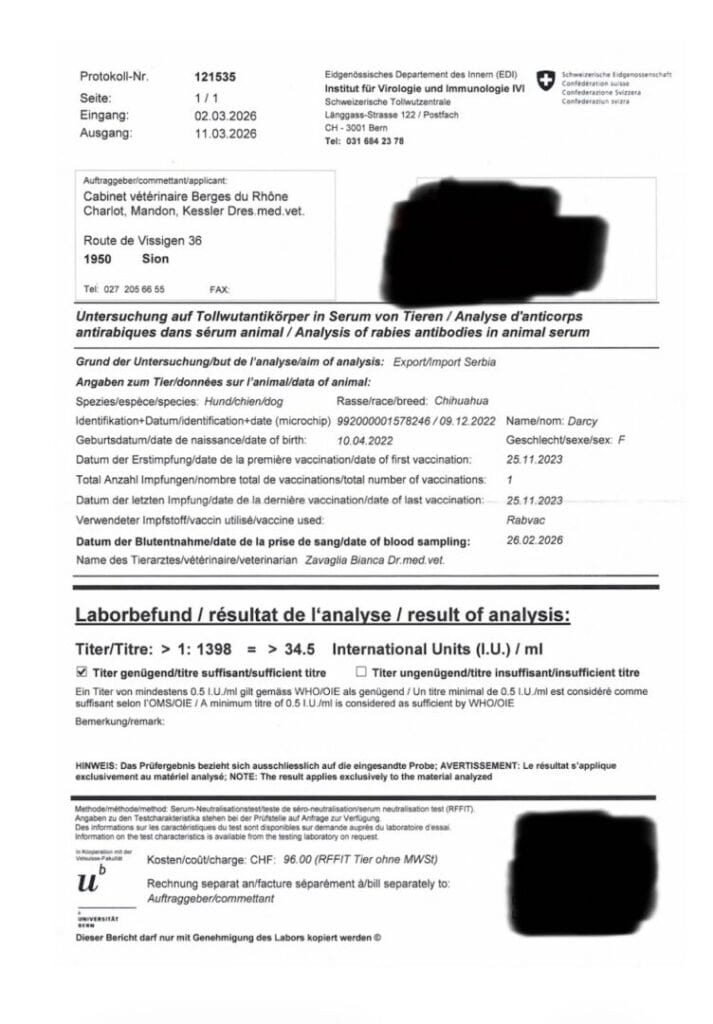
He drew Darcy’s blood that same visit. The sample had to be sent out to an approved lab, and I was told the results would arrive by email in about two weeks. There was no tracking, no portal, nothing to check in the meantime. For something that determines whether your dog is allowed back into the EU, it felt like you just had to trust the process and wait.
I left not fully sure if everything had been done correctly, just hoping it had.
Exactly two weeks later, the email came through. The result was there, valid, documented. That moment removed a level of uncertainty I hadn’t realized I was carrying.
The titer is valid for the entire life of the animal as long as you don’t let the rabies vaccination expired.
Outside of the paperwork, Switzerland itself was easy with Darcy. We walked a lot, and she handled it without any issue. Restaurants were consistently accommodating. Without asking, they would bring her a water bowl, even though I always carried her water, food, and her blanket just in case.
She adjusted quickly to the rhythm of it. At some point, she started assuming that passing a restaurant meant we were going inside. She would start turning toward the entrance on her own, like she already knew.
The Friction
The biggest challenge was communication, especially during the vet visit. Not everyone spoke English, and this wasn’t a situation where you could afford to misunderstand details. Every requirement mattered, every date mattered, and getting something wrong wasn’t really an option.
Using Italian helped, but it required effort. Repeating things, confirming again, making sure we were actually talking about the same requirement and not just thinking we were.
There was also the realization that being physically in Europe doesn’t mean you can get an EU pet passport. That assumption didn’t hold. Without residency or a qualifying registration pathway, it simply isn’t issued.
Switzerland also felt different from Italy in a way that was hard to miss. In Italy, Darcy felt fully integrated into everyday life. In Switzerland, she was allowed everywhere I needed her to be, but there was a subtle shift. It felt more structured. Like there were clear rules behind the scenes, even if no one was actively enforcing them in front of you.
It wasn’t restrictive, just more controlled.
The Ugly
The rabies titer test is where everything becomes rigid, and the timing is not flexible.
It’s not just about doing the test. It’s about when you do it.
The dog must already have a valid rabies vaccination, and you have to wait at least 30 days after that vaccine before the blood can be drawn so the antibodies are detectable. Once the blood is drawn, a three-month waiting period begins before you can re-enter the EU from certain non-EU countries.
That three-month clock starts on the date of the blood draw, not when you receive the results.
If that timing is off, there is no fix. You either delay your travel or you cannot legally bring your dog back into the EU.
This applies to countries like Serbia, Montenegro, and Albania. There’s no workaround at the border, no exception you can explain your way through.
While waiting for the results, there’s also no real visibility into the process. You don’t know if the sample was handled correctly or if the antibody levels will meet the requirement. You just wait.
And until that email arrives, everything downstream feels uncertain.
Takeaway
Switzerland was smooth in terms of day-to-day life with Darcy. No access issues, no friction moving around, no problems in restaurants or public spaces.
But the real challenge wasn’t access. It was compliance and timing.
The U.S. health certificate has a defined limit, and for longer trips, that limit matters. EU pet passports aren’t guaranteed for travelers, even if you’re already in Europe. And the rabies titer test has fixed timing requirements that have to be planned months in advance.
Doing it in Switzerland, at that exact point in the trip, made everything else possible.
If your route includes leaving and re-entering the EU with a dog, this is the step that determines whether your trip continues or stops.
It’s not something you can leave for later.
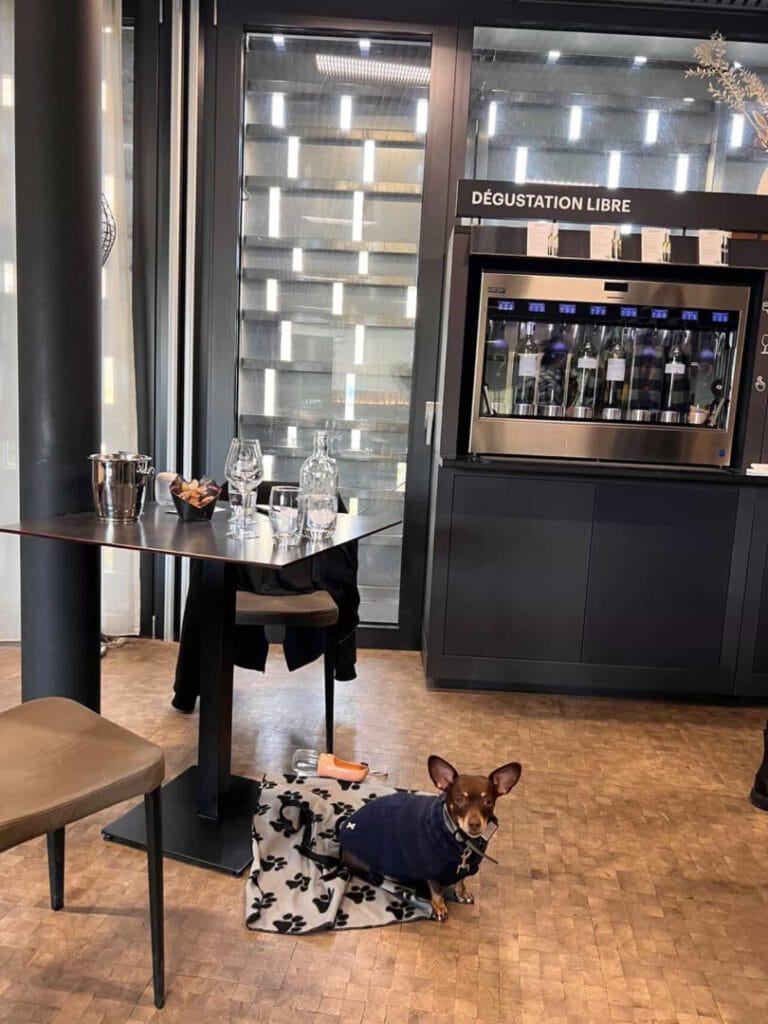
At a vineryWalking in a parkInside the tasting room at the winery
Serbia: Learning the Hard Way with a Service Dog (Belgrade)
I arrived in Belgrade expecting a continuation of what I had experienced across Italy and Switzerland. By that point, traveling with Darcy, my service dog, had become routine. Access was predictable. Even when rules existed, they were applied consistently.
Within the first day, that assumption collapsed.
Not gradually. Immediately.
The Ugly
The first incident happened at the Natural History Museum of Serbia.
I was stopped at the entrance.
Not questioned. Stopped.
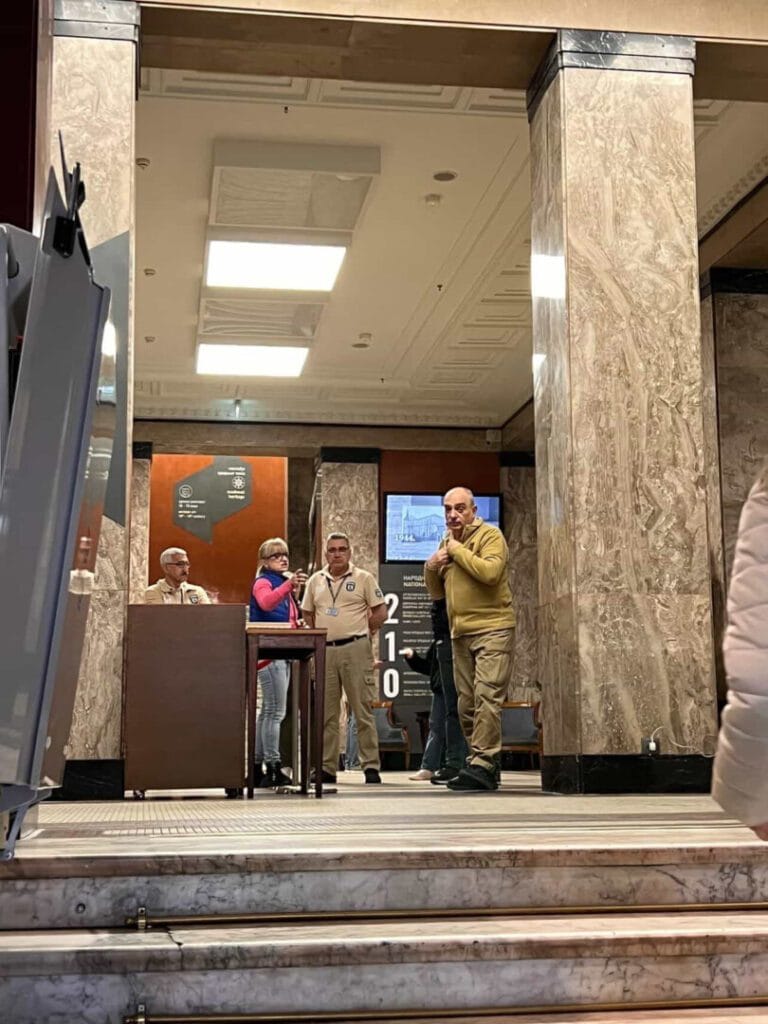
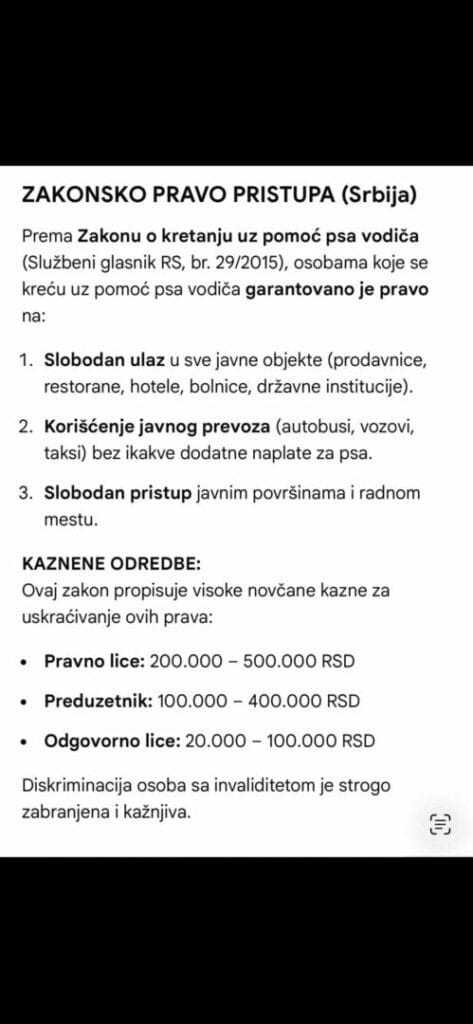
Four staff members were involved. There was no attempt to understand or clarify. The answer was immediately no. I tried to show the service dog law on my phone. The guard refused to read it. There was no discussion, just dismissal.
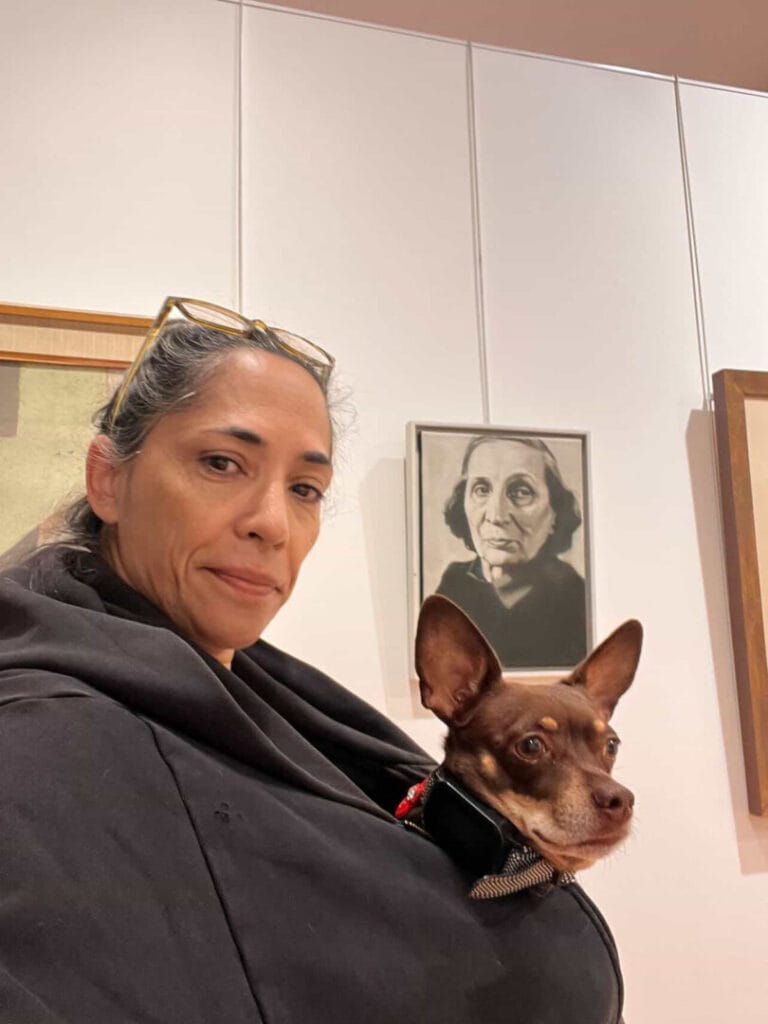
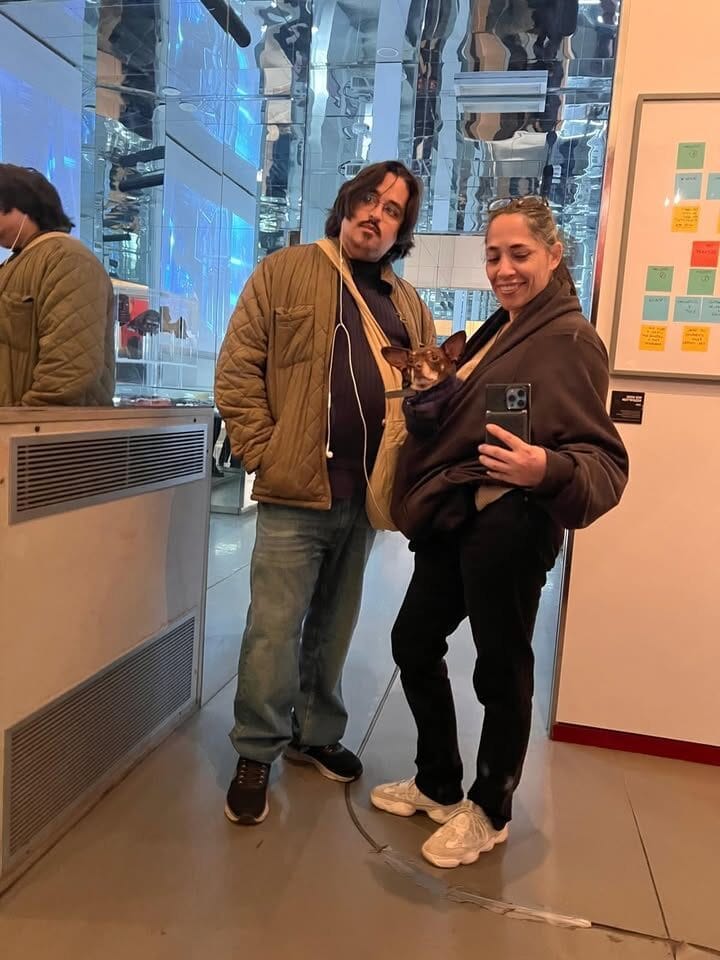
Here you can see a picture of the 4 individuals that stopped us at the museum.
The tone escalated quickly.
At that point, I was no longer trying to negotiate entry. I was trying to stabilize the situation. The interaction became so intense that I had a panic attack. I was crying, lightheaded, and close to fainting.
That is what access denial looked like in practice.
After leaving, I followed up by email. Dorotea Asceric responded, stating that institutions like the Louvre and the British Museum follow similar restrictions regarding service dogs. (email exchange bellow)
Stopped at the door. Immediate denial. No attempt to understand.
That was the moment the pattern became clear.
Not isolated. Not a misunderstanding. A system.
The Adjustment
After two back-to-back denials on the same day, I stopped assuming access and started contacting places in advance.
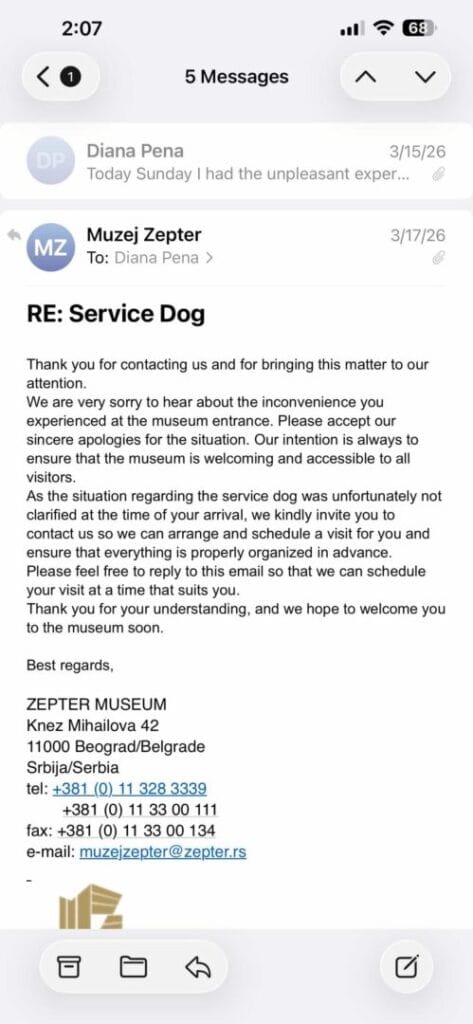
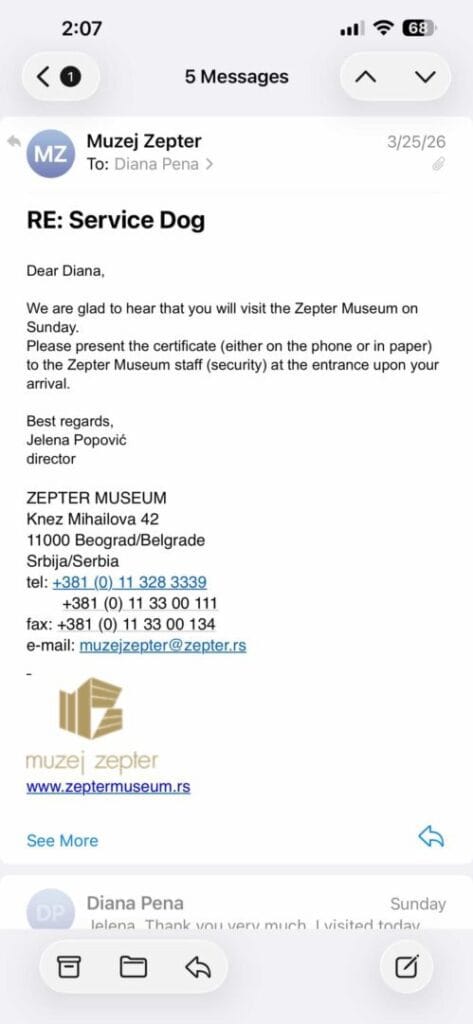
At the Zepter Museum, instead of pushing at the door, I followed up by email. Jelena Popovic, the director, responded and offered to issue a certificate confirming Darcy’s access so staff would allow entry without further issues.
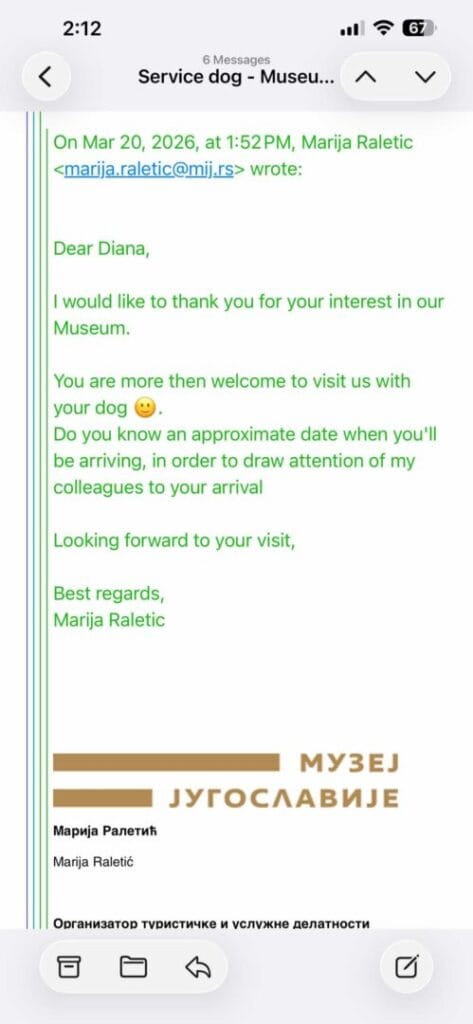
At the Museum of Yugoslavia, I received written confirmation that Darcy would be allowed.
When I arrived, I was still stopped at the entrance and had to mention the email.
Only after I brought it up did the older gentleman at the door recognize it and say, “Oh, you are Diana,” and then asked me to follow him inside.
The approval existed, but it was not applied unless I initiated it.
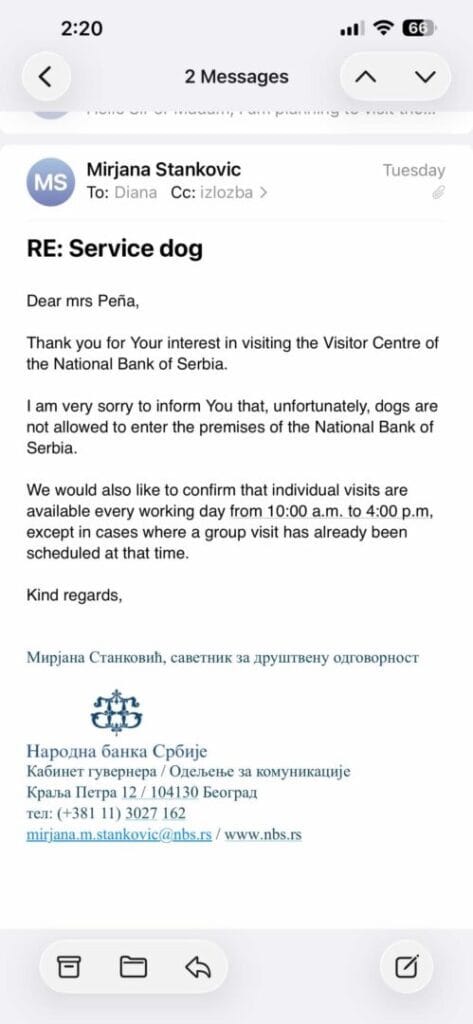
At the National Bank of Serbia Visitor Center, I contacted them in advance and received a firm denial via email.
The Good
Outdoors, Darcy was largely a non-issue. Walking through Knez Mihailova Street, along the river, or inside Kalemegdan Fortress, nobody stopped us. No one questioned her presence.
Younger individuals, especially those who spoke English, tended to understand immediately. There was no need to explain. The interaction, if any, was brief and neutral.
At a street level, the city functions normally.
The Friction
The issue in Serbia is inconsistency.
There is no standard you can rely on. Access depends entirely on who is in front of you.
At Idea supermarket, this played out in a single moment.
A younger woman at the entrance welcomed us in without hesitation. No questions, no concern. We started shopping.
Then, from across the store, an older man came running from the meat department, yelling and escalating immediately. He did not approach to ask or clarify. He was already shouting that the dog was not allowed and that we needed to leave.
Same place. Same moment. Two completely different responses.
I pulled up the service dog law for Serbia and asked him to call the authorities so the situation could be clarified properly. The tone shifted. He backed down.
After that, we were able to shop there without issues for the rest of our stay.
Public transportation followed the same pattern.
Buses in Belgrade are free, and for the most part, no one questioned Darcy.
Except the first time.
When we tried to board, the driver immediately started yelling at us to get off. He only spoke Serbian. There was no attempt to understand, just refusal.
A younger Serbian woman stepped in and advocated for us. She spoke both English and Serbian. I showed the service dog law, she translated, explained, and helped de-escalate the situation.
After a lot of back and forth, we were finally allowed to ride.
That was the only time it happened.
Every other bus driver after that either ignored us or allowed us on without question. No one asked for documentation. No one challenged it.
Again, same system. Completely different outcomes depending on the person.
Restaurants and Real-Time Negotiation
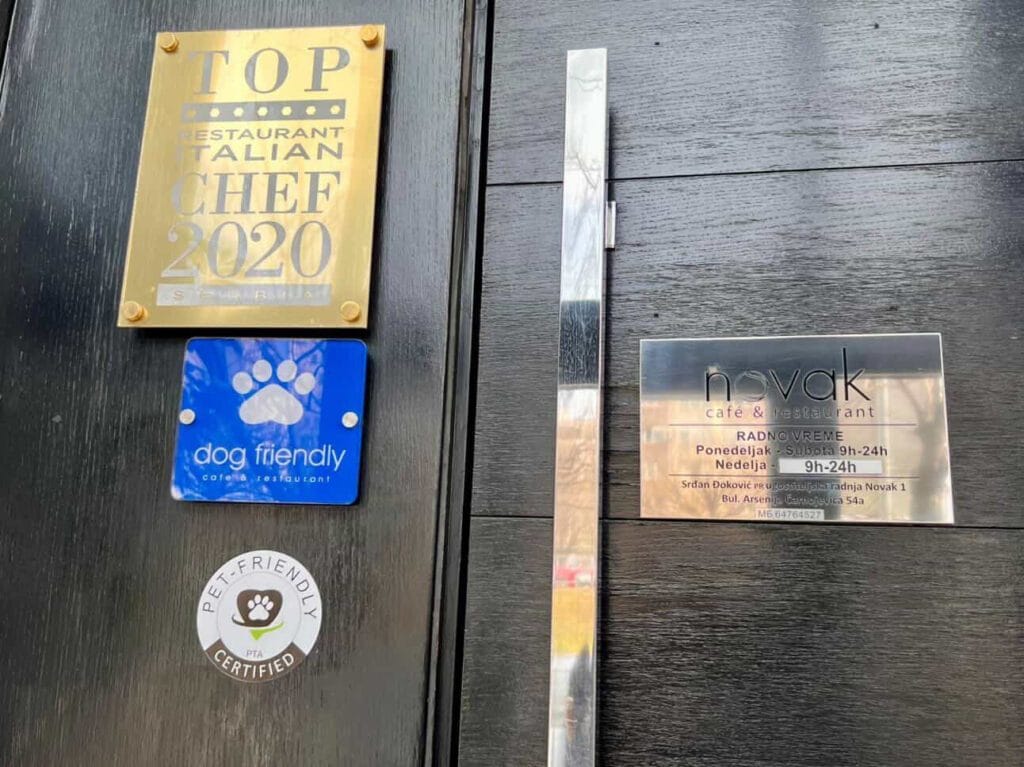
Many restaurants and locations in Belgrade display “pet friendly” signs at the entrance.
In those places, entry was typically not questioned, even for pets.
At Hotel Moskva, I was stopped immediately and told to leave. After asking for the manager, he brought me outside and pointed to a sign that said no pets.
I had to explain the difference between a pet and a service dog and show the law.
Only after that did the situation change. He seated us at a corner table and allowed staff to serve us.
At Question Mark (Kafana ? ), the same sequence repeated. Initial refusal, explanation, then partial accommodation. Again, we were placed at a corner table, separate from the rest of the space.
Access was allowed, but never assumed.
Tours: Assumptions and Course Correction
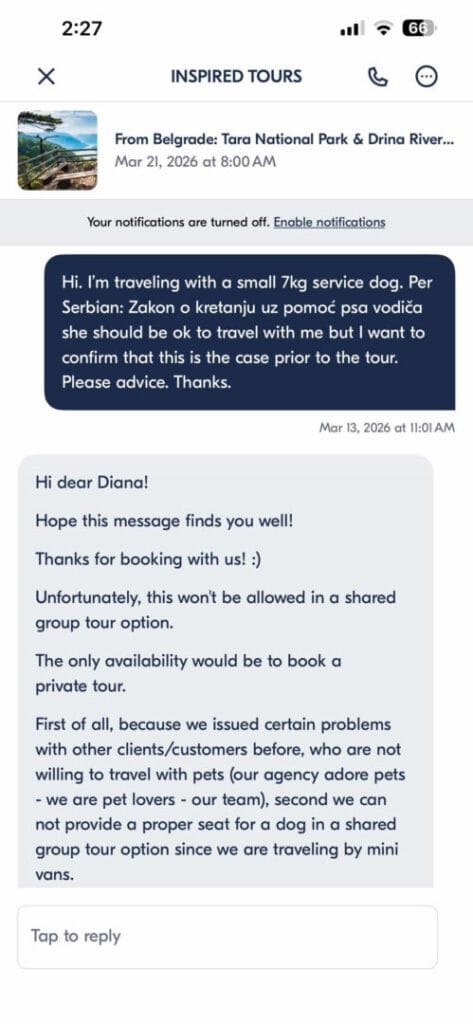
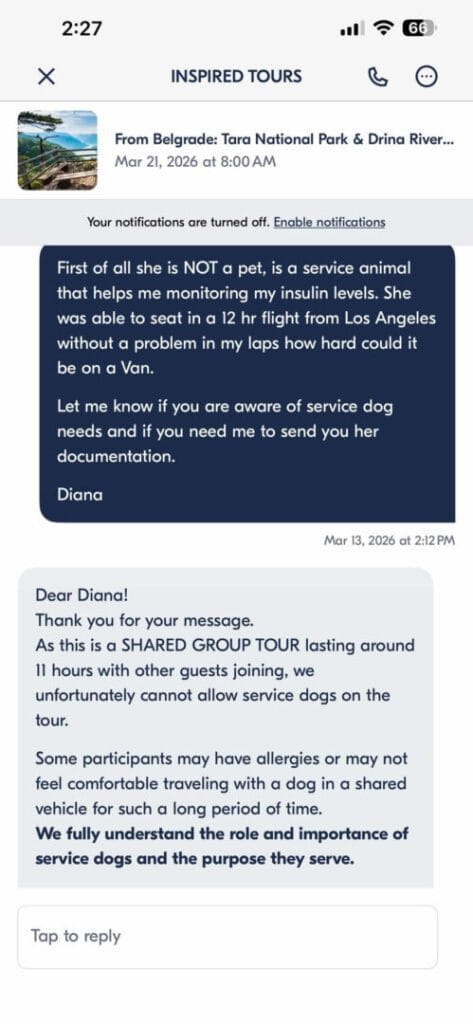
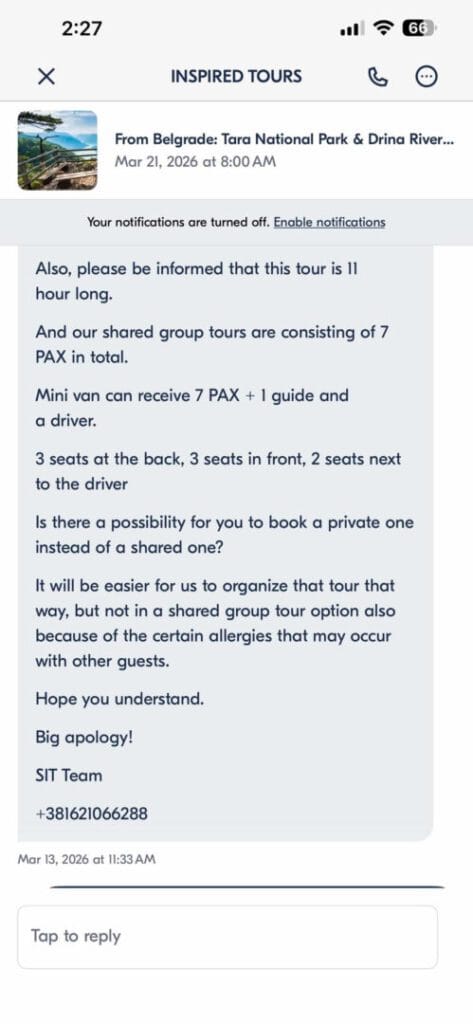
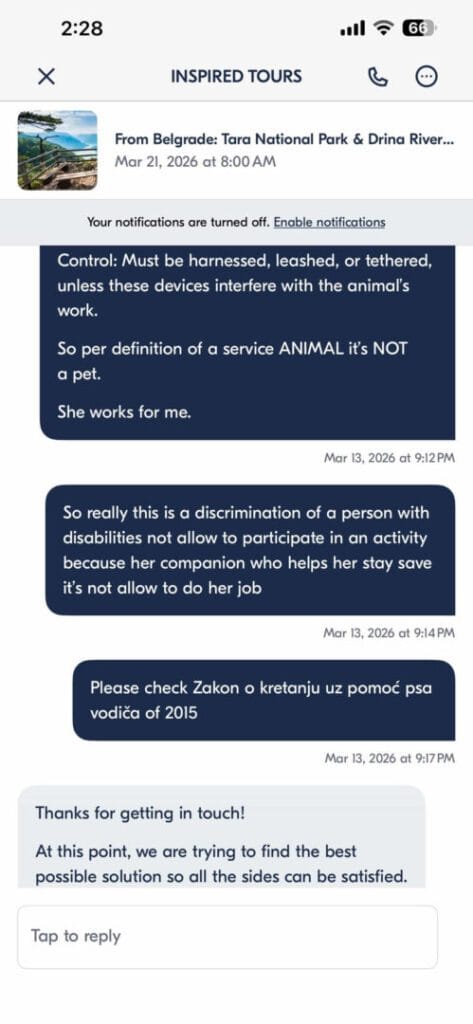
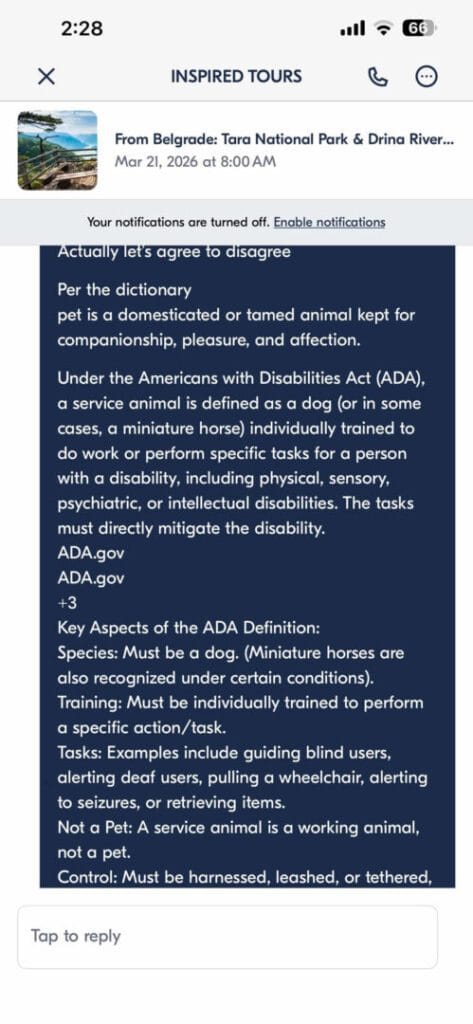
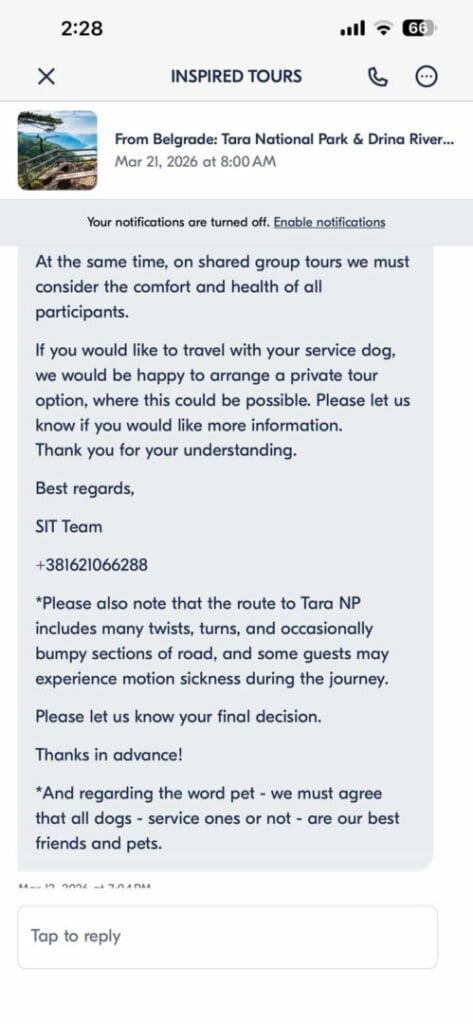
With Inspired Tours Belgrade, Darcy was initially classified as a pet and denied participation.
I sent over ADA definitions and explained what a service dog is.
Once they reviewed it, their response changed completely.
Jelena, our tour guide, was accommodating from that point forward. After seeing Darcy in action, calm, controlled, and working, she not only welcomed us but invited us to a second tour.
At one point she said, “Keep advocating. You are doing good for others by explaining what a service animal does and opening the door.”
She even started advocating for us at restaurants and locations during the tour.
It was the first time in over ten years she had a dog on her tour.
The Pattern
Across all interactions, the pattern becomes clear.
Younger staff:
Understand immediately
Speak English
Allow access
Older staff:
Default to “no dogs”
Do not distinguish between pets and service animals
Require explanation or escalation
This reflects a system where service dog access is not standardized despite the law.
The Takeaway
Would I recommend Belgrade?
Yes.
It is a great place. The food, the architecture, the history, the museums. There is a lot here.
But you have to be prepared.
You will need to advocate for yourself and your service dog. You will need to explain, show documentation, and sometimes push through uncomfortable situations.
Outdoor spaces are easy. Controlled environments are unpredictable.
The experience is not effortless, but it is possible.
Travel Note: Leaving Serbia
I flew from Belgrade to Berlin with Wizz Air.
Wizz Air requires all service animal documentation to be submitted at least 48 hours before the flight.
I submitted the first email on February 24, well in advance of my March 5 flight. There were multiple follow-ups. The last confirmation I received was on March 30, stating that all documents had been received and verified.
At the airport, that record did not exist.
At the check-in counter, staff told me they had no record of Darcy flying with me.
I was taken to a separate customer service desk and asked to forward them the same email they had previously sent confirming that her documentation had been received and verified.
There was no internal record accessible to them.
After sending the email, I waited approximately 30 minutes while the staff member made multiple phone calls to confirm the information.
Eventually, we were cleared.
During that process, the agent mentioned that Wizz Air is strict and does not allow pets in the cabin. Darcy is not a pet. She also noted that in over ten years of working there, this was the first time she had seen the airline allow any animal in the cabin.
After that, the experience shifted.
Airport staff and flight crew were accommodating. There was visible curiosity, but no resistance. Once cleared, there were no further issues.
Arrival in Berlin was straightforward.
Border control did not question Darcy. The airline had already verified all documentation. Passports were checked, and we were allowed through without additional steps.
That contrast was immediate.
From having to prove everything again at departure to no questions at arrival.
This little girl had several firsts in Belgrade, opening the door for others and, along the way, educating people on the role and importance of service dogs.
Now, on to celebrating her birthday on April 10 in Berlin.
Stay tuned for the next part!
Email between national museum and me.
Madam,
Thank you for your response and for your explanation.
At this point, it seems we will have to agree to disagree. However, I would like to clarify that the comparison made in your message is not accurate.
For reference, under the Americans with Disabilities Act (ADA), a service animal is defined as a dog individually trained to perform tasks directly related to a person’s disability. These animals are not considered pets and are recognized as essential accessibility accommodations.
While I understand that your institution may maintain different policies, it is important that comparisons to other museums reflect their actual practices.
Sincerely, Diana Peña
—
Dear Madam,
Thank you for your message and for taking the time to share your experience with us. We are truly sorry to hear that your visit to the National Museum of Serbia did not meet your expectations, and we understand how upsetting and disappointing this situation must have been, especially during an international trip.
At the same time, we would like to kindly clarify that the work carried out by our institution is highly specific. As a museum entrusted with the preservation and protection of cultural heritage safeguarded by law, we are required to maintain strictly controlled conditions within our exhibition spaces. A large team of highly trained conservators, specializing in the control of microclimatic conditions for the preservation of museum objects, carefully defines and prescribes all environmental standards in accordance with what is most favorable for the safety and long-term conservation of the collections. For this reason, the entry of animals is not permitted, regardless of their size or training, as part of our standard conservation and security policies.
We would also like to note that similar regulations are in place at many of the world’s leading museums, such as the Louvre Museum, the British Museum, and the Vatican Museums, where restrictions on animals – including service animals – are applied in order to ensure the highest standards of collection care.
We regret that this was not more clearly communicated to you at the entrance, and we will certainly take your feedback into consideration in order to improve how we inform our visitors about museum policies in the future.
As part of the National Museum of Serbia, we would like to highlight that the Museum of Vuk and Dositej, which includes a spacious courtyard area, does allow visitors to be accompanied by animals in its outdoor space.
Once again, we sincerely regret the inconvenience you experienced and thank you for your understanding. We hope that you will have another opportunity to visit our museum under more suitable circumstances.
Kind regards,
Kind regards, Доротеа Ашћерић Кустос ПР, Одељење за рад са публиком и односе с јавношћу Народни музеј Србије Трг Републике 1а Београд ——- Dorotea Ašćerić Curator PR, Learning and Communication Department National Museum of Serbia Republic Square 1a Belgrade, Serbia —— mob. (+381) 60/8075066 tel. (+381) 11/3306053 www.narodnimuzej.rs
— Subject: Service Dog Dear Sir or Madam,
On Sunday, I attempted to visit the National Museum while accompanied by my certified service dog and had a very unpleasant experience. I was stopped at the entrance and denied entry in a manner that felt dismissive and discriminatory given my medical condition and the role my service dog plays in assisting me.
My dog is a trained medical alert service animal. She is extremely small (under 7 kg) and is typically carried in my arms during visits to indoor spaces. She is calm, quiet, and does not interact with other visitors. For context, she recently completed a 12-hour international flight from the United States to Rome without any disturbance, accident, or disruption to passengers.
During this incident I was simply prevented from entering the museum. No explanation of policy or reasonable accommodation was offered at the time, and I ultimately left without being able to visit.
This experience was disappointing, particularly as a visitor traveling internationally and hoping to experience the cultural institutions of Serbia. I would appreciate clarification regarding the museum’s policy toward certified service dogs so that visitors with disabilities can better understand what to expect before planning a visit.
Thank you for your attention to this matter.
Compare that to:
Subject:Re: Service dog – Museum of Yugoslavia
Dear Diana,
I would like to thank you for your interest in our Museum.
You are more then welcome to visit us with your dog .
Do you know an approximate date when you’ll be arriving, in order to draw attention of my colleagues to your arrival
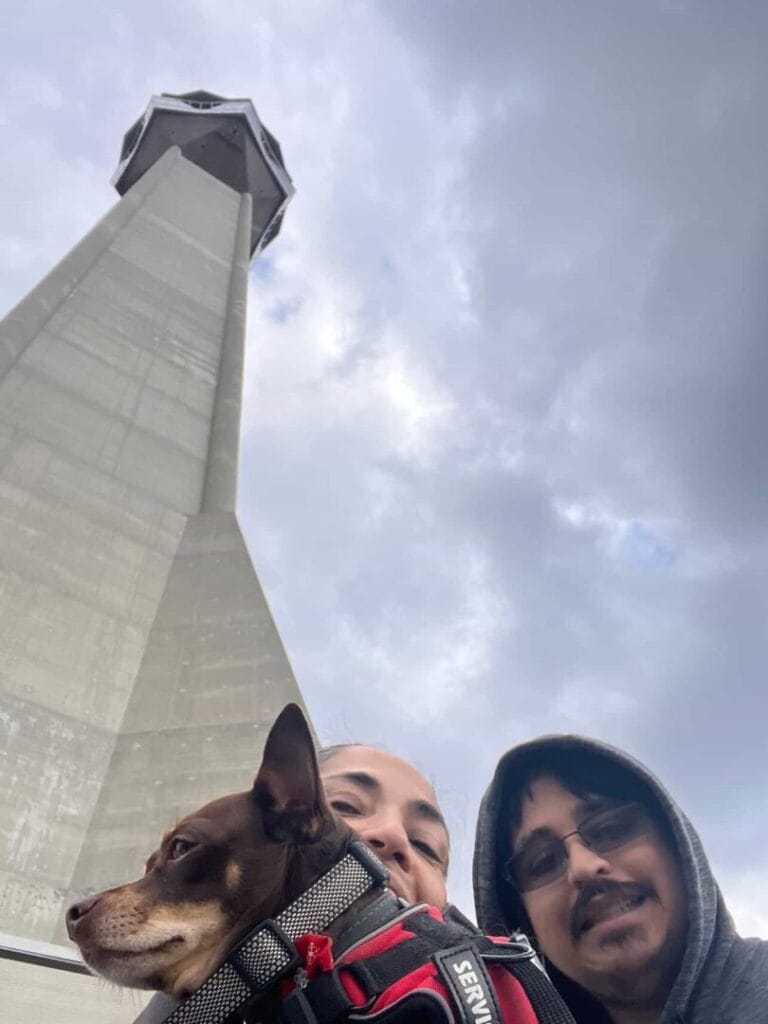
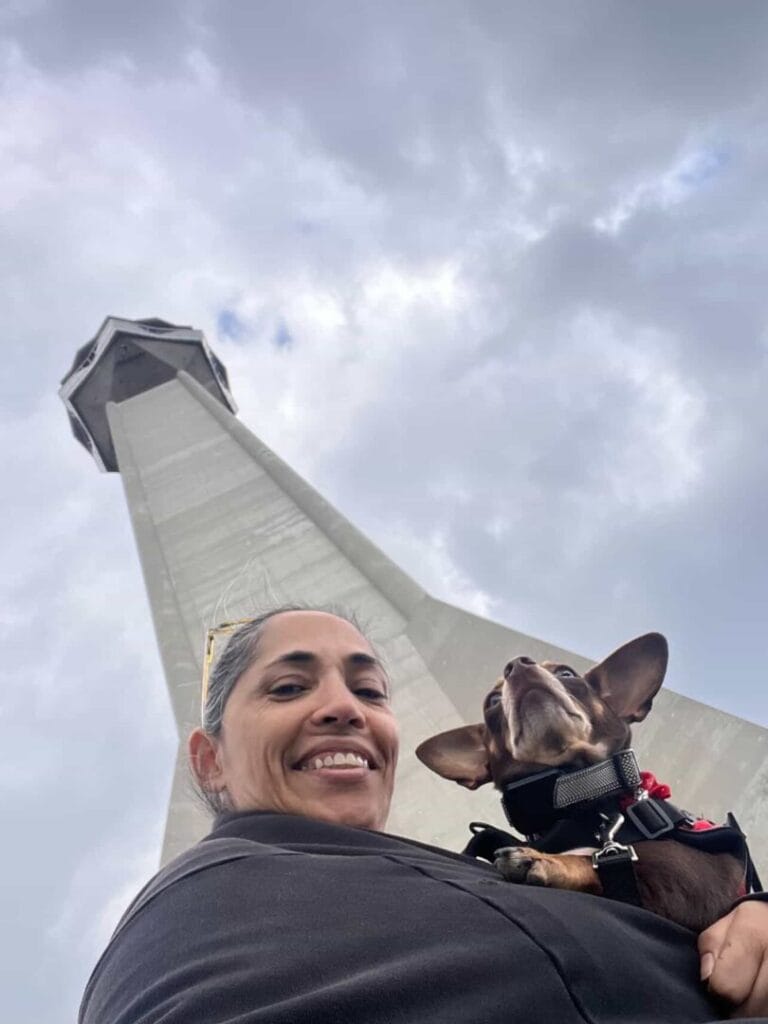
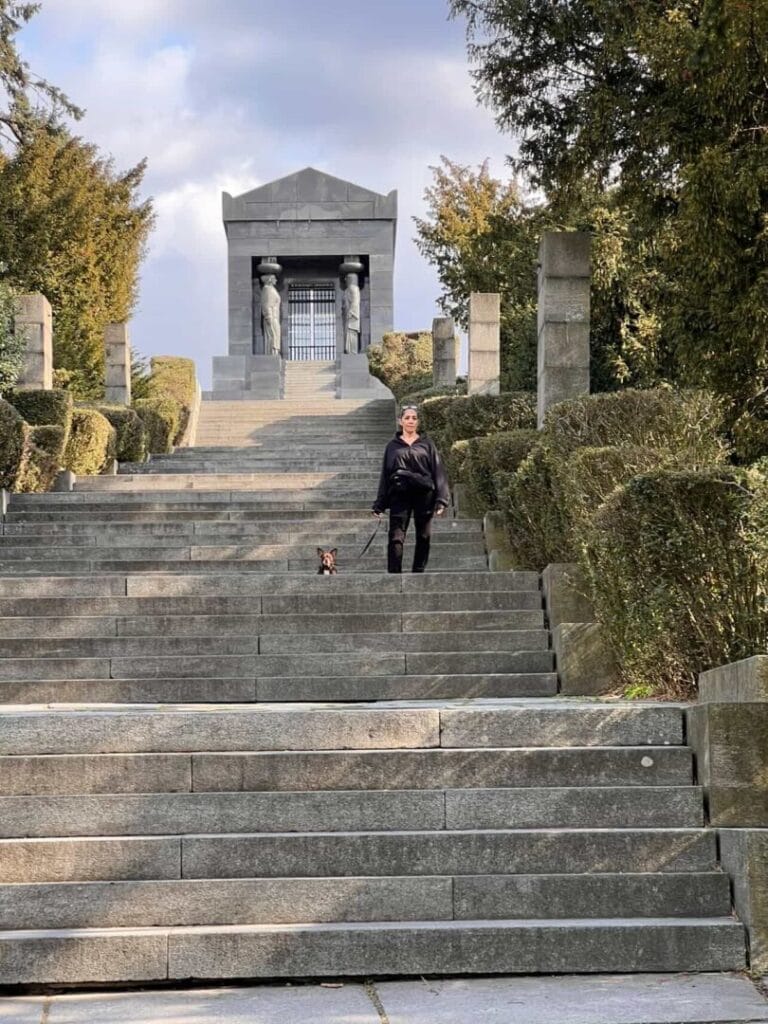
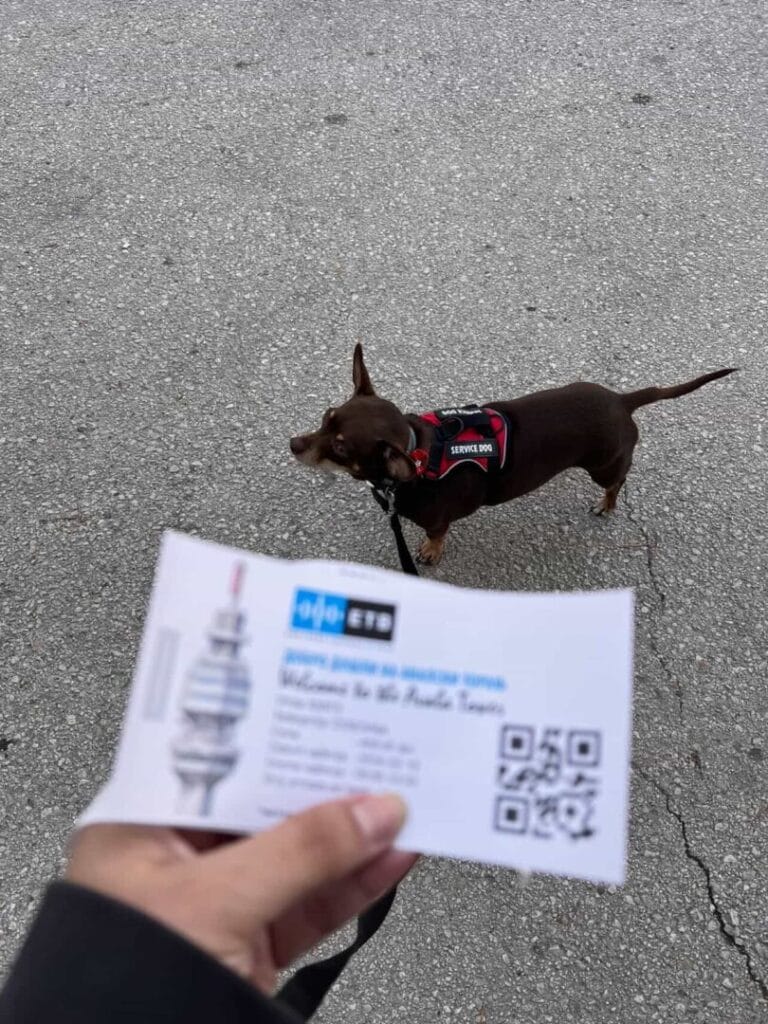
Ada BrideAs part of the Inspire Tour – Drina River House, was on the cover of National Geographic Aug 2012At Novac 1 RestaurantAs part of the Inspire Tour – Tara National ParkAt a restaurantThe Moscu HotelZepter MuseumZepter MuseumZepter MuseumZepter MuseumNovac Restaurant, you can see the Pet friendly signDuring the car ride on the Inspire TourInspire Tour – gems of Eastern Serbia TourCoffee time – inside restaurantUnknown Soldier MonumentUnknown Soldier MonumentYugoslavia MuseumYugoslavia Museum entranceBelgrade FortressMuseum of IllusionMemorial Museum of Ivo Andrić, Nobel Prize winner 1961Avala Tower (Avala toranj)Resava Cave as part of Inspire TourResava Cave as part of Inspire TourSava churchParliamentUnion of Sava and Danube riversMuseum of IllusionA park close to the rentalAvala Tower (Avala toranj)Avala Tower (Avala toranj),Unknown Soldier MonumentAvala Tower (Avala toranj), located on Mount Avala near Belgrade, it’s the landmark tower that was destroyed during the 1999 NATO bombing and subsequently completely rebuilt.







.
 .
.