The aftermath–and healing
Montenegro (Kotor): Finding Normal After Sarajevo
The Good
Flying from Belgrade to Kotor with Darcy was refreshingly uneventful.
By this point in the journey, flying together had become routine. Darcy behaved exactly as she always does—quiet, calm, and settled throughout the flight. Even though she was still recovering from the injuries she sustained in Sarajevo, I carried all of her veterinary records and travel documents in paper form, just in case airline staff questioned the visible scars or recent surgeries. They never did.
Everything proceeded normally.
After landing, I met up with my son and daughter, who had traveled separately, and together we began exploring Kotor.
As luck would have it, we arrived on Montenegro’s Independence Day. The Old Town was alive with music, celebrations, and people filling the streets late into the evening. It was the perfect introduction to the country and one of those moments where you accidentally arrive at exactly the right time.
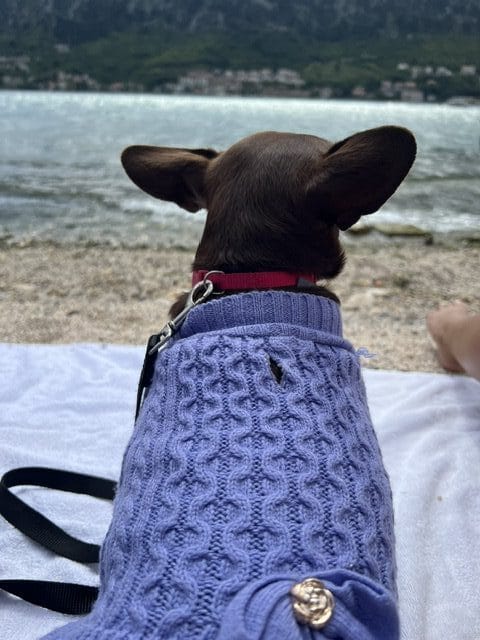
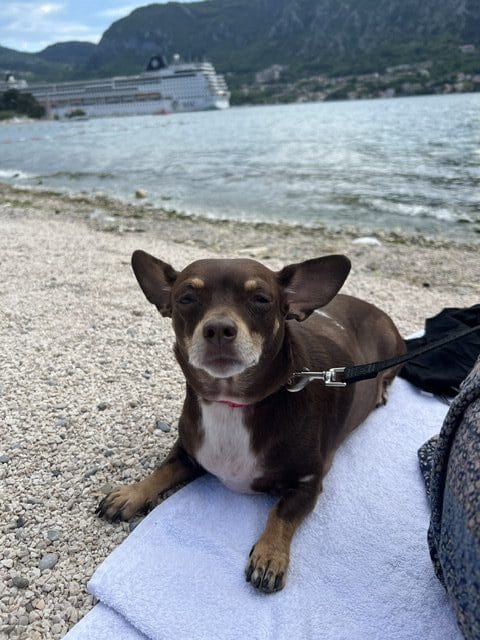
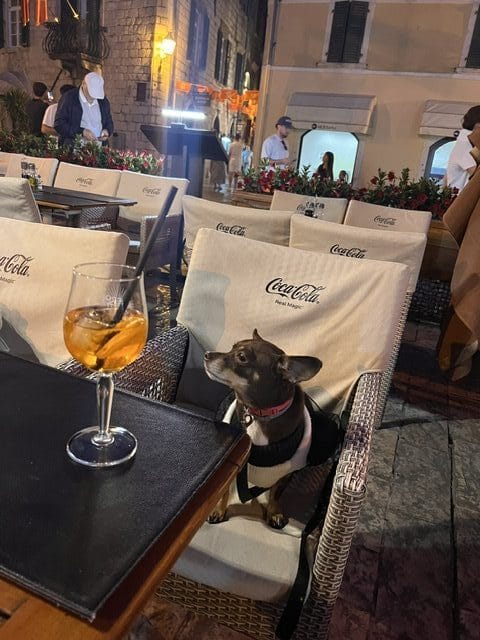
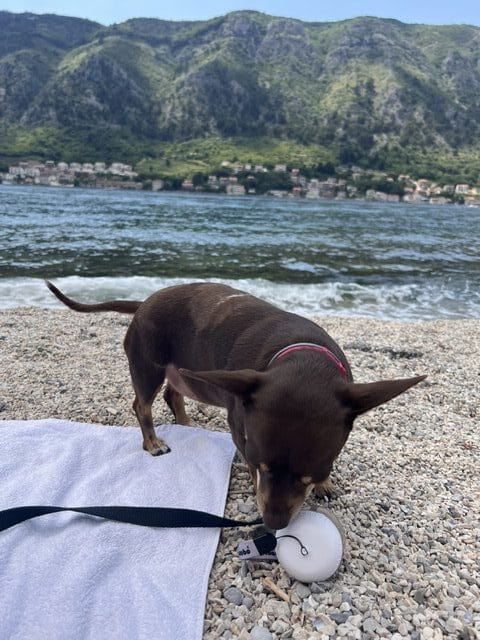
Montenegro immediately felt welcoming—not only toward service dogs, but toward dogs in general.
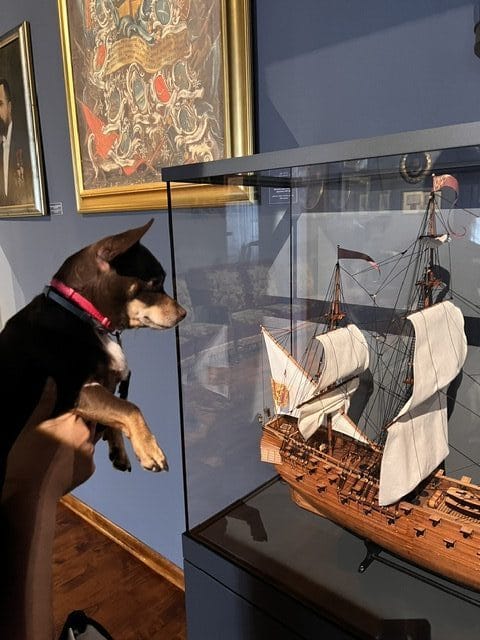
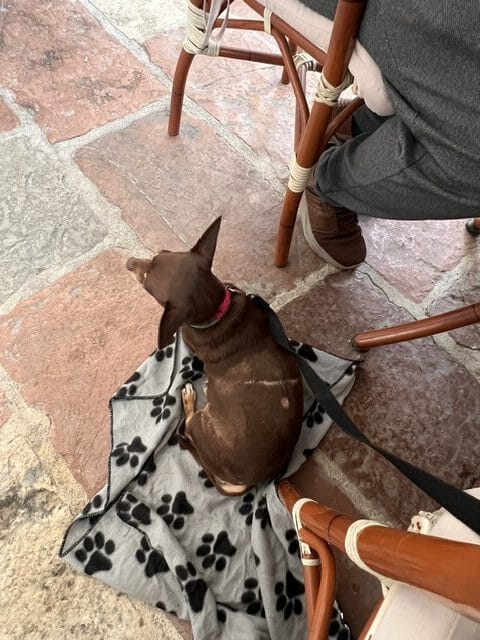
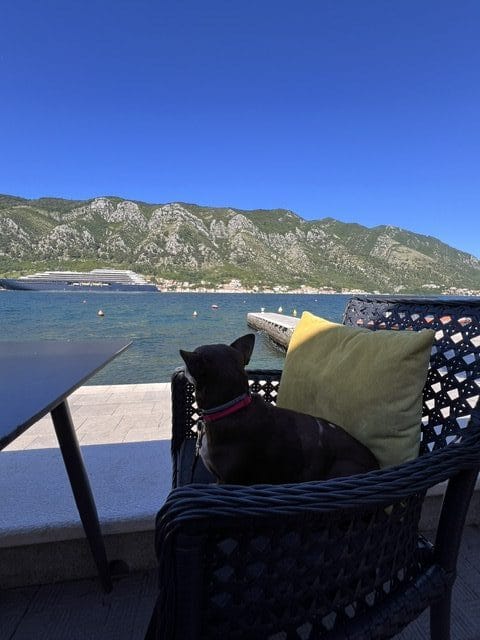
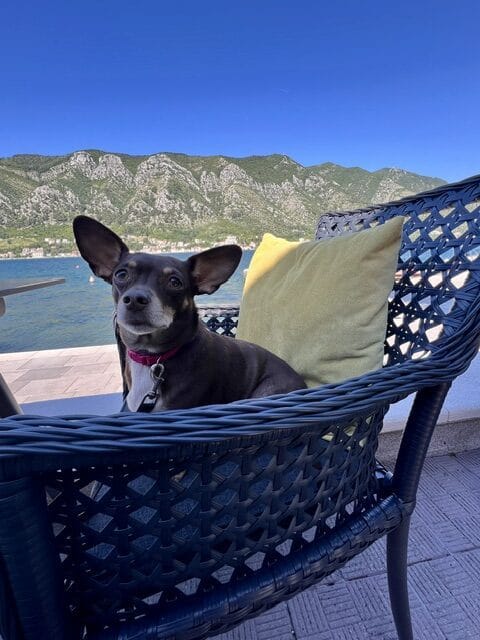
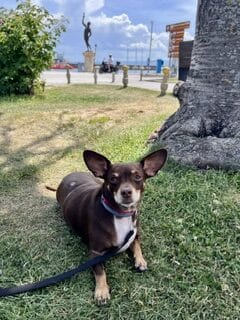
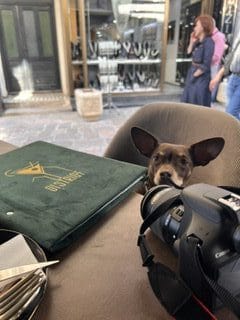
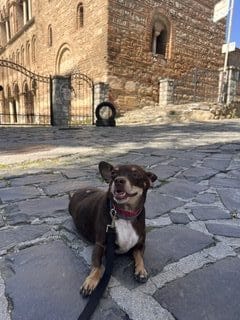
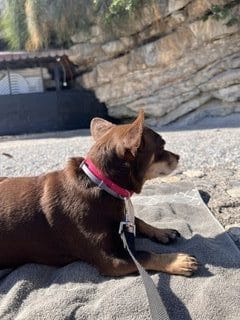
Darcy accompanied me everywhere we went without repeated explanations or confrontations. Restaurants welcomed her inside, people smiled when they saw her, and no one questioned her presence.
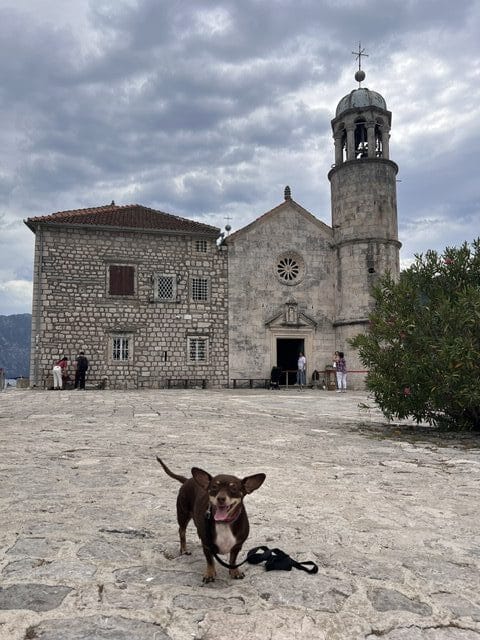
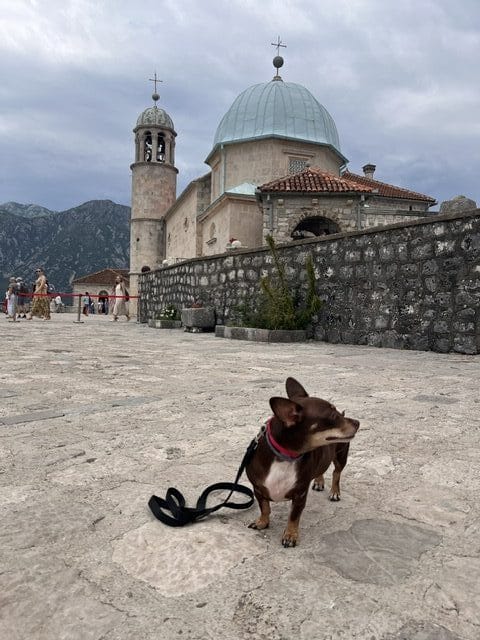
One of my favorite experiences was taking the ferry across the Bay of Kotor to visit Our Lady of the Rocks. Darcy joined us for the boat ride and explored the island with us without any issues.
The only place she was not allowed was inside the church itself. After spending weeks in Italy, where she had accompanied me inside numerous churches, it stood out as one of the few religious sites where access was restricted. The limitation was specific to the church rather than the island, and staff handled it respectfully.
Even months later, I realized the attack hadn’t stayed in Sarajevo. Darcy had become noticeably more cautious whenever unfamiliar dogs approached, and I found myself instinctively pulling her into my arms whenever I saw a dog off leash. Before April 18, I rarely thought about those situations. Now I scanned every street before setting her down.
Kotor quietly helped rebuild that confidence.
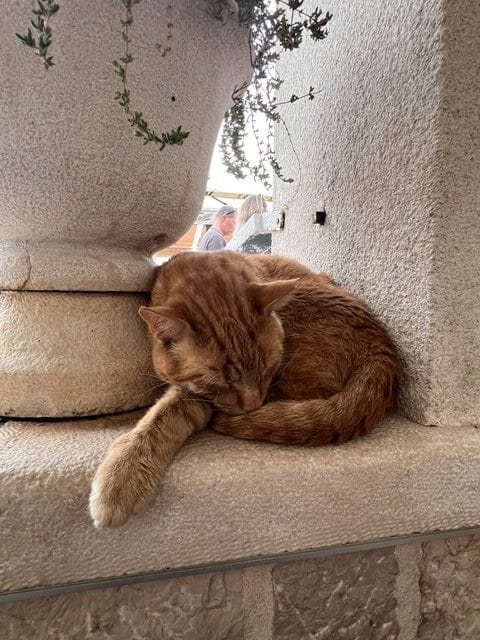
Unlike Sarajevo, I never felt that sense of uncertainty. Dogs were almost always walking calmly with their owners on leash, and the city itself is famously known as the City of Cats. It was common to see cats lounging in the streets and squares, while dogs were relatively few and generally well controlled.
For the first time since the attack, I found myself relaxing instead of constantly looking over my shoulder.
The Friction
There was very little friction during our stay.
We spent approximately one week in Kotor before continuing our journey overland toward North Macedonia, and everything simply worked.
Transportation was straightforward, restaurants were welcoming, and moving around the Old Town with Darcy never became an issue.
The Ugly
There really wasn’t one.
After everything that had happened in Bosnia, simply experiencing several peaceful days without conflict, access issues, or fear felt almost therapeutic.
Sometimes the absence of problems becomes the most memorable part of a destination.
Takeaway
Montenegro exceeded my expectations.
Kotor was relaxed, beautiful, and remarkably easy to explore with a service dog. The combination of welcoming locals, pet-friendly attitudes, and the calm atmosphere made it one of the most enjoyable stops of the trip.
It also became something I hadn’t expected.
It was the first place where traveling started to feel normal again.
Not because Sarajevo had been left behind—it hadn’t. The emotional impact of what happened there continued to influence many of the decisions I made throughout the rest of the journey.
But Kotor reminded me that those experiences didn’t have to define every destination that followed.
Albania — A Pleasant Surprise Between Borders
The Good
Albania was never meant to be a destination on this trip.
It became a pleasant surprise while traveling overland from Montenegro to North Macedonia.
Rather than taking a direct transfer, we booked with Daytrip, a company that allows travelers to customize long-distance drives with sightseeing stops along the route. Instead of spending the day simply watching the landscape through a car window, the journey itself became part of the experience.
Crossing into Albania was remarkably simple. Border control focused primarily on our passports, and Darcy’s paperwork was never requested.
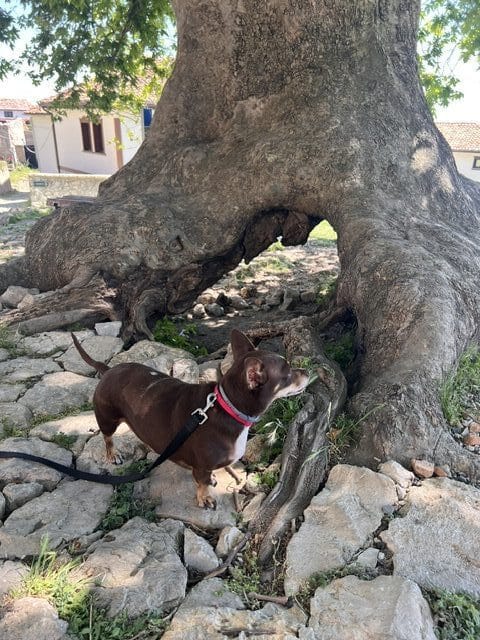
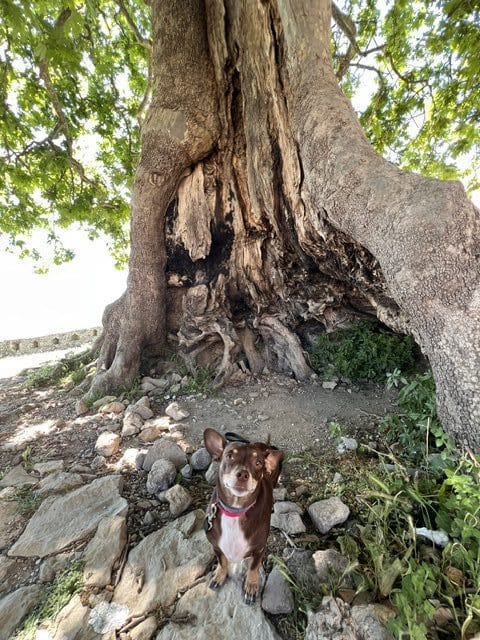
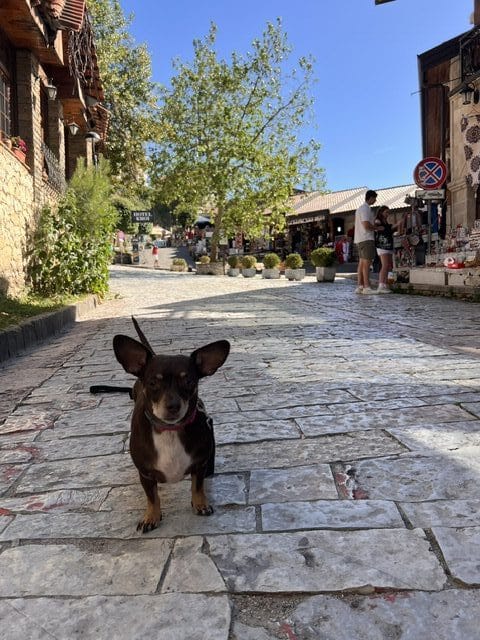
Our main stop was Krujë Castle, one of Albania’s most important historical landmarks and the former stronghold of Albania’s national hero, Skanderbeg.
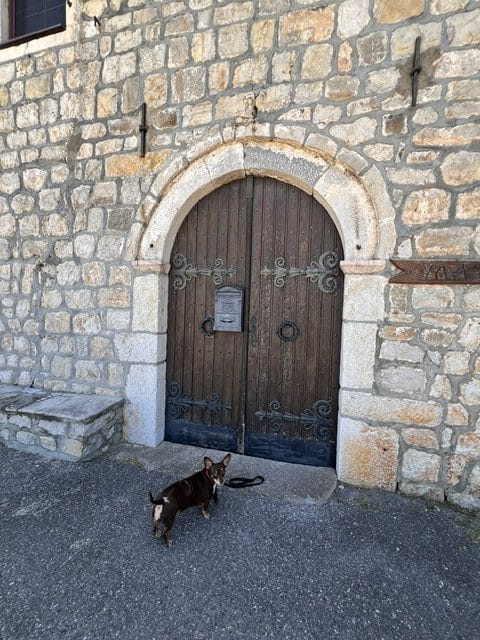
Walking through the castle grounds with Darcy was effortless. We explored the stone pathways, admired the panoramic views, wandered through the historic bazaar, and never encountered any hesitation about her presence.
After exploring the castle, we stopped for lunch before continuing toward North Macedonia.
Darcy was welcomed into the restaurant without hesitation, and every interaction we had during our short visit felt friendly and relaxed.
Even though Sarajevo was now behind us, I realized the attack hadn’t stayed there.
Without thinking, I caught myself scanning every new place before setting Darcy down. I looked for loose dogs, listened for barking, and instinctively reached down to pick her up whenever something made me uneasy.
None of those concerns ever materialized in Albania.
Instead, the afternoon became exactly what travel should feel like—peaceful, enjoyable, and uncomplicated.
The Friction
Because we only spent a few hours in Albania, there wasn’t much opportunity for friction.
Everything—from crossing the border to walking through Krujë and stopping for lunch—felt straightforward.
If there was one disappointment, it was simply not having enough time.
The country left me wanting to come back for a proper visit instead of treating it as a stop between destinations.
The Ugly
There wasn’t one.
Sometimes the most memorable places aren’t the ones with dramatic stories.
Sometimes they’re the places where nothing goes wrong.
Albania became one of those places.
Takeaway
Although my visit lasted only a few hours, Albania completely exceeded my expectations.
The people were welcoming, the historic town of Krujë was beautiful, and traveling with Darcy was effortless from beginning to end.
Instead of simply becoming another country crossed off the map, Albania became one of the places I most look forward to returning to.
North Macedonia (Ohrid) — Learning to Trust Again
The Good
After leaving Albania, we continued our journey to Ohrid using Daytrip once again.
The drive itself was beautiful, and crossing another international border proved surprisingly simple. Once again, border officials focused primarily on our passports. Darcy’s paperwork was never requested, and within minutes we were on our way.
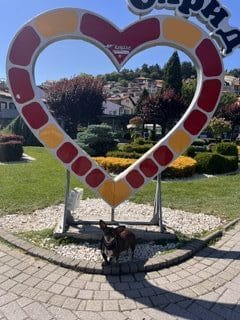
Ohrid immediately felt welcoming.
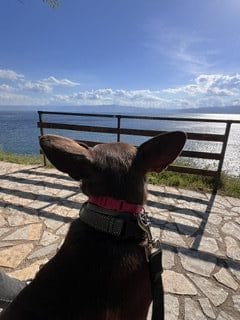
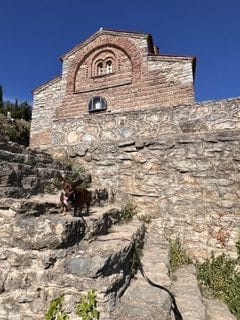
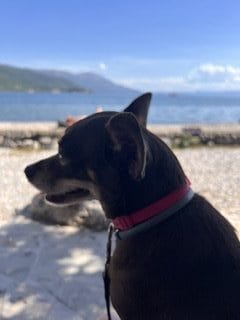
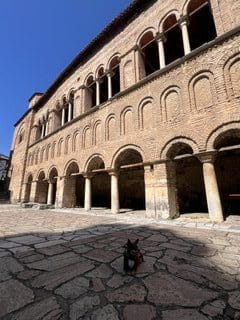
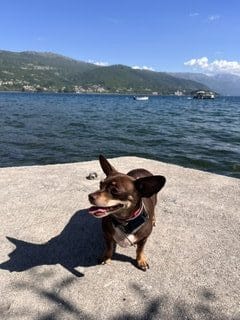
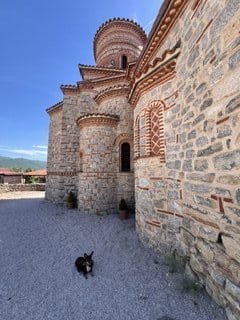
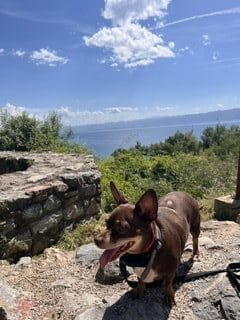
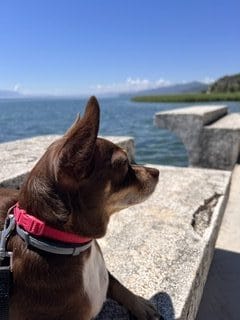
The city sits along the shores of one of Europe’s oldest and deepest lakes, and nearly every street seems to lead toward either the waterfront or another centuries-old church. It quickly became one of my favorite places simply to wander.
Traveling with Darcy was easy.
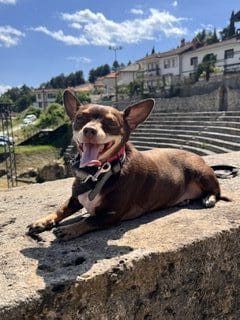
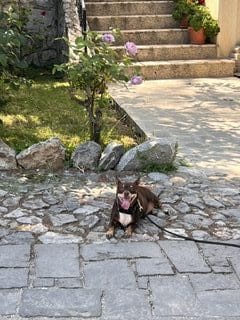
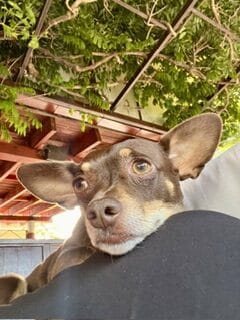
She accompanied me through the Old Town, along the lakeside promenade, into restaurants, cafés, and throughout nearly every place we visited. Other than one or two restaurants that preferred not to allow dogs inside, we experienced very little resistance. Whenever that happened, we simply walked to another restaurant nearby that happily welcomed us.
One thing that happened repeatedly was restaurant staff bringing Darcy a bowl of fresh water almost as soon as we sat down. It was a thoughtful gesture that always made me smile, especially because we never expected it. We travel everywhere with her portable water bottle and food container, so she never goes without water, but seeing people instinctively think about her comfort spoke volumes about the hospitality we experienced throughout Ohrid.
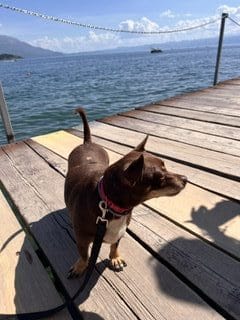
We also spent time on Lake Ohrid, taking a boat ride across the lake. Once again, Darcy was welcomed aboard without any hesitation and quietly enjoyed another adventure from the water.
One of the highlights of our stay was a day tour through Kalishta, Struga, and Vevčani.
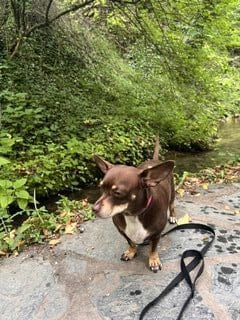
Just as we had experienced elsewhere, Darcy was welcomed throughout the tour. She walked with us through each destination, and no one questioned her presence.
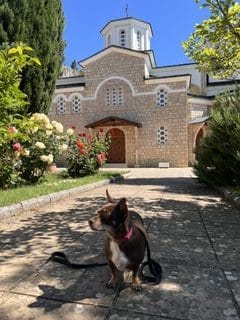
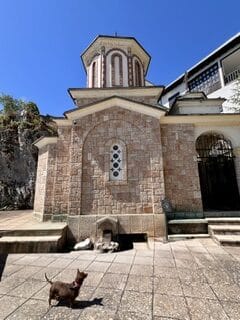
The only recurring limitation involved churches.
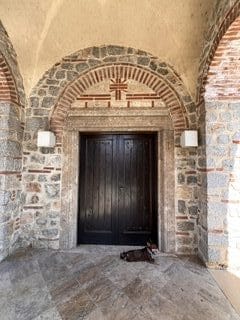
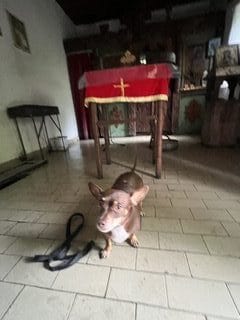
Just as in Montenegro, Darcy was not permitted inside the churches we visited. By this point, I had begun noticing how much policies varied from country to country. Italy had welcomed her into numerous churches, while other destinations treated those spaces differently.
Outside those few religious sites, she accompanied me everywhere.
The Friction
There was very little friction during our stay.
If anything, the greatest challenge came from me.
Ever since Sarajevo, I had become hyperaware of dogs.
Before letting Darcy walk anywhere, I found myself automatically scanning the area first. If I spotted an unfamiliar dog, my instinct was to pick her up immediately.
It wasn’t something I consciously decided to do.
It had simply become part of how I traveled.
The Ugly
What surprised me most about Ohrid wasn’t a bad experience.
It was realizing how much the attack in Sarajevo had changed me.
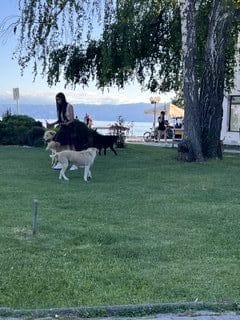
Ohrid has a large population of free-roaming dogs.
During almost every walk, we encountered them.
At first, seeing so many loose dogs made my heart race. I immediately expected another attack.
It never came.
These dogs behaved completely differently.
Most spent the day sleeping peacefully in the shade or quietly wandering through town. Some would slowly approach tourists—not aggressively, but hopefully—looking for a gentle pat or a little food.
Many wore brightly colored ear tags identifying them as part of Ohrid’s community dog program. The tags indicate the dogs have been vaccinated, sterilized, and are monitored as part of the city’s animal welfare program.
I later learned that local organizations even help facilitate international adoptions for visitors who fall in love with one of these dogs and want to give them a permanent home.
Watching them slowly changed something for me.
Not every loose dog represented danger.
That didn’t erase what happened in Sarajevo, but it reminded me that one terrible experience doesn’t define every place—or every dog.
Takeaway
Ohrid became one of the biggest surprises of the entire trip.
The city is beautiful, walkable, affordable, and remarkably welcoming toward travelers with service dogs.
More importantly, it quietly helped rebuild some of the confidence that both Darcy and I had lost after Sarajevo.
The physical scars were continuing to heal.
The emotional ones were taking longer.
Ohrid didn’t erase those memories.
But it reminded me that healing sometimes happens in small moments—a peaceful boat ride across the lake, restaurant staff instinctively bringing water for your dog, or realizing that for the first time in weeks, you aren’t constantly expecting something bad to happen.