7 Tips to Throw a House Party Like A Pro
Organizing a house party that actually succeeds requires more than a guest list and a few bags of chips. It requires a social system. Most hosts fail because they focus on surface aesthetics rather than the underlying guest experience and logistics flow. To ensure your event doesn’t end up as a cautionary tale of awkward silences and empty rooms, you must treat party planning as a series of interlocking components: atmosphere, sustenance, and safety.
The secret to a “legendary” party is Pattern Interruption. Guests expect a standard routine; your job is to maximize engagement through curated environments. Use this operational manual to transform your gathering into a high-fidelity social experience.
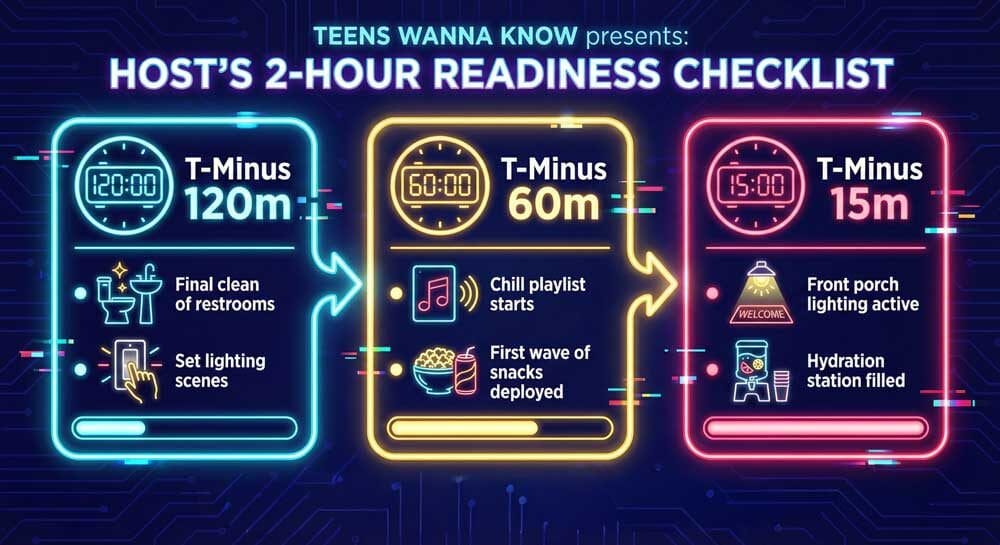
1. Audio Systems and Atmosphere Management
Music is the heartbeat of the event. You do not need a professional DJ, but you do need a curated soundscape that evolves with the night. Utilizing specialized music platforms ensures a seamless mix without awkward pauses.
The Pro-Level Tactic: Do not use one single playlist for the entire night. Use a “Tiered Audio Strategy.” Start with lo-fi or instrumental to allow for guest arrival and initial conversations. As the density of the room increases, transition to high-bpm tracks. Check out Allie’s Wake Playlist for a masterclass in track selection and mood-setting.
Ad · If you sign up through this link, TWK earns a commission at no extra cost to you.
Prime for $6.99 a month if your family qualifies
Half price for households on government assistance, or with verified income. Same Prime — free delivery, Prime Video, Amazon Music.
CHECK IF YOU QUALIFYAs an Amazon Associate, TWK earns from qualifying purchases.
Operational Spec: Aim for 75-85 dB in primary dance zones to encourage movement without causing immediate ear fatigue. In “chill zones,” drop levels to 55-60 dB to facilitate conversation. If using hardware like Sonos or Bose, utilize “Group” features to ensure zero-latency synchronization across rooms.
2. Strategic Catering and Dietary Inclusion
Food logistics are often the most significant friction point for hosts. To maintain momentum, serve high-protein, easy-to-consume snacks that don’t require cutlery. This keeps guests mobile. You must also account for dietary restrictions—ensure at least 30% of your spread is vegan-friendly and clearly labeled to avoid guest anxiety.
Focus on “Finger Foods” like sliders, roasted nuts, and diverse fries. Avoid heavy meals that induce “food coma” and kill the energy of the room. Think of food as fuel for the social interaction system, not the main event.
3. Spatial Architecture and Furniture Layout
The layout of your home determines the flow of the party. To maximize the “dance floor” effect, push furniture to the perimeter of the room. This creates a central hub for movement. Conversely, ensure there are “pocket” seating areas where 3-4 people can sit and talk without being bumped by the crowd.
Visual Prep: Just as you would balance style and budget for your wardrobe, you must balance aesthetics and utility in your layout. Remove high-value or fragile items—glass tables and delicate heirlooms—to a locked room. This reduces your liability and prevents the “breakage anxiety” that makes hosts act like helicopters.

4. Visual Anchoring and Mood Lighting
Bright overhead lights kill parties. To pass the quality “sniff test,” you need layers of light. Simple decorations like lanterns, LEDs, and smart bulbs set the psychological tone. Use warm colors (reds, oranges) to stimulate appetite and energy, or cool blues for a “chill” late-night vibe.
Lighting is the ultimate “Visual Anchor.” By illuminating specific areas (like the bar or the snack table), you non-verbally communicate to your guests where they should congregate. Cheap neon strips or color-changing bulbs (set to 2700K for warmth) can transform a standard living room into a curated venue.
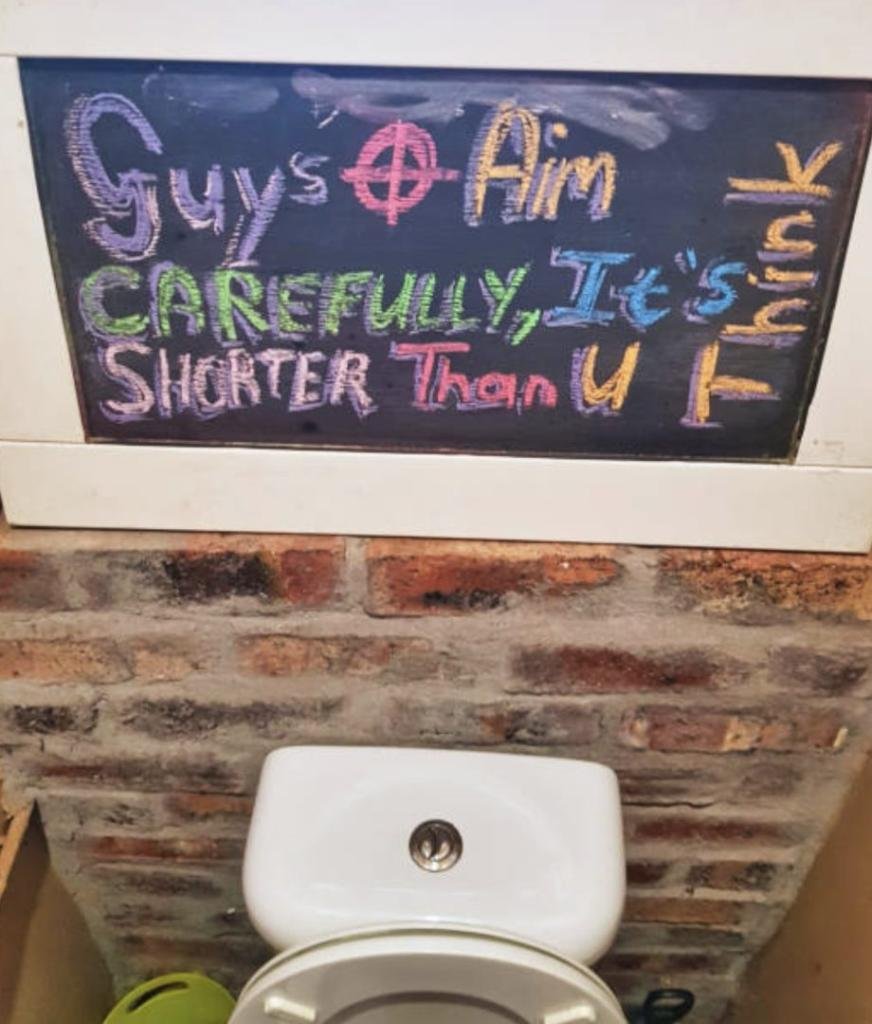
5. The “Hospitality Protocol”: Restrooms and Toiletries
A messy or under-supplied restroom is the fastest way to make guests leave early. This is a High-Fidelity requirement: Ensure the washrooms are stocked with triple the amount of toilet paper you think you need. Provide high-quality hand wash, disposable hand towels (more hygienic than a shared damp cloth), and a small “emergency kit” (mints, stain remover, feminine hygiene products).
The 90-Minute Rule: Clean the space every 90 minutes. A clean restroom signals to the guest that the host is in control and the environment is safe. This level of social etiquette separates a basic gathering from a professional event.
6. Risk Mitigation and The Neurochemical Safety Protocol
Parties are chaotic by nature. Accident preparation is the mark of an experienced host. Have a dedicated “Spill Kit” ready (paper towels, carpet cleaner, enzyme spray) so you can neutralize a mess in seconds.
Hydration-to-Toxin Ratio: Provide 1.5 liters of water per guest. A dedicated “Hydration Station” with electrolytes or high-quality mineral water reduces the likelihood of over-intoxication. Managing the neurochemical balance of your guests—preventing sugar crashes or caffeine jitters—is the superior way to maintain the vibe without relying on external substances.
7. Sustaining the Social Momentum
The “energy” of a party is a resource that must be managed. Offer a mix of beverages, including “signature cocktails” and sophisticated mocktails (like those from Seedlip or Ghia) for non-drinkers.
Use Micro-Cliffhangers throughout the night—announce a specific “event” (like a cake cutting or a group game) at 30-minute intervals to keep people from checking their phones. When it’s time to wrap up, implement the “Departure Protocol”: slowly increase lighting brightness and transition to lower-tempo audio to signal the end of the event system without an abrupt “lights-on” kill-switch.
Conclusion: Building for Resilience
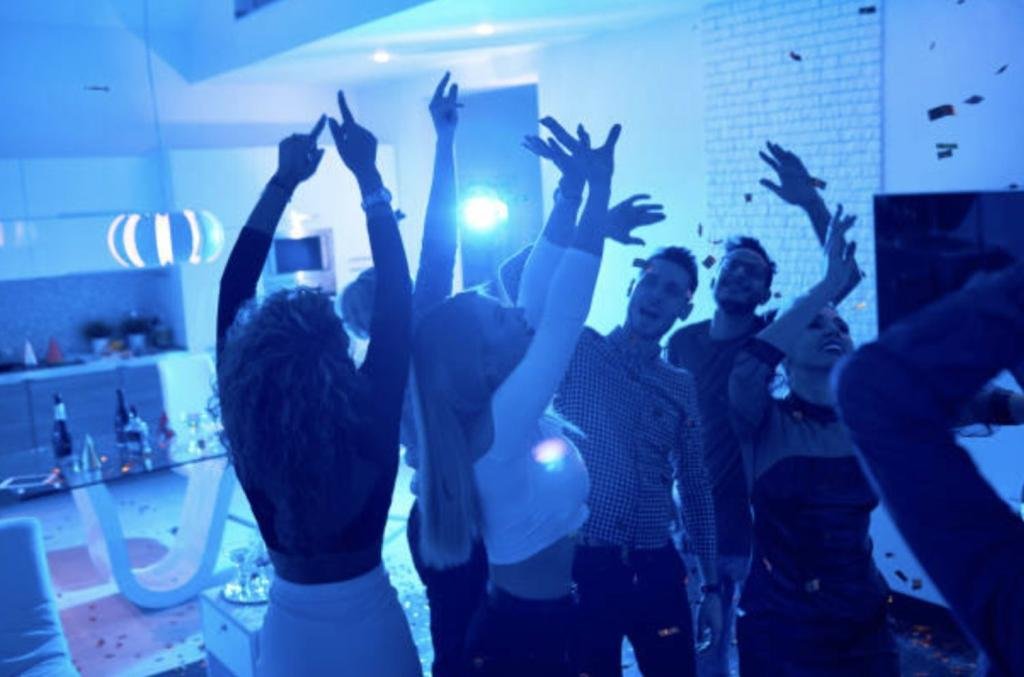
Hosting is a skill that improves with systemization. By prioritizing the auditory environment, spatial flow, and safety protocols, you transform a simple gathering into a high-fidelity experience. The goal is a self-reinforcing party where the guests entertain each other because you have provided the perfect infrastructure.
References: